
 E-Paper



Terms of Trade | The disjoint between economic growth and politics
That incumbents in rich Maharashtra and poor Jharkhand are both relying on the cash transfer route to return to power is an indictment of India’s economic model

 Prefer HTon Google


Going by headline numbers, Maharashtra and Jharkhand are on opposite extremes of economic development in India. Maharashtra’s GSDP in 2023-24, according to the Centre for Monitoring Indian Economy (CMIE) database, was 8.5 times that of Jharkhand and its per capita GSDP was 2.6 times greater than Jharkhand’s. In per capita GSDP terms, Maharashtra outperforms the national average while Jharkhand is a laggard. And yet, none of this seems to matter in the forthcoming elections in the two states.
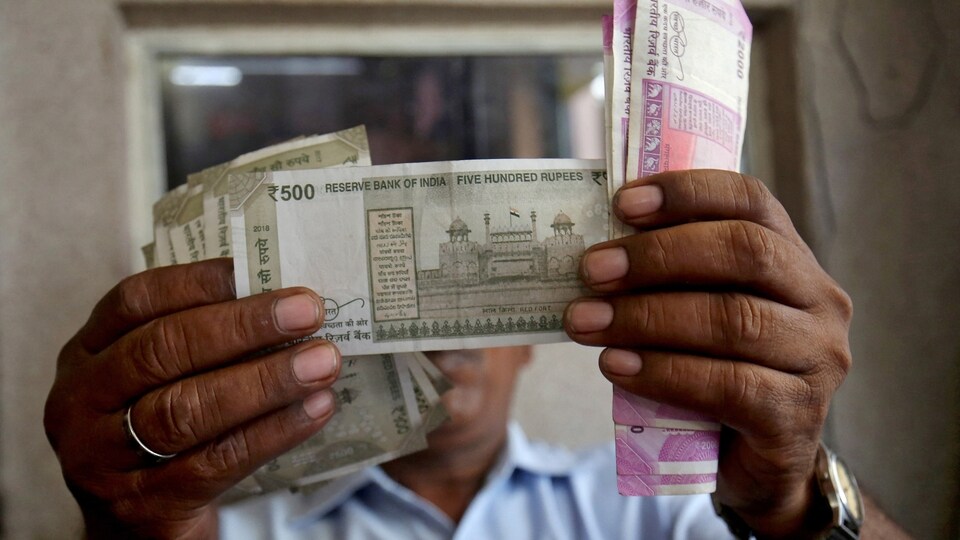
Incumbent governments in both these states are banking big time on direct cash transfer scheme for women — it is called Ladki Bahin in Maharashtra and Maiya Samman in Jharkhand — which gives ₹1,000 and 1,500 per month, in Jharkhand and Maharashtra, respectively, in cash transfers to women. Promises are being made that the amount would be increased in the future. To be sure, the idea of targeted cash transfers to women has been successfully tried and tested before in states such as West Bengal in 2021 and Madhya Pradesh in 2023. In both these elections, the incumbents, Mamata Banerjee and Shivraj Singh Chauhan, respectively, were seen as extremely vulnerable, but women played a big role in returning them to power.
Going by that logic, the reliance on cash transfer schemes in Maharashtra and Jharkhand should not be very surprising. However, what does seem a bit jarring is that politicians think that almost the same amount of money would be enough to win votes in two states which are very different when it comes to overall economic performance. Are the relatively rich voters in Maharashtra, who earn more than 2.6 times than their Jharkhand counterparts really underselling their votes then?
Not really, shows a cursory reading of the latest Household Consumption Expenditure Survey (HCES) results which was conducted in 2022-23. A quintile-wise — bottom 20% to top 20% — comparison of the average monthly per capita expenditure (MPCE) values for the two states shows that Maharashtra’s average MPCE is only 1.4 (lowest 20%) to 1.7 times (top 20%) higher than that of Jharkhand. Once read with this number, the ₹1000 and ₹1500 cash transfer amounts in Jharkhand and Maharashtra make perfect sense.
With the caveat that the HCES data might have excluded the uber-rich in cities like Mumbai, what really explains the relatively muted difference in consumption spending for Jharkhand and Maharashtra? Once again, CMIE data is useful. In 2021-22, the latest period for which data is available, just three districts, namely, Mumbai, Thane and Pune had a share of 45% in Maharashtra’s GSDP. These three districts account for just 81 of the 288 assembly constituencies in the state, leaving just 55% of the GSDP for the remaining 70% of ACs. The short point is that for most people in Maharashtra, their lives might be only marginally better than that of the average person in Jharkhand, which is what the quintile-wise MPCE data in the HCES shows us.
The political class in these two states is smart in acknowledging this reality and offering financial assistance or ‘freebies’ which takes into account the difference in mass rather than headline economic well-being levels in the two states. That governments and political parties across the country and ideological divide are resorting to such methods to win elections shows that they realise the criticality of such support in shaping political decisions. In a way, this is the triumph of democratic pressure which is making the political class, and by extension, the government pay at least a minimal compensation for failing to bring a general improvement in living standards. The politician might not be really unhappy with the arrangement because unlike in the old days, he can now use government resources to give this money to voters rather than use private funds to make illegal transfers.
Where does this pragmatic compromise in politics leave our economic model, which keeps telling us that Jharkhand must aspire to become a Maharashtra even as politicians in Maharashtra and Jharkhand must do similar things to retain their democratic legitimacy? This convergence in politics, the economic divergence notwithstanding, is the biggest indictment of the economic growth India has had in the post-reform period where even the biggest success stories have failed to ensure even a semblance of trickle-down to reckon with.
To be sure, none of this means that India or these states are near some sort of political explosion or economic collapse in the near term. The biggest tangible gain of growth, even if unequal in nature, is that it has given revenue resources to the states and the centre to spend more on welfare or so-called freebies, which can act as palliatives for the poor.
However, with overall economic growth not showing any sign of reaching the promised level — nobody even talks about a double-digit growth rate anymore — and the demographic dividend window gradually beginning to close for India, the day of reckoning will come in a couple of decades. This palliative route to democratic sanctity will only become more precarious. Can our economic model make suitable changes to chart a new course? This is the only political economy question relevant in India.
Roshan Kishore, HT's Data and Political Economy Editor, writes a weekly column on the state of the country's economy and its political fallout, and vice-versa


