Why is it that a country united by a civilisation for millennia, has people who at the level of daily life, are so easily divided? Of course, we have also always been a land of differences of opinion, but must this healthy diversity spawn a natural talent for factionalism? There is an old, weary truism that encapsulates our public culture with devastating accuracy: If there are four Indians in a room, they will inevitably form two rival groups. This relentless choreography of fission can be seen in the grand arenas of national politics down to the petty fiefdoms of Resident Welfare Associations (RWAs), sports bodies, culture and clubs.
To understand this endemic fractiousness, we must honestly examine our own character. The proclivity to split is driven by a potent mixture of unyielding ego, lack of discipline, ideological flexibility, expedient sycophancy and a structural obsession with hierarchy. In a society where status has historically been determined by one’s place in a rigid social ladder, the impulse to impose one’s will becomes paramount. Family, kith, regional and community loyalties impose additional incentives for disunity. In the Indian worldview, compromise is often misread as capitulation. The absolute refusal to subordinate the individual ego to a larger public cause turns every disagreement into an existential battle for supremacy. This is further fuelled by what Amartya Sen famously termed the “argumentative” nature of the Indian, where, unfortunately, the gratification of being right far outweighs the utility of being united. Religion too plays a role. In Hinduism, for instance, the remarkable profundity at the philosophical level reduces itself in practice to an insular singularity where the pursuit of individual moksha — be it material or spiritual — often finesses notions of civic sense or the larger welfare of community.
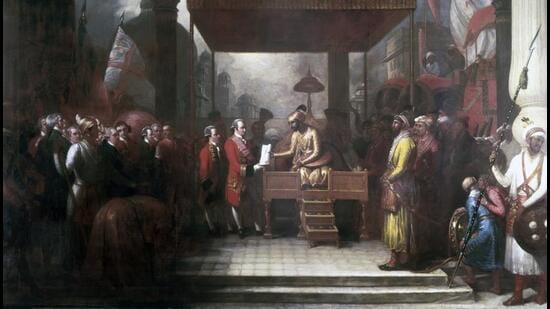
History stands as a tragic, repetitive testament to this fatal flaw. Conquerors did not need to defeat India; they merely had to exploit the betrayals engineered by Indians against Indians. When the Turkic ruler Muhammad Ghori invaded India in the 12th century, he did not face a cohesive front. Instead, the deep-seated rivalry between Prithviraj Chauhan and Jaichand of Kannauj helped him to win. Centuries later, the British East India Company mastered the art of playing one Indian satrap against another. The Battle of Plassey in 1757 was not a triumph of British military genius, but of successful subversion: Mir Jafar’s thirst for the Nawabship of Bengal led him to betray Siraj-ud-Daulah, selling out an entire subcontinent for personal ambition.
{{/usCountry}}History stands as a tragic, repetitive testament to this fatal flaw. Conquerors did not need to defeat India; they merely had to exploit the betrayals engineered by Indians against Indians. When the Turkic ruler Muhammad Ghori invaded India in the 12th century, he did not face a cohesive front. Instead, the deep-seated rivalry between Prithviraj Chauhan and Jaichand of Kannauj helped him to win. Centuries later, the British East India Company mastered the art of playing one Indian satrap against another. The Battle of Plassey in 1757 was not a triumph of British military genius, but of successful subversion: Mir Jafar’s thirst for the Nawabship of Bengal led him to betray Siraj-ud-Daulah, selling out an entire subcontinent for personal ambition.
{{/usCountry}}In modern times, this historical pathology has found its most vibrant laboratory in our democratic politics. The political landscape is littered with the debris of parties that succumbed to the vanity of clashing egos. The Indian National Congress, which once functioned as an umbrella movement for independence, has split multiple times — most notably in 1969 and 1978 under Indira Gandhi. The tragedy of the socialist movement is even more pronounced. Born out of a noble ideological zeal, the once-mighty socialist front fragmented rapidly into minuscule factions, fatally diminishing it. Not even the disciplined cadres of the Communist parties could resist this urge; their historic split in 1964 into the CPI and CPI(M), and other splinter groups, highlighted that even rigid Marxist dogma is no match for the Indian genius for factionalism. Perhaps, the BJP-RSS is the only ecosystem that has been largely able to preserve its unity both in adversity and success.
Yet, this urge to mutate is not exclusive to the political class; it is pervasive across our social fabric. Step into any elite urban club, a sports federation, or a neighbourhood RWA, and you will find the same microcosm of factional warfare. Elections in these bodies are fought with the venom and intrigue of a mediaeval court. The pursuit of power, no matter how minuscule the domain, provides an irresistible form of psychological gratification.
Is our reality of unity in diversity dangerously morphing into disunity in diversity? Differences are healthy — and necessary — in a democracy, but to pursue even those successfully, true strength lies not in the constant urge to divide, but in the deliberate, painful, and necessary work of holding together. If we fail to understand this, the lines of Iqbal will resound: “Na samjhoge tau mit jaoge Ai Hindostan walon, tumhari dastan tak no hogi daastanon mein (Understand, for it you don’t, you will cease to be; in the annals of history no trace of you shall remain).”
Pavan K Varma is an author, diplomat, and former Rajya Sabha MP. The views expressed are personal