World-class institutions require infrastructure, capital, size, location, and legacy. Yet the limiting factor is exceptional faculty. While India must expand higher education to meet GER targets, scaling institutions without securing quality dilutes the enterprise.
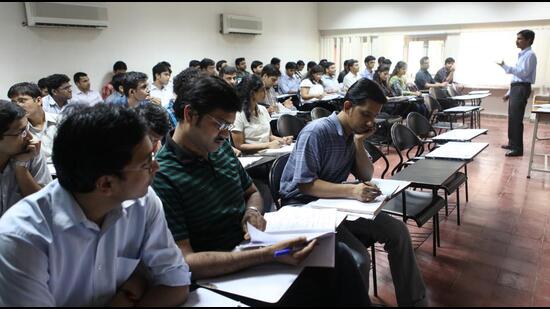
Exceptional academics are the most significant contributor to institutional quality, as well as the scarcest resource in global education today.
A structural opening has emerged. In western systems, shifting demographics are flattening enrolments, prompting fiscal caution. As tenure tracks tighten and hiring slows across North America and Europe, scholars are increasingly open to high-impact opportunities back home. Similarly, home-grown top-quality talent is showing an inclination to national opportunities.
Tens of thousands of Indian- origin scholars operate at the international research frontier. This pool includes more than 22,000 faculty members in the US alone. Indian researchers are globally recognised in rankings of top scientists. Domestic doctoral output of quality has grown significantly, reflected in a surge in annual PhD completions over the past decade. The best Indian scholars are in high demand internationally. Singapore, Vietnam, and the UAE are scaling university systems, China is succeeding through targeted talent repatriation initiatives, and South Korea is deploying research visas to recruit 2,000 global experts by 2030. Attracting top talent is fiercely competitive.
While national policy creates a baseline, transformation requires institutional action. The Chinese University of Hong Kong, in the world’s top 20 today (QS 2027), demonstrated this in the 1960s, when its founding vice-chancellor built a research university by bringing top Chinese scholars back from leading western institutions and giving them autonomy to shape new departments and research centres. Indeed, PK Kelkar did exactly this at IIT Kanpur. Replicating such success requires university leaders to engage academic talent through four urgent interventions.
{{/usCountry}}While national policy creates a baseline, transformation requires institutional action. The Chinese University of Hong Kong, in the world’s top 20 today (QS 2027), demonstrated this in the 1960s, when its founding vice-chancellor built a research university by bringing top Chinese scholars back from leading western institutions and giving them autonomy to shape new departments and research centres. Indeed, PK Kelkar did exactly this at IIT Kanpur. Replicating such success requires university leaders to engage academic talent through four urgent interventions.
{{/usCountry}}First, compensation has to be generous and competitive. That does not mean matching nominal western dollar rates, but it means establishing parity with India’s leading private universities and matching what scholars earn in regional hubs such as Southeast Asia or the Middle East. Teaching is a noble calling, not a vow of self-denial. Scholars, too, assess long-term prospects. Flexible, selective ‘top-off’ support from philanthropy is one way.
Second, academics value pedagogical freedom. Traditional systems too often reduce them to executing a curriculum decided by distant committees. Real attraction lies in letting scholars design their courses, introduce innovative methods, and teach subjects they feel passionate about. This autonomy can extend beyond the classroom to entrepreneurial, consulting, and industry projects, particularly during summer breaks, as at top US universities.
Allowing scholars to translate research into application and share in the financial and intellectual gains of their innovation keeps them engaged and sharpens their impact.
Third, India has unmatched potential for original and translational research. We often get distracted by western academic benchmarks without looking at the ground beneath our feet. India does not need to play only a preset global game when our geography offers vast, virgin territories of unique data sets. UPI is a global reference point for fintech and inclusion.
Regional diversity has answers for climate adaptation. Disease burdens and genetic variation open frontiers in biomedicine and biotechnology. India’s leverage can drive breakthroughs globally as much as at home. Our research, fundamental or translational, must address daring questions we define or the best problems defined internationally.
Fourth, institutions must cultivate the academic talent they need. Searching for the ideal while not participating in creating a community of talent creates a scarcity mindset. An example of a proactive approach is from the Public Health Foundation of India which fast-tracked its faculty pipeline by sponsoring candidates through doctoral programs at partner universities abroad, ensuring they returned to anchor domestic capacity. Today, it is ranked second globally in public health (PHAR 2024). Similar networks can accelerate capacity across disciplines.
One corollary: great faculty cluster together. A strong physics group attracts more physics talent, because scholars want excellent peers. The same logic binds faculty and doctoral students: each raises the bar for the other. The practical lesson is to resist hiring broadly across every field. Instead, build a few strategic centres of excellence, anchor each with renowned scholars, and allow gravitational pull to do the rest.
Faculty recruitment is fundamentally about leadership. People join people. Exceptional scholars do not respond to generic advertisements. They are deliberate, joining inspiring leaders who articulate opportunities for impact and a clear institutional mission.
India’s ambition rests on the institutions it builds, and those institutions rest on the people inside them. That talent exists. Some of it is here, some of it is abroad, and all of it has to be sought out. We have to venture out, find them, and offer an environment that meets what they fairly expect and what we can with total conviction deliver.
Ashish Dhawan and Pramath Raj Sinha are founders, Ashoka University. The views expressed are personal