
 E-Paper



Photos: Amur falcon hunters turn protectors in Nagaland’s Pangti
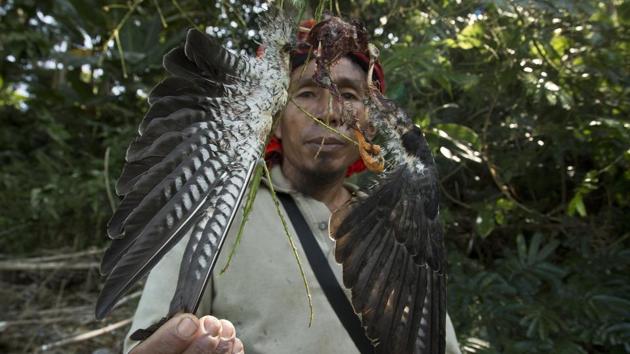
Surrounded by hills, the Doyang reservoir and a hydroelectric dam, Pangti village inhabited by Lotha Naga tribe became notorious in 2012 for killing up to 15,000 migratory Amur falcons per day. The villagers were either consuming or selling the birds. Today, Pangti is called the falcon capital of the world because it is believed the world's largest congregation of this exotic bird takes place right here between October and December. Residents regard this as one of the biggest conservation success stories in South Asia — an entire village transforming from predators to protectors.
Updated on: Nov 21, 2018 9:37 AM IST

Share via


Copy link

1/9
 View Photos in a new improved layout
Published on Nov 21, 2018 9:37 AM
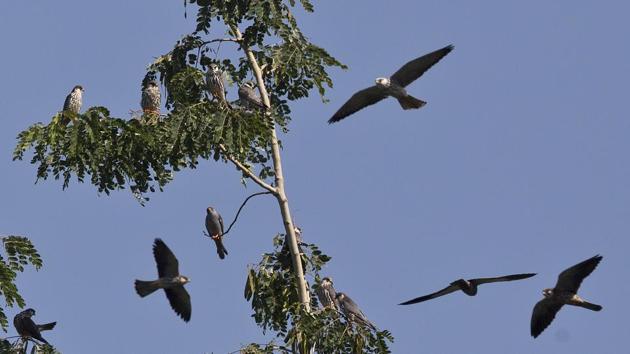
Amur Falcons fly over the Doyang reservoir at Pangti village in Wokha district, in Nagaland. The 8,000 residents of Pangti are busy hosting millions of the migratory falcons from Siberia who roost by a massive reservoir before taking off for their final destinations — Somalia, Kenya and South Africa — traversing up to 22,000 kilometers. (Anupam Nath / AP)
2/9
 View Photos in a new improved layout
Published on Nov 21, 2018 9:37 AM
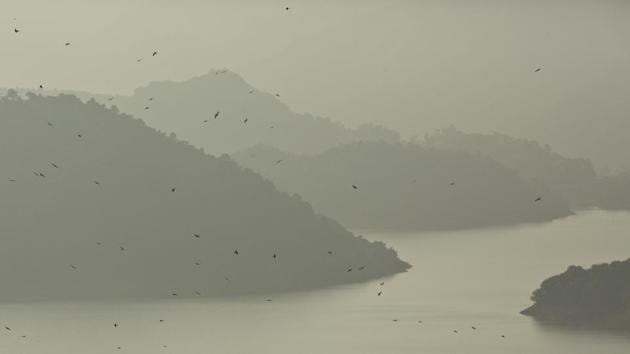
Amur falcons fly over the Doyang reservoir at Pangti village. Surrounded by hills, the reservoir and a hydroelectric dam, Pangti village inhabited by Lotha Naga people became notorious in 2012 for killing up to 15,000 migratory Amur falcons per day. (Anupam Nath / AP)
3/9
 View Photos in a new improved layout
Published on Nov 21, 2018 9:37 AM
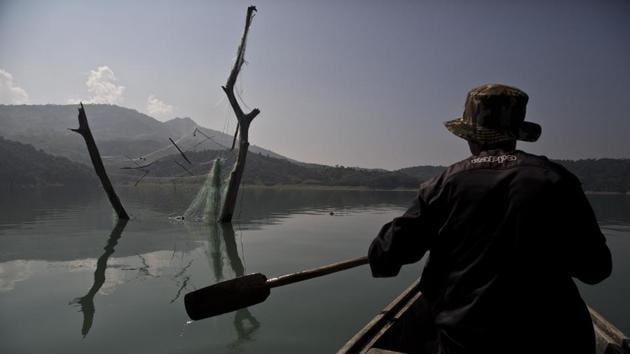
The villagers were either consuming or selling the birds. “Our people have transformed and today my village of Pangti is called the falcon capital of the world because it is believed the world’s largest congregation of this exotic bird takes place right here between October and December every year,” said Nyimthungo Yanthan, 52, a former falcon hunter turned conservationist. (Anupam Nath / AP)
4/9
 View Photos in a new improved layout
Published on Nov 21, 2018 9:37 AM
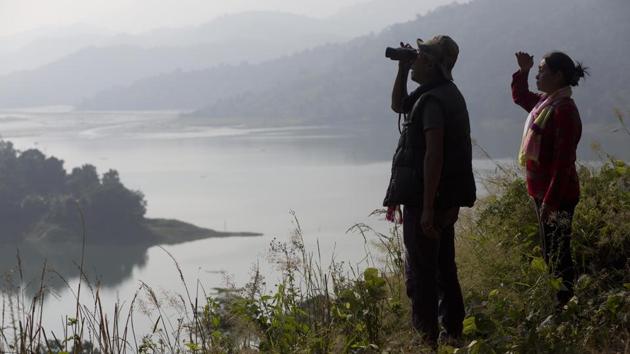
Residents regard this as one of the biggest conservation success stories in South Asia — an entire village transforming from predators to protectors. As the Amur falcons come, hordes of tourists flock to Pangti and to the Doyang reservoir to savour the sight of the amazing birds. Wildlife agencies have satellite-tagged a few Amur falcons to keep track of them. (Anupam Nath / AP)
5/9
 View Photos in a new improved layout
Published on Nov 21, 2018 9:37 AM
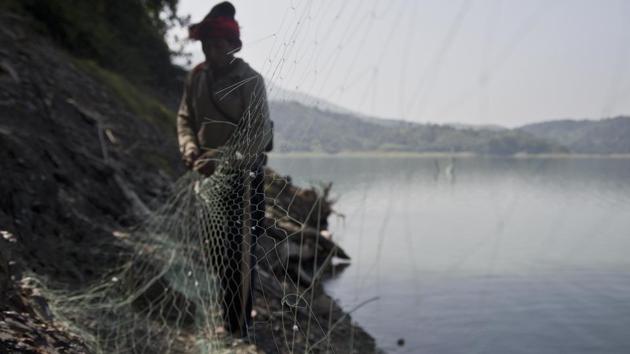
After the 2012 discovery of the mass slaying of the Amur falcons, it was determined that more than 70 groups of people had trapped and slaughtered the birds using fishing nets tied to trees to trap them. (Anupam Nath / AP)
6/9
 View Photos in a new improved layout
Published on Nov 21, 2018 9:37 AM
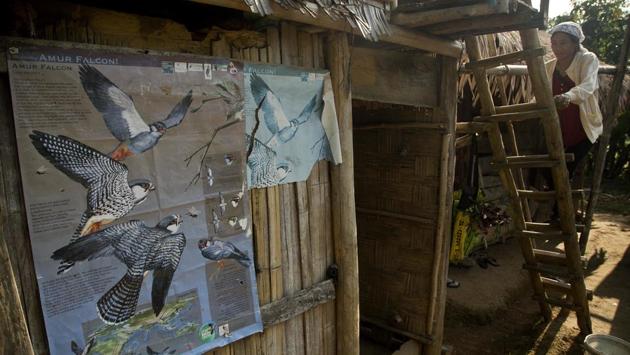
A Lotha Naga woman climbs a ladder beside a poster creating awareness about Amur falcons at Pangti village. When the birds began migrating to the area around 2000, villagers sold four for 100 rupees. Later they charged the same for half as many birds. (Anupam Nath / AP)
7/9
 View Photos in a new improved layout
Published on Nov 21, 2018 9:37 AM
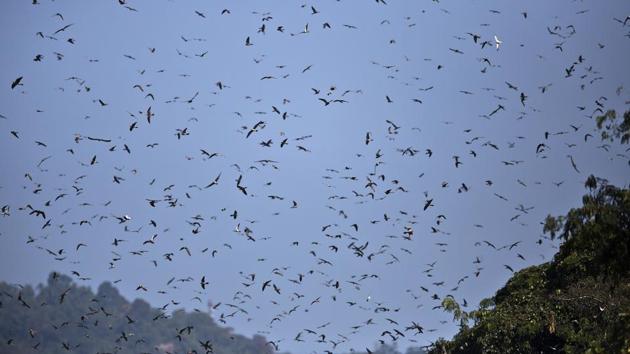
Amur falcons over the Doyang reservoir. “The government in Nagaland is also paying remuneration to those who are actively engaged in protecting and creating awareness about this small but beautiful raptor of the falcon family. Non-governmental organizations, too, are providing help,” said Mhathung Yanthan, a former government official from the district. (Anupam Nath / AP)
8/9
 View Photos in a new improved layout
Published on Nov 21, 2018 9:37 AM
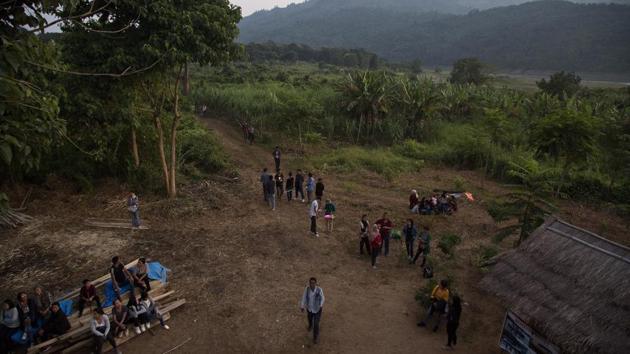
Tourists gather to watch Amur falcons near the Doyang reservoir. To celebrate the conservation story, the Nagaland government held an Amur Falcon Conservation Week and Festivals earlier this month in Wokha district, 400 kilometers east of Gauhati, the largest city in northeastern India. (Anupam Nath / AP)
9/9
 View Photos in a new improved layout
Published on Nov 21, 2018 9:37 AM


