
 E-Paper



Photos: Lifeline Express brings healthcare and hope to remote Indian villages
The Lifeline Express is a hospital on wheels that has been crisscrossing India for 27 years bringing cutting edge medical care to remote regions and villages using the Indian Railways network. The seven coach train, run by a small permanent staff assisted by volunteer doctors in the regions it passes, fills a gap left by inadequate public healthcare or expensive private facilities. The Lifeline Express, stationing in each district for a month, performs surgery ranging from cataracts and cancer to cleft palates and orthopaedics.
Updated on: Apr 17, 2018 9:54 AM IST

Share via


Copy link

1/11
 View Photos in a new improved layout
Updated on Apr 17, 2018 9:54 AM
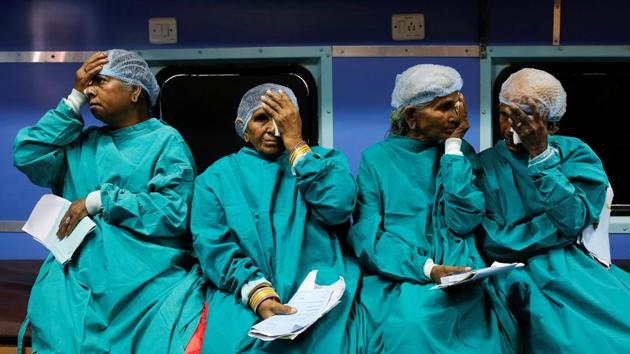
Patients cover their eyes as they wait before their cataract surgery on the Lifeline Express, at a railway station in Jalore, India. The Lifeline Express, a seven-coach train converted into a rolling hospital has crisscrossed India for 27 years to treat people living in areas with scarce healthcare. (Danish Siddiqui / REUTERS)
2/11
 View Photos in a new improved layout
Updated on Apr 17, 2018 9:54 AM
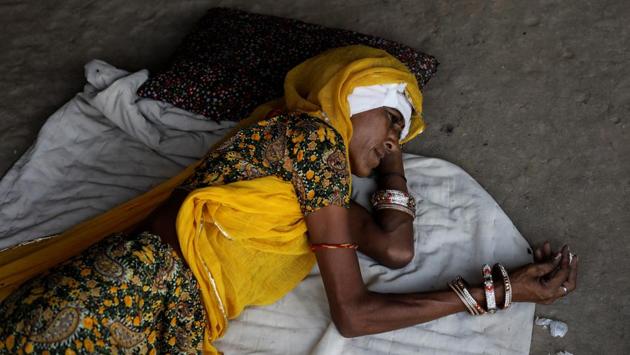
Bhawri Devi, 41, thought she was dying when she started losing her hearing last month. A government hospital near her remote village in Rajasthan lacked a specialist doctor. The nearest private hospital in Gujarat, told her treatment, middle ear surgery, would cost about Rs 50,000. “I didn’t even have 5,000 rupees,” said Devi, who returned home in despair. (Danish Siddiqui / REUTERS)
3/11
 View Photos in a new improved layout
Updated on Apr 17, 2018 9:54 AM
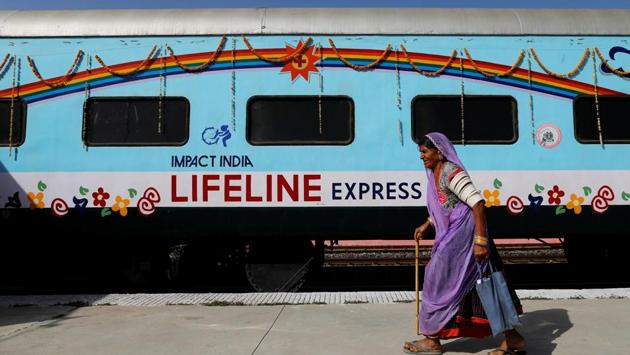
Days later came news of visiting specialists who would treat her for free. They arrived in early April as volunteers on the Lifeline Express, seen here parked at the railway station in Jalore, to treat people like Devi living in areas with inadequate healthcare. (Danish Siddiqui / REUTERS)
4/11
 View Photos in a new improved layout
Updated on Apr 17, 2018 9:54 AM
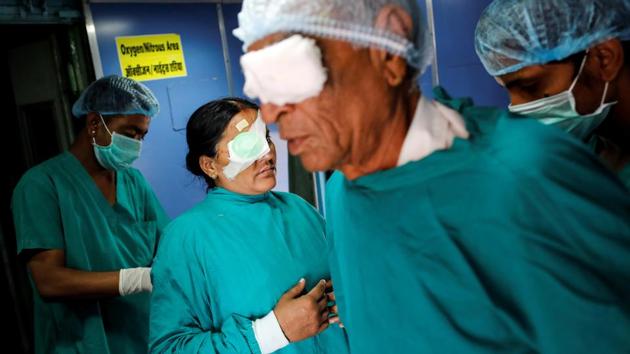
Patients with their eyes bandaged leave an operation theatre after cataract surgery, on the hospital train. Lifeline Express has treated about 1.2 million people since its launch in 1991 by the non-profit Impact India Foundation, said chief operating officer and doctor Rajnish Gourh. (Danish Siddiqui / REUTERS)
5/11
 View Photos in a new improved layout
Updated on Apr 17, 2018 9:54 AM
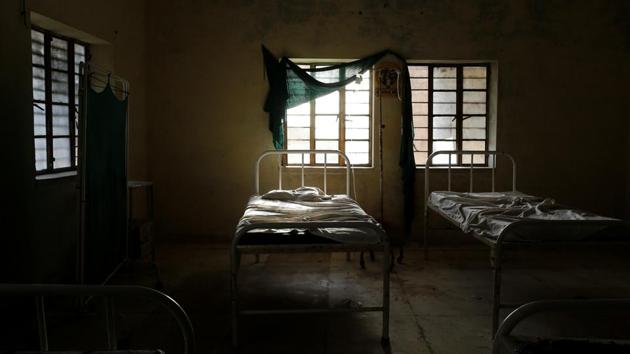
A general ward is seen inside a government Primary Health Centre at a village in Jalore. In a country that spends just one percent of its gross domestic product on healthcare, among the world’s lowest, the hospital on wheels fills a critical gap. (Danish Siddiqui / REUTERS)
6/11
 View Photos in a new improved layout
Updated on Apr 17, 2018 9:54 AM
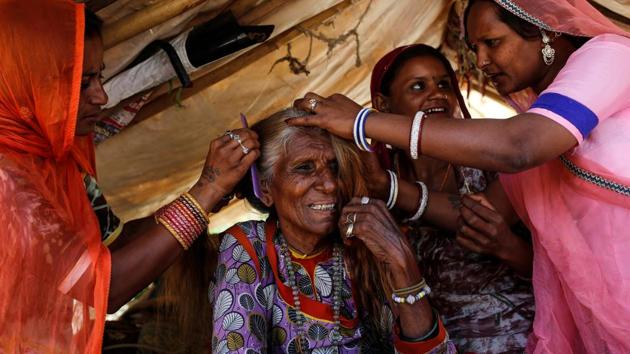
Movan, 77, is helped by her relatives as prepares to leave for her cataract surgery on the Lifeline Express. “I am never going to forget the name of this train, never in my life,” Movan said. Like Devi, the poor are caught between relying on a public health system trusted by few, or selling meagre assets to fund private treatment. (Danish Siddiqui / REUTERS)
7/11
 View Photos in a new improved layout
Updated on Apr 17, 2018 9:54 AM
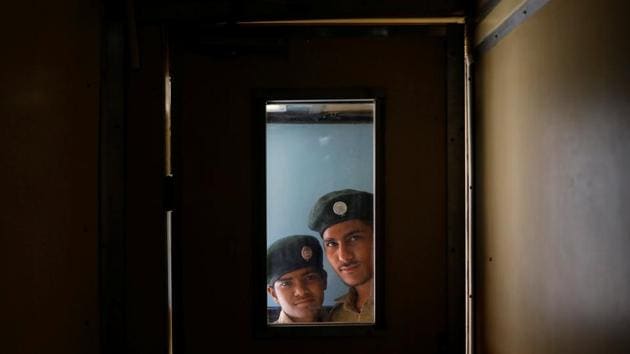
Volunteers from the National Cadet Corps wait to guide patients on the train. The government launched a scheme in February that aims to widen health insurance coverage to 500 million people, but critics say the plan is unlikely to work unless public health systems improve dramatically. Until then, options such as Lifeline Express offer crucial support. (Danish Siddiqui / REUTERS)
8/11
 View Photos in a new improved layout
Updated on Apr 17, 2018 9:54 AM
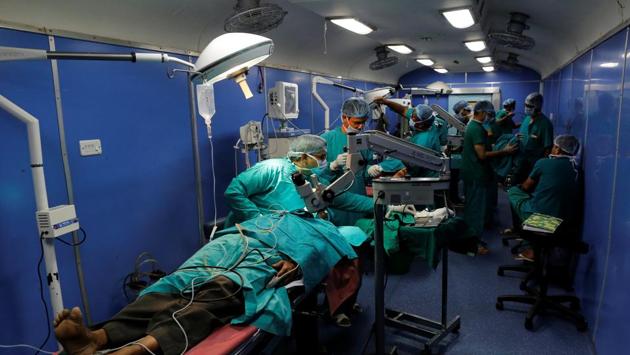
Doctors perform middle ear surgery in an operating theatre on the train. Decorated with mahogany flower garlands, the sky-blue train could be mistaken for a new passenger line. Inside, facilities could rival many public hospitals. It employs 20 permanent paramedic staff, with most doctors volunteering from nearby medical colleges or hospitals. (Danish Siddiqui / REUTERS)
9/11
 View Photos in a new improved layout
Updated on Apr 17, 2018 9:54 AM
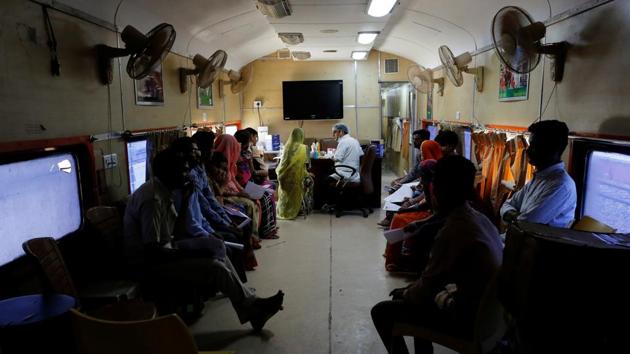
Patients wait for dental checkups on the Lifeline Express. Typically, it spends a month in a district, performing surgery ranging from cataracts and cancer to cleft palates and orthopaedics. The aim is not to compete with public healthcare, but support it. A second train is also in the works to cover the north and northeast. (Danish Siddiqui / REUTERS)
10/11
 View Photos in a new improved layout
Updated on Apr 17, 2018 9:54 AM
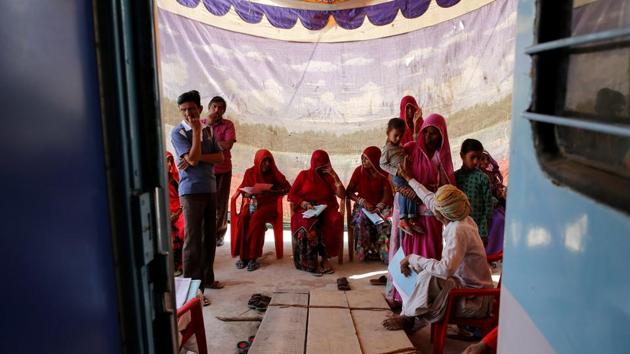
Patients and their relatives wait before the start of a cataract surgery. The train gives volunteer doctors and medical students an opportunity to hone their skills while doing satisfying community work. “Because we are working at the grassroots, we are exposed to different kinds of diseases,” said volunteer doctor Mehak Sikka. “You get to learn more.” (Danish Siddiqui / REUTERS)
11/11
 View Photos in a new improved layout
Updated on Apr 17, 2018 9:54 AM


