
 E-Paper



Photos: Rangers brave monsoon to save Assam’s rhinos
The Kaziranga National Park, 850-square-kilometre (330-square-mile) park, created in 1908 is home to rhinos, tigers, elephants and panthers and all are under threat from poaching. During rainy season, the threat to these animals especially one-horned rhinos becomes higher as the grass reaches head-height, providing perfect cover for poachers and also flooding forces the animals to move to higher ground, sometimes to the outskirts of the park. So far, three rhinos have been killed this year.
Updated on: Jul 10, 2019 12:33 PM IST

Share via


Copy link

1/9
 View Photos in a new improved layout
Updated on Jul 10, 2019 12:33 PM
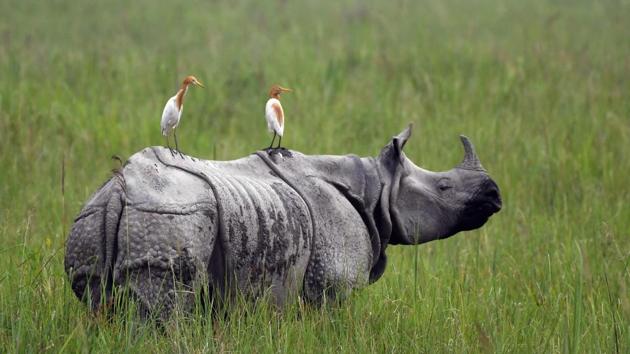
Egrets sit on a grazing one-horned rhinoceros in Kaziranga National Park, some 220 km from Guwahati. The monsoon may bring respite from the scorching heat, but for the rangers and animals at Kaziranga National Park it also brings danger as poachers take advantage of greater camouflage and flooding. (Biju Boro / AFP)
2/9
 View Photos in a new improved layout
Updated on Jul 10, 2019 12:33 PM
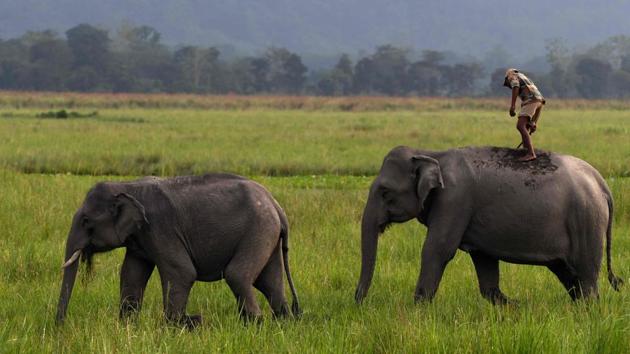
Mahout seen standing on an elephant as he takes them to their shelter in Kaziranga National Park. In rainy season, it can be an especially gruelling battle -- the grass reaches head-height, providing perfect cover for poachers and flooding forces the animals to move to higher ground, sometimes to the outskirts of the park. (Biju Boro / AFP)
3/9
 View Photos in a new improved layout
Updated on Jul 10, 2019 12:33 PM
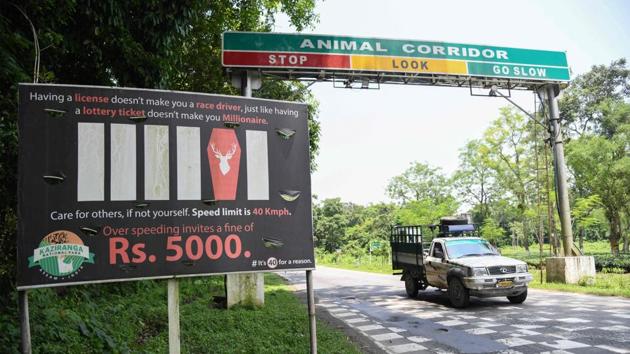
Vehicles drive past a signboard for the vehicles speed limit on National Highway 37 adjoining Kaziranga National Park. The 850-square-kilometre (330-square-mile) park, created in 1908 after the wife of the British viceroy visited and complained there were no rhinos, is also home to tigers, elephants and panthers, all under threat from poaching. (Biju Boro / AFP)
4/9
 View Photos in a new improved layout
Updated on Jul 10, 2019 12:33 PM
Forest guards climb a temporary surveillance tower in Kaziranga National Park. “We are always on our toes in this season. There is hardly any rest for us. Information about poachers entering the park comes anytime and we have to respond immediately,” explains ranger Gopi Kanta Deka. “We walk in groups from one anti-poaching camp to another or paddle boats during high floods to reach those areas from where the information has come in and get to the job quickly,” he adds. (Biju Boro / AFP)
5/9
 View Photos in a new improved layout
Updated on Jul 10, 2019 12:33 PM
Director of Kaziranga National Park P. Sivakumar (C) seen with Kohora forest ranger Salim Ahmed (R) in Kaziranga National Park. In 2014 poachers killed 27 rhinos inside the park followed by 16 in 2015, but a sharp increase in the number of rangers -- there are now 700 -- helped reduce this to seven in 2017 and six in 2018. Authorities are also taking the task of protecting them more seriously. (Biju Boro / AFP)
6/9
 View Photos in a new improved layout
Updated on Jul 10, 2019 12:33 PM
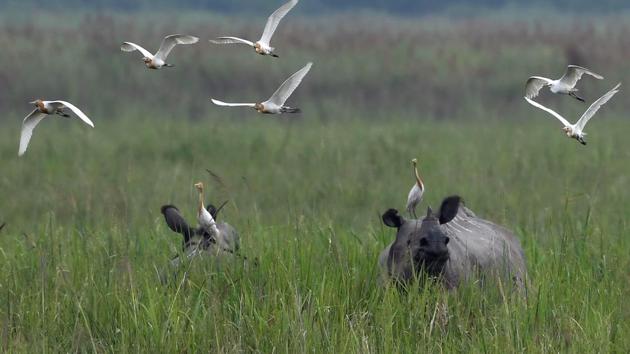
Three rhinos have been killed so far this year. “There is huge demand for the horns and international rackets are pumping in huge amounts of money, prompting poachers sometimes to risk their own lives,” wildlife activist Somyadeep Datta warns. Prized in some forms of traditional Chinese and South East Asian medicine, acolytes believe the horns containing keratin -- the same protein in human hair and nails -- can cure anything from cancer to curses, or can be used as an aphrodisiac. (Biju Boro / AFP)
7/9
 View Photos in a new improved layout
Updated on Jul 10, 2019 12:33 PM
Forest guards patrol on a speedboat on Diphlu river in Kaziranga National Park. They are on duty constantly for weeks at a time in this period, sometimes sleeping out in the open -- must follow the animals to protect them from harm. “We really feel bad when something bad like poaching happens to the animals,” says ranger Manoj Gogoi. (Biju Boro / AFP)
8/9
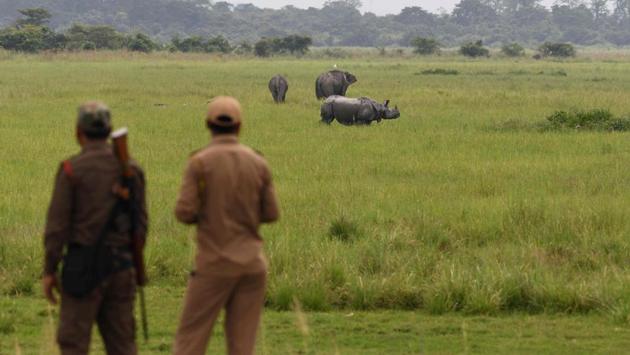 View Photos in a new improved layout
Updated on Jul 10, 2019 12:33 PM
One horn can fetch around $150,000 or around $60,000 per kilo according to media reports, which are huge sums for many in India and the opportunity to make such money often pushes the poor into poaching. (Biju Boro / AFP)
9/9
 View Photos in a new improved layout
Updated on Jul 10, 2019 12:33 PM


