
 E-Paper



Photos: There’s demand, but Patan’s Patola seems running out of weavers
If the heritage stepwell Rani Ki Vav - now being featured on the new Rs 100 note - is the pride of Patan, a small town in Gujarat, the other thing that is a speciality to this place is the double Ikat weave known as Patola. Hundreds of weaver families were once engaged in producing this prized fabric, but few among the traditional workforce are interested in weaving anymore -a decline brought about after the trade shortages of the second world war.
Updated on: Nov 22, 2018 4:53 PM IST

Share via


Copy link

1/8
 View Photos in a new improved layout
Updated on Nov 22, 2018 4:53 PM
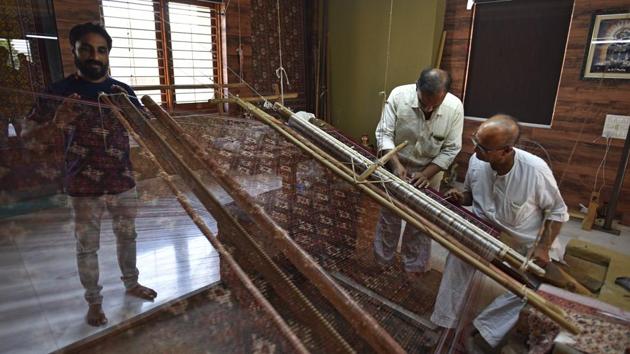
Two generations of a Salvi family work the loom to create the double ikat Patola, that is made only in this Gujarat town. If the Rani Ki Vav is the pride of Patan, the other thing that this little Gujarat town can claim to have a national monopoly over, is the double ikat silk weave. (Sanchit Khanna / HT Photo)
2/8
 View Photos in a new improved layout
Updated on Nov 22, 2018 4:53 PM
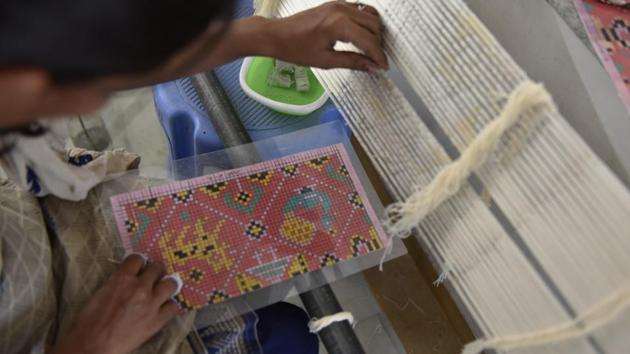
A weaver works on a sari at Patola House, a double storied space that acts as Rohit --a national award winning Patola weaver from Patan-- and his family’s workshop and an exhibition area. According to one story of its origins, Kumarpal, a ruler of Patan, was so fond of the Patola weave that he brought 700 families of weavers from Maharashtra, where this weave had originated, to Patan. (Sanchit Khanna / HT Photo)
3/8
 View Photos in a new improved layout
Updated on Nov 22, 2018 4:53 PM
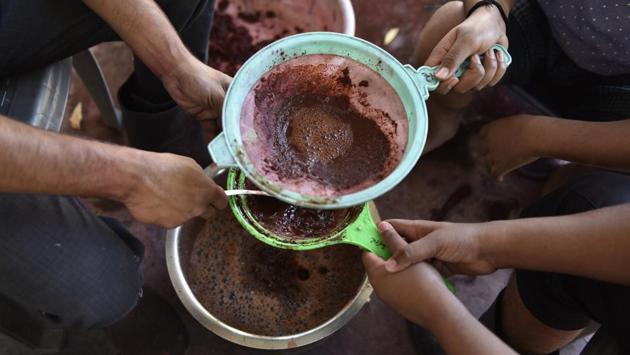
Pigment is prepared as part of the dying process. Another story associated with this weave is that an Indonesian king during a visit to India saw the handloom here and took the art to his country with a decree that only allowed Indonesian royalty to wear this weave. (Sanchit Khanna / HT Photo)
4/8
 View Photos in a new improved layout
Updated on Nov 22, 2018 4:53 PM
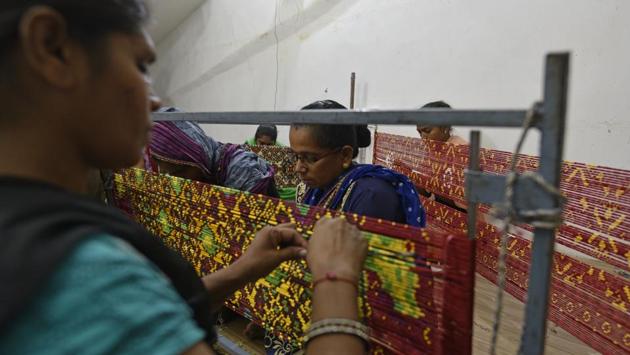
But over the years, in Patan, the number of traditional Patol weaver families has dwindled from 700 to just two or three. Bharat Kantilal Salvi, Rohit’s younger brother explained that there was a huge demand of Patola abroad and traders used to come via the Multan route but during the second world war, trade was disrupted, starting the downfall of the weavers. (Sanchit Khanna / HT Photo)
5/8
 View Photos in a new improved layout
Updated on Nov 22, 2018 4:53 PM
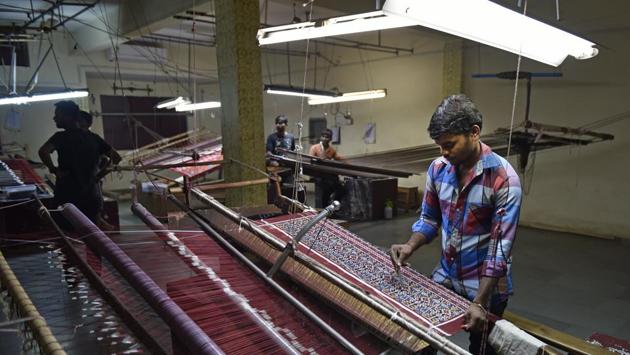
Royal patronage has given way to affluent new customers. The traditionally double ikat handloom fabric, with a sari costing upwards of ₹ 1.5 lakh has given way to mass-market ones that sell for ₹12-15,000 and use a single ikat pattern. But what is worrying is the loss of the traditional workforce. (Sanchit Khanna / HT Photo)
6/8
 View Photos in a new improved layout
Updated on Nov 22, 2018 4:53 PM
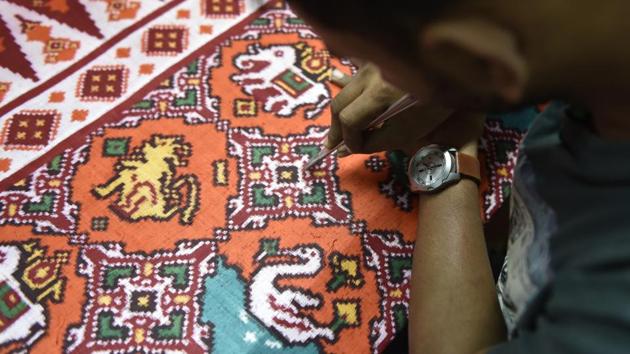
Now even though there is demand for the fabric, there aren’t enough weavers left, says Rohit’s nephew Rahul, a weaver and trained architect. He is the one who has designed Patola House. It’s time consuming work, and it is labour intensive. Multiple rounds of tie and dye are done before the weaving begins. (Sanchit Khanna / HT Photo)
7/8
 View Photos in a new improved layout
Updated on Nov 22, 2018 4:53 PM
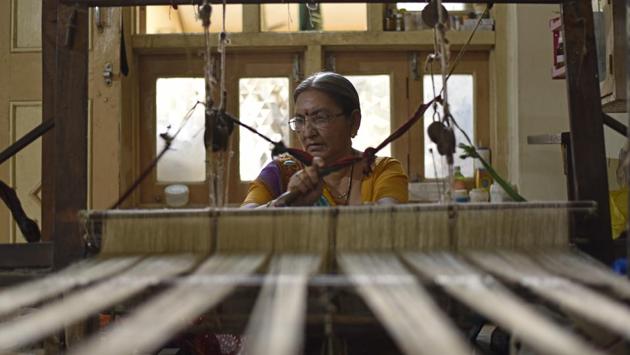
Waning interest among traditional artisans is something Patola shares with Mashru (pictured) – a handloom that was once woven across India but is today believed to be made only in Patan. Even here its production is shrinking. “The number of looms have gone down to 30-35 from 250, three-four decades back,” said Jagdish Khatri. (Sanchit Khanna / HT Photo)
8/8
 View Photos in a new improved layout
Updated on Nov 22, 2018 4:53 PM


