
 E-Paper



Photos| World Refugee Day: Rohingya in Mewat camps lack water, education and sanitation
Ahead of World Refugee Day, Hindustan Times visited seven Rohingya refugee camps spread across Mewat — three in Chandeni, two in Nangli, one in Jogipur ward-7 and one in Punhana and found that the refugees, burdened with a life in transit, are living without proper sanitation, education and healthcare facilities. Some hope to return to Myanmar one day, others find safety in India despite squalid conditions. The Supreme Court on May 11 designated nodal officers to address these concerns about the facilities in camps in Haryana and Delhi.
Updated on: Jun 20, 2018 2:37 PM IST

Share via


Copy link

1/13
 View Photos in a new improved layout
Updated on Jun 20, 2018 2:37 PM
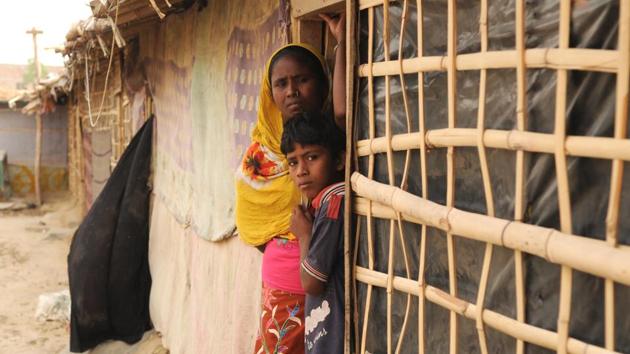
Refugees seen at Chandeni camp 2. The Supreme Court on May 11 designated local sub-divisional magistrates as nodal officers to address concerns about healthcare, food, sanitation and education of Rohingya refugees living in Haryana and Delhi camps. In the run up to the World Refugee Day, Hindustan Times found all camps in Mewat lacked drinking water and proper sanitation. (Parveen Kumar / HT Photo)
2/13
 View Photos in a new improved layout
Updated on Jun 20, 2018 2:37 PM
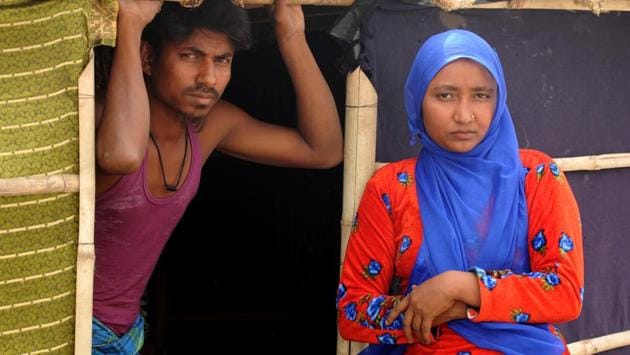
More than 46 km away from Gurugram, Chandeni hosts three camps. Last month, a fire damaged 57 dwellings in Chandeni camp 1. Mohd. Jawed, 34, was among those who lost all their belongings in the fire. He lost all documents that established his identity in India along with three lakh in cash. Now he and his wife are trying to build a temporary hut before the monsoon sets in. (Parveen Kumar / HT Photo)
3/13
 View Photos in a new improved layout
Updated on Jun 20, 2018 2:37 PM
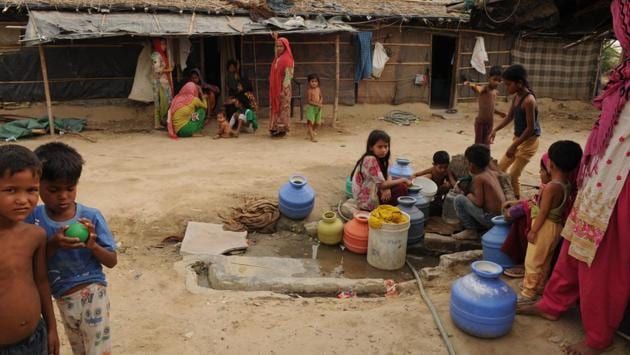
Children fill containers with drinking water at the Chandeni camp 2. Residents here contribute to pay Rs 35,000 per year as rent for the plot of land where they have made dwellings. Nisar Ahmad, a local said that the court will decide the refugees’ fate and they have no issues with them. While they lack work here, the area is safe. (Parveen Kumar / HT Photo)
4/13
 View Photos in a new improved layout
Updated on Jun 20, 2018 2:37 PM
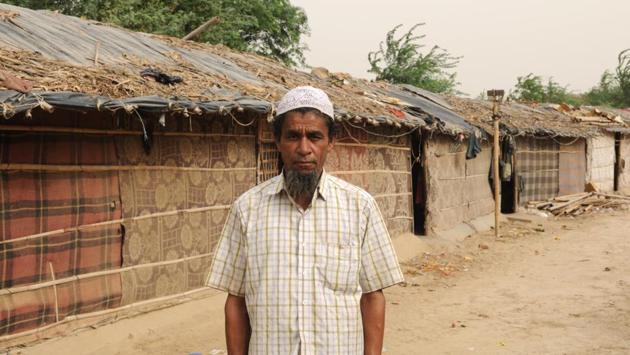
Mohammad Hussain, 45, runs a small tea shop in Chandeni camp 2. Back home in Myanmar, it was much bigger. He left in 2012 when communal tensions began rising. A perilous journey through Bangladesh led him to Kolkata and then Jammu for a few days, after which he set out for Mewat. “We were scared. We found that Muslims lived in Mewat and, therefore, moved here,” he said. (Parveen Kumar / HT Photo)
5/13
 View Photos in a new improved layout
Updated on Jun 20, 2018 2:37 PM
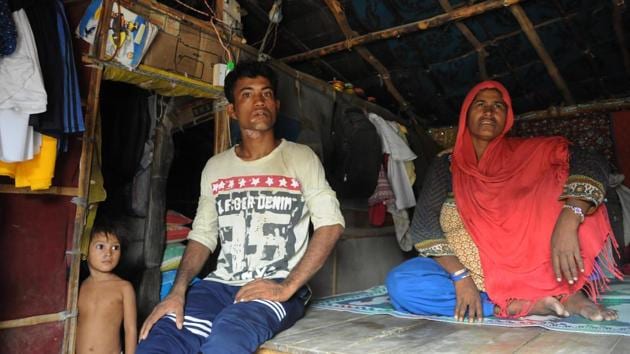
Nur Begum, 50, has been living at Chandeni camp 2 with her two sons, a daughter-in-law and grandchildren for the past four years. Her shanty is made up of cardboard supported by bamboo sticks and covered with black tarpaulin. Nur’s husband and one-year-old infant were killed in the 2012 violence in Buthidaung. Her son Dilbar Hussain (L), also sustained burns when a portion of the ceiling fell on him. (Parveen Kumar / HT Photo)
6/13
 View Photos in a new improved layout
Updated on Jun 20, 2018 2:37 PM
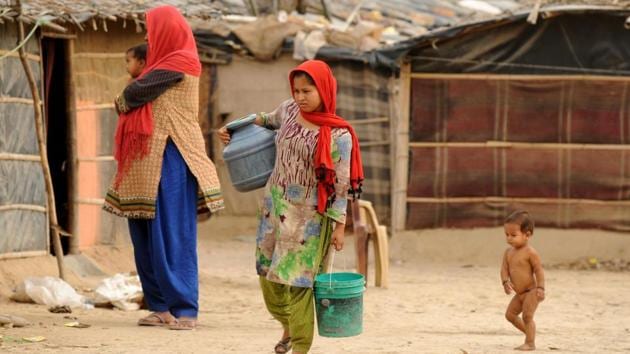
Residents at Chandeni camp 3 shell out Rs 600 for a tanker of water daily. Nur Hassan who moved here from Mathura six months ago said that they have requested the UN to address their situation but no one has listened. Kids are falling ill as with no proper toilets present to stop diseases. And a lack of clean drinking water is a common problem across the camps. (Parveen Kumar / HT Photo)
7/13
 View Photos in a new improved layout
Updated on Jun 20, 2018 2:37 PM
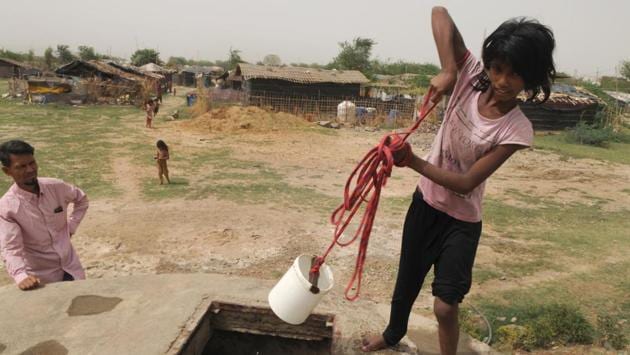
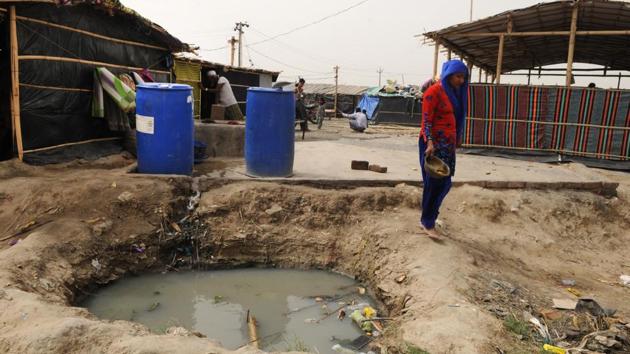
A girl fetches water from a well at Nangli camp 2 which houses 90 families of 330 refugees. Drinking water comes from a tanker. For bathing and washing, they make do from the well. Earlier, a teacher from a non-profit organisation would come to teach the children. That hasn’t been happening for the past one year. (Parveen Kumar / HT Photo)
8/13
 View Photos in a new improved layout
Updated on Jun 20, 2018 2:37 PM
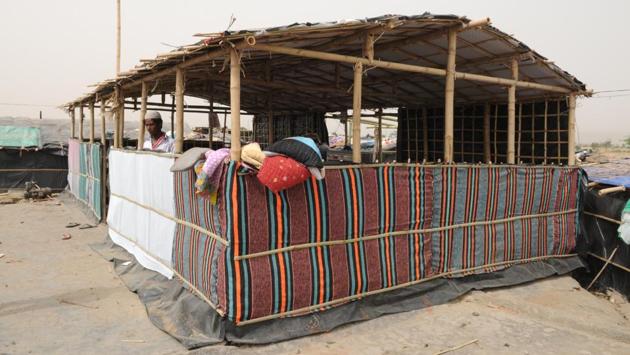
A makeshift mosque is seen at Chandeni camp 2. All the houses at Nangli 2 camp are made of bamboo and covered with black tarpaulin. The camp has reported three fire incidents. A few months back, four houses in the camp had caught fire and a makeshift mosque was burnt down more than a year back. In another accident, a 60-year-old had died. (Parveen Kumar / HT Photo)
9/13
 View Photos in a new improved layout
Updated on Jun 20, 2018 2:37 PM
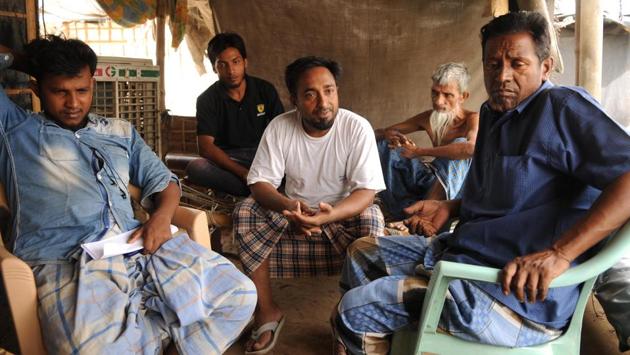
There are 90 families in the Jogipur Ward-7 camp with 270 people, said Zaibul Alam, 26, who is the ‘zimmedar’ (incharge). However as per the UNHCR partner agency, there are 301 residents. Alam alleged that they are can’t get birth certificates for their children as the UNHCR certificate is not accepted by the government. Last year, 32 refugees in the camp got Aadhar cards made but they were taken away by the CID. (Parveen Kumar / HT Photo)
10/13
 View Photos in a new improved layout
Updated on Jun 20, 2018 2:37 PM
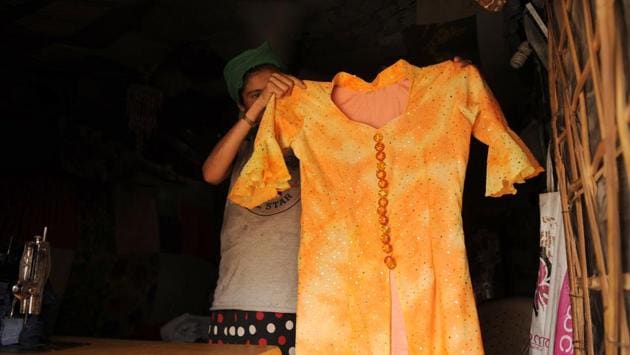
Asma, 30, shows a dress she stitched at Jogipur Ward-7 camp. “Back in Burma, my husband used to operate a boat. We had two boats and lived in a pucca house,” she said of her time in Myanmar. Children in the camp used to go to the nearby Chaudhary Mohd. Yasin Khan Meo Senior secondary school till three months ago but had to drop out after the school turned private. (Parveen Kumar / HT Photo)
11/13
 View Photos in a new improved layout
Updated on Jun 20, 2018 2:37 PM
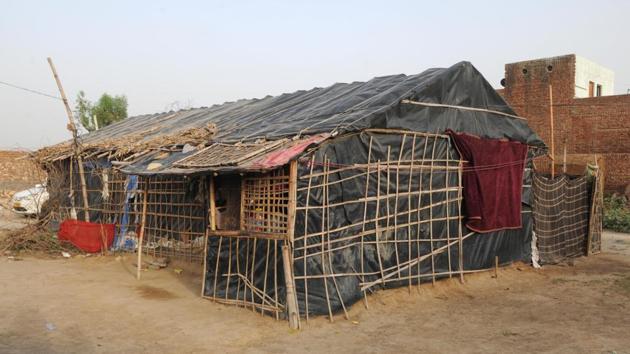
A makeshift tent seen at Punhana camp. Fatima, a resident, left Myanmar with her family to escape the violence. “We were forced to leave Burma because of communal tensions. Buddhists told us that Burma was not our country and we didn’t have any right to stay there. Over here, the plot owner wants us to leave the place. Where do we go? Our life is perennially in transit,” the 17-year-old said. (Parveen Kumar / HT Photo)
12/13
 View Photos in a new improved layout
Updated on Jun 20, 2018 2:37 PM
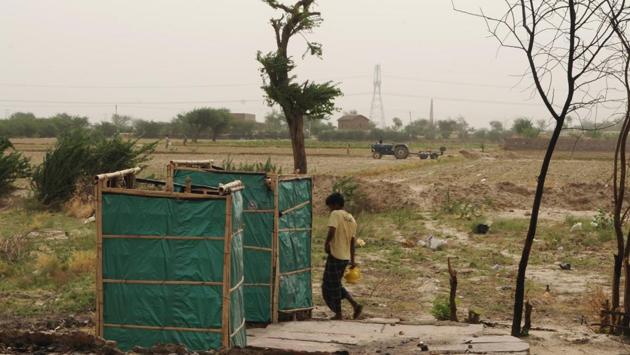
A makeshift toilet at Chandeni camp 1. Rehana Akhtar of Punhana camp said that there are insects all around due to which the children are always falling sick. There are two makeshift toilets in the camp for men but none for women. She lacks a toilet inside her home and is also forced to go out in the open to defecate. (Parveen Kumar / HT Photo)
13/13
 View Photos in a new improved layout
Updated on Jun 20, 2018 2:37 PM


