
 E-Paper



Charge of the ‘light’ brigade: HT Pune photographers wish you a happy Diwali
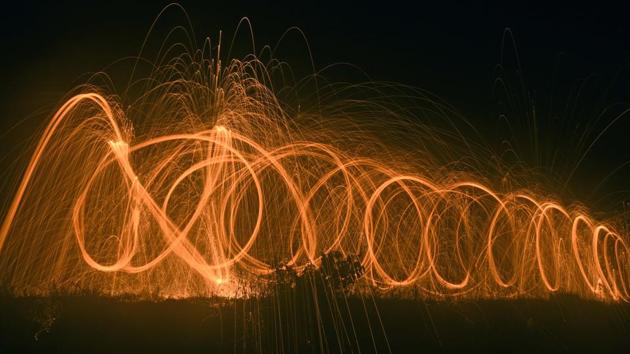
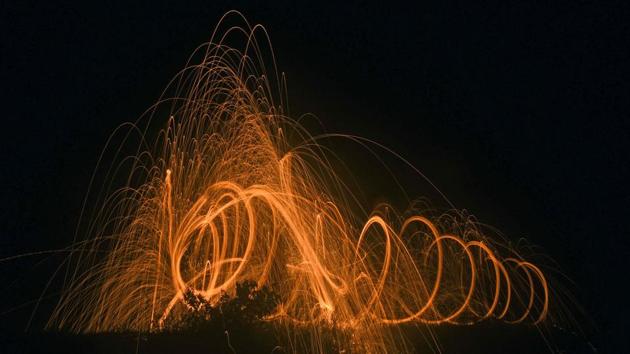
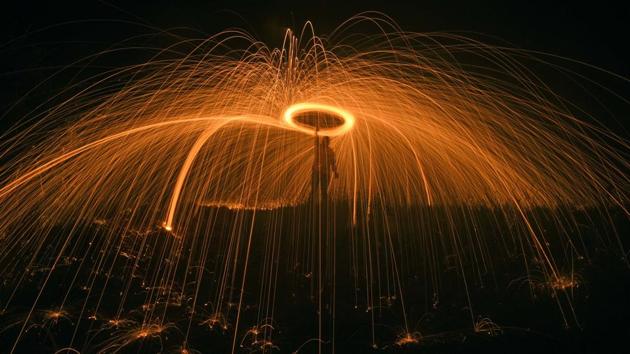
Hindustan Times, Pune, photographers find an alternative to bring out the essence of the festival of lights which does not pollute the environment; Light Trails. Light trails are created by setting steel wool on fire and spinning it, which is in turn captured by camera. This project was done exclusively by HT Pune photographers on Tuesday. (Pratham Gokhale/HT Photo)
Updated on: Oct 19, 2017 3:44 PM IST

Share via


Copy link

1/6
 View Photos in a new improved layout
Updated on Oct 19, 2017 3:44 PM
Hindustan Times, Pune, photographers find an alternative to bring out the essence of the festival of lights which does not pollute the environment; Light Trails. Light trails are created by setting steel wool on fire and spinning it, which is in turn captured by camera. This project was done exclusively by HT Pune photographers on Tuesday. (Pratham Gokhale/HT Photo)
2/6
 View Photos in a new improved layout
Updated on Oct 19, 2017 3:44 PM
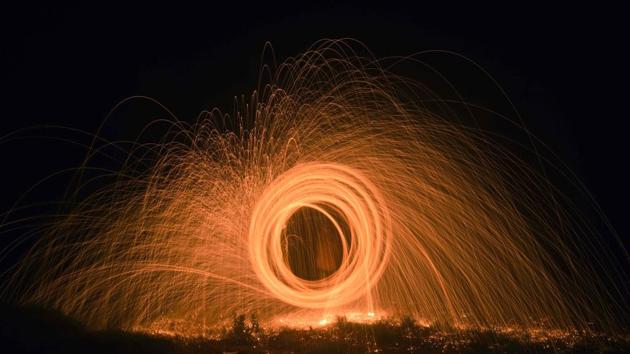
For capturing a steel wool light trail, steel wool is set on fire and is then spun, following which it creates a sort of visual distortion. (Pratham Gokhale/HT Photo)
3/6
 View Photos in a new improved layout
Updated on Oct 19, 2017 3:44 PM
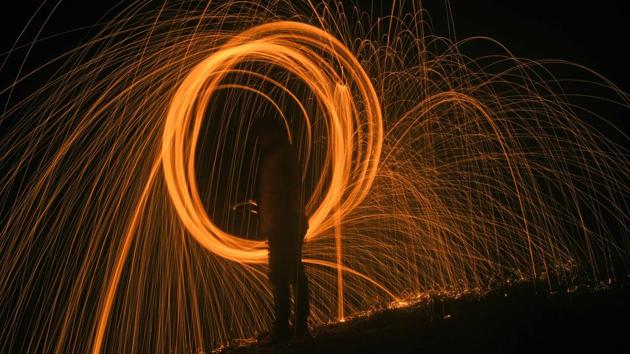
This light distortion is then captured by a DSLR camera or any camera whose aperture, ISO and shutter speed can be altered manually. (Pratham Gokhale/HT Photo)
4/6
 View Photos in a new improved layout
Updated on Oct 19, 2017 3:44 PM
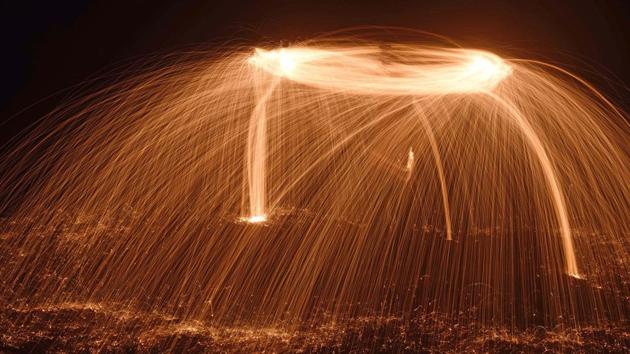
The first step to capture it is to set the ISO to a lower limit, preferably to ISO 100, depending on the lighting conditions. (HT Photo)
5/6
 View Photos in a new improved layout
Updated on Oct 19, 2017 3:44 PM
The next step is to set the aperture to an upper limit, preferably anywhere between f/8 and f/32, depending on the subject that you are shooting, lighting conditions and the make of your camera. After this, the shutter speed should be set to the lower limit or to ‘BULB’ mode so as to get a long exposure. (HT Photo)
6/6
 View Photos in a new improved layout
Updated on Oct 19, 2017 3:44 PM


