
 E-Paper



Photos: China reins Uighur culture while promoting tourism in Xinjiang
Xinjiang, a fraught region where flare-ups of interethnic violence have led to unprecedented levels of surveillance, is one of the fastest growing areas for tourism in China. Here, authorities have created a parallel universe for tourists and locals -- a place where travellers sightsee just a stone's throw from internment camps. The tourists are only shown a carefully curated version of traditional customs and culture.
Updated on: Jul 16, 2019 10:49 AM IST

Share via


Copy link

1/10
 View Photos in a new improved layout
Updated on Jul 16, 2019 10:49 AM
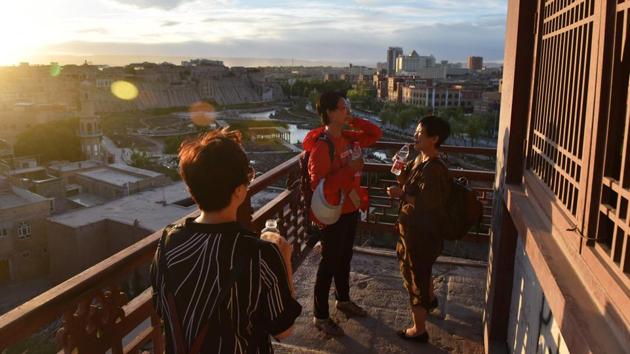
Tourists in the restored old city area of Kashgar, in China's western Xinjiang region. From the expansive dunes of the Taklamakan Desert to the snow-capped peaks of Tianshan, Chinese authorities are selling troubled Xinjiang as a tourist idyll, welcoming travellers even as they send locals to internment camps. (Greg Baker / AFP)
2/10
 View Photos in a new improved layout
Updated on Jul 16, 2019 10:49 AM
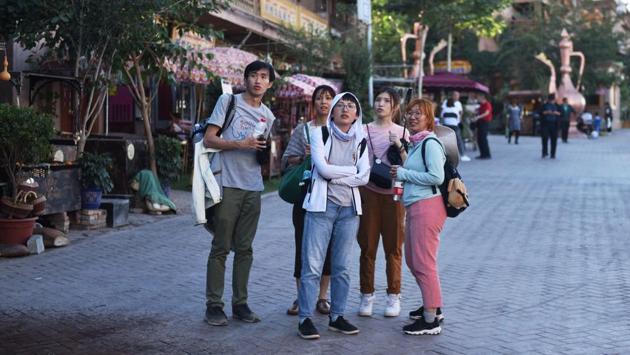
Malaysian tourists seen in the restored old city area of Kashgar. The government has rounded up an estimated one million Uighurs and other mostly Muslim Turkic-speaking minorities into re-education camps in the tightly-controlled region in China’s northwest, but it has also created a parallel universe for visitors, who are only shown a carefully curated version of traditional customs and culture. (Greg Baker / AFP)
3/10
 View Photos in a new improved layout
Updated on Jul 16, 2019 10:49 AM
Uighur men dance after the Eid-ul-Fitr prayers outside the Id Kah mosque in Kashgar. Josh Summers, an American who lived in Xinjiang for more than a decade and wrote travel guides for the region, said, “Uighur culture is being boiled down to just song and dance. What makes me sad is what ends up happening is there are only very specific parts of Uighur culture that get maintained because of the tourism.” (Greg Baker / AFP)
4/10
 View Photos in a new improved layout
Updated on Jul 16, 2019 10:49 AM
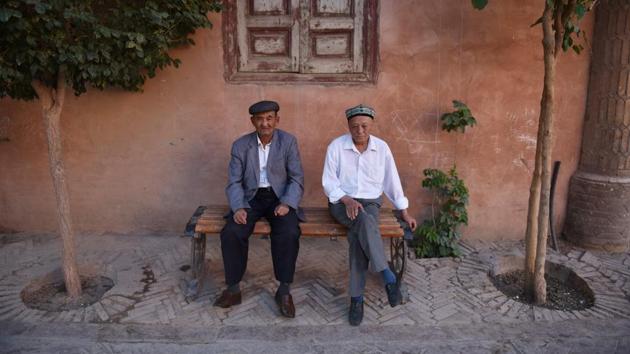
Uighur men rest in the restored old city area of Kashgar. But while ethnic song and dance is showcased to tourists, Uighurs are often restricted in how they express their own culture. Large, spontaneous gatherings of Uighurs -- even if they involve dancing -- are less frequent because of tightened security, said Summers. (Greg Baker / AFP)
5/10
 View Photos in a new improved layout
Updated on Jul 16, 2019 10:49 AM
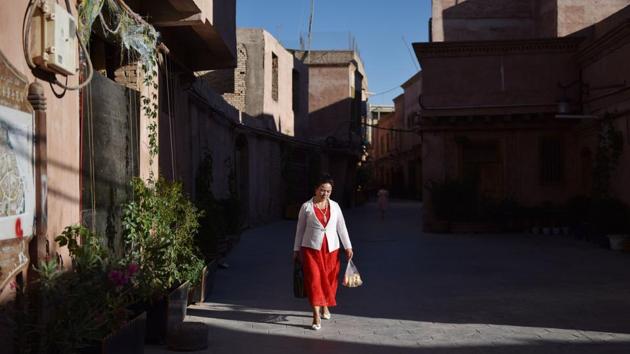
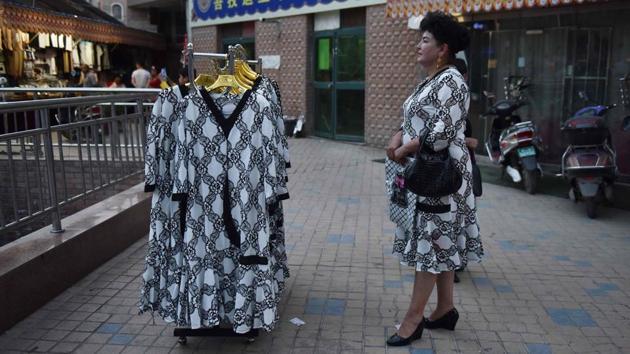
A woman walks in the restored old city area of Kashgar. Xinjiang is one of the fastest growing areas for tourism in China. Armed police and frequent checkpoints have not dampened the flow of vacationers visiting the region, which in 2018 saw a 40 percent increase year-on-year of visits -- mainly from domestic tourists -- outstripping the national average by 25 percent, according to official figures. (Greg Baker / AFP)
6/10
 View Photos in a new improved layout
Updated on Jul 16, 2019 10:49 AM
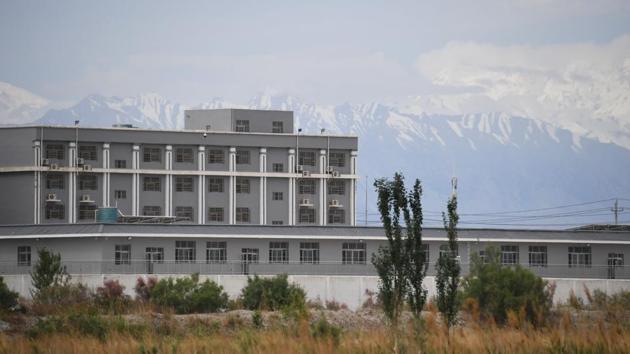
A facility believed to be a re-education camp where mostly muslim ethnic minorities are detained, north of Akto in China's northwestern Xinjiang region. Travellers to the city are barred from witnessing the most controversial part of Xinjiang’s security apparatus: the network of internment camps spread across the vast region. (Greg Baker / AFP)
7/10
 View Photos in a new improved layout
Updated on Jul 16, 2019 10:49 AM
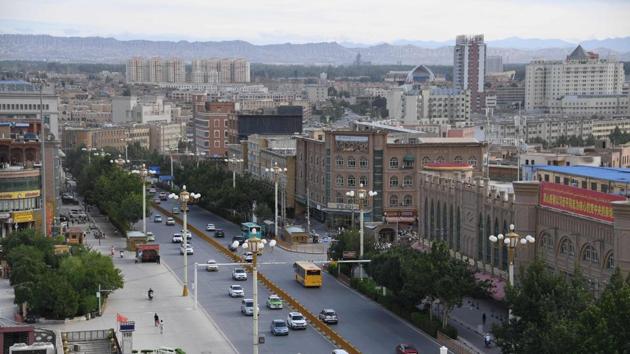
A street in Kashgar. “The violence that is being inflicted on the bodies of Uighur and other Muslim people...has been rendered invisible,” said Rachel Harris, who studies Uighur culture and music at the School of Oriental and African Studies University of London. “For a tourist who goes and travels around a designated route, it all looks nice,” she added. (Greg Baker / AFP)
8/10
 View Photos in a new improved layout
Updated on Jul 16, 2019 10:49 AM
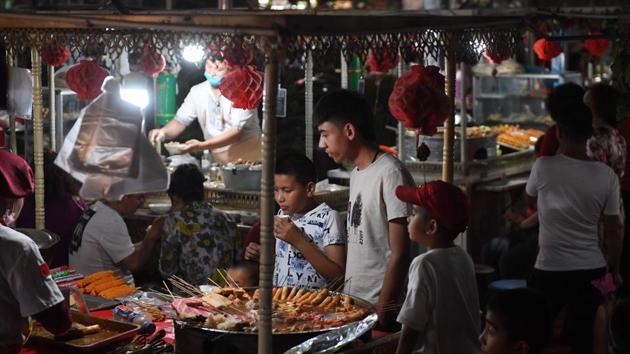
People at a night market Kashgar. Night markets too are more controlled. In Hotan, what used to be an outdoor night market is now inside a white tent, where red lanterns hang from the ceiling and uniform food stalls adorned with Chinese flags sell lamb skewers, but also sushi and seafood. (Greg Baker / AFP)
9/10
 View Photos in a new improved layout
Updated on Jul 16, 2019 10:49 AM
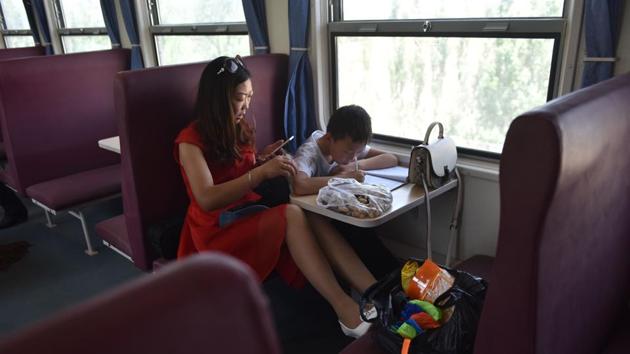
A woman and child on a train between Hotan and Kashgar. Over the past few years, cultural leaders in the Uighur community have disappeared, raising fears they have been detained. (Greg Baker / AFP)
10/10
 View Photos in a new improved layout
Updated on Jul 16, 2019 10:49 AM


