
 E-Paper



Photos: Film on ‘Pakistan’s toughest woman’ makes a bid for the Oscars
Nazo Dharejo and her sisters grabbed their Kalashnikov and battled against 200 armed men who surrounded their house in a gunfight which laurelled her as “Pakistan’s toughest woman”, and became the subject of a film which has now entered the 2018 Academy Awards race.
Updated on: Nov 29, 2017 9:51 AM IST

Share via


Copy link

1/8
 View Photos in a new improved layout
Updated on Nov 29, 2017 9:51 AM
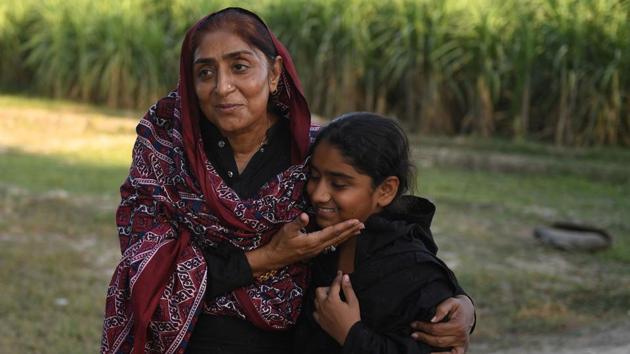
Mukhtiar Naz (L), known as Waderi Nazo Dharejo with her daughter Urooj in Qazi Ahmed, Pakistan. A fierce gunfight earned her the moniker of ‘Pakistan’s toughest woman’, and became the subject of the film ‘My Pure Land’ which has been entered in next year’s Academy Awards, vying for glory alongside heavy-hitters such as Angelina Jolie’s “First They Killed My Father” and Joachim Trier’s “Thelma”. (Asif Hassan / AFP)
2/8
 View Photos in a new improved layout
Updated on Nov 29, 2017 9:51 AM
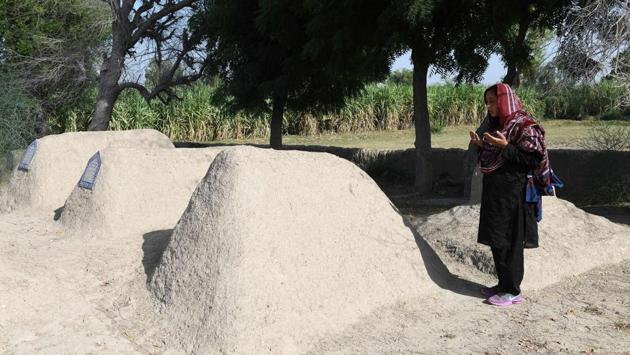
Dharejo offers prayer at the graves of her relatives in Qazi Ahmed. As 200 armed men surrounded her home on a hot August night in 2005, Nazo Dharejo, her sisters, husband and some loyal friends grabbed their Kalashnikov and puny stock of ammunition and climbed to the roof as household staff made daring runs for ammunition until daylight broke. (Asif Hassan / AFP)
3/8
 View Photos in a new improved layout
Updated on Nov 29, 2017 9:51 AM
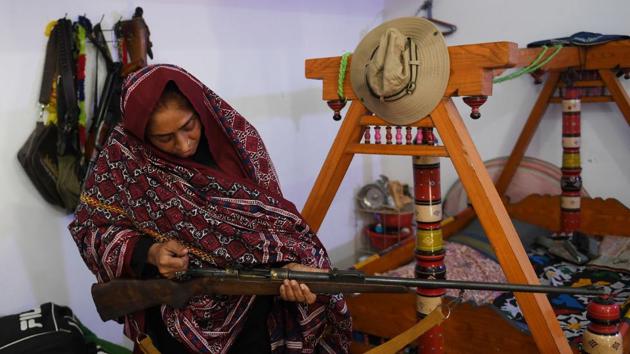
A world away from Hollywood’s red carpet, at the ancestral home she fought for in Pakistan’s Sindh province, she described the night which could lead to Oscar glory. “I will kill them or die here but never retreat,” Dharejo, now in her late 40s, recalled saying as she checked a gun. (Asif Hassan / AFP)
4/8
 View Photos in a new improved layout
Updated on Nov 29, 2017 9:51 AM
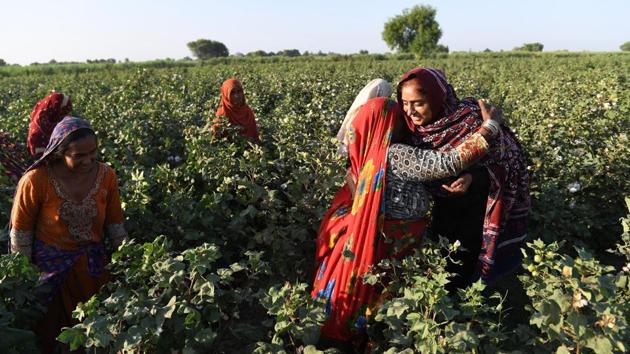
Dharejo meets workers at her agricultural field. When her father died, the women who visited to pay condolences taunted them that their family line had ended. But Dharejo’s determination --particularly her defiant stand over her family’s property years later --slowly turned the tide. Soon neighbours began to speak of her as Waderi, a new feminine version of the male honorific Wadera meaning something akin to a feudal “Lady”. (Asif Hassan / AFP)
5/8
 View Photos in a new improved layout
Updated on Nov 29, 2017 9:51 AM
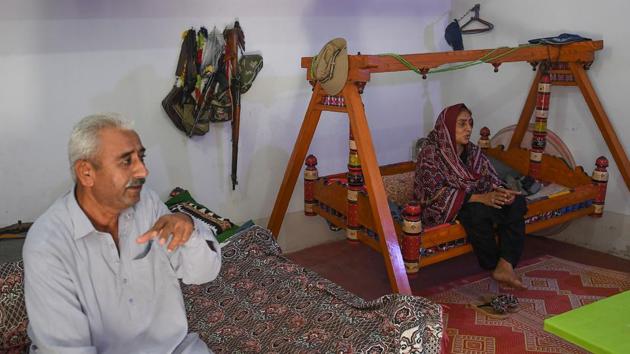
Dharejo rocked gently on a swing bed next to her husband Zulfiqar (L) in her sparse drawing room, recalling how he begged her to stand down but she refused, facing down armed relatives who had long sought to usurp her family’s property. A five-year legal battle eventually saw her foes pay half a million rupees ($4,800) in compensation and offer a public apology -- an act of utmost disgrace in rural Pakistan. (Asif Hassan / AFP)
6/8
 View Photos in a new improved layout
Updated on Nov 29, 2017 9:51 AM
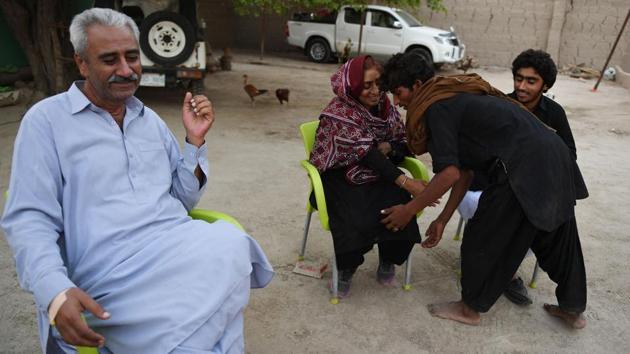
“She has become such a huge tree spreading soothing shade to the people around her,” commented Zulfiqar Dharejo as his wife, draped in a traditional Sindhi shawl met with workers. Born to a conservative feudal family she persuaded her father to allow her and her sisters to study, all the way to a degree in economics, defying rural Pakistani cultural norms of the time to educate daughters and teach them they were as good as boys. (Asif Hassan / AFP)
7/8
 View Photos in a new improved layout
Updated on Nov 29, 2017 9:51 AM
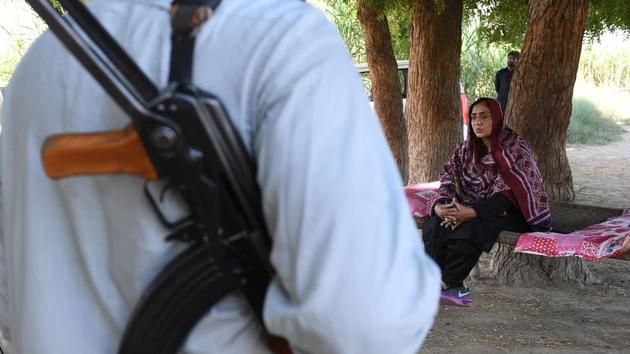
But the modern justice system has made few inroads into rural Sindh, where little has changed for centuries in a society dominated by feudalism, and the bloody years-long fight over her family’s land threatened many times to derail her progress. “It kept intensifying. Five, six murders took place and in 1992 my brother was also murdered,” she explained. (Asif Hassan / AFP)
8/8
 View Photos in a new improved layout
Updated on Nov 29, 2017 9:51 AM


