
 E-Paper



Photos: Hawaii town hopes lava tourism will bring economic relief
Businesses on Hawaii’s Big Island are calling for a lava viewing site of the erupting Kilauea volcano, but authorities say it’s been difficult these past months to set one up while keeping people safe. Especially hit by this passing opportunity to turn a natural disaster into a tourism money maker is Pahoa, the island’s gateway to the Hawaii Volcanoes National Park, its biggest attraction. And while authorities mull over whether to have moving tours or a dedicated viewing site, businesses say they’re inching close to running dry.
Updated on: Jul 21, 2018 1:03 PM IST

Share via


Copy link

1/8
 View Photos in a new improved layout
Updated on Jul 21, 2018 1:03 PM
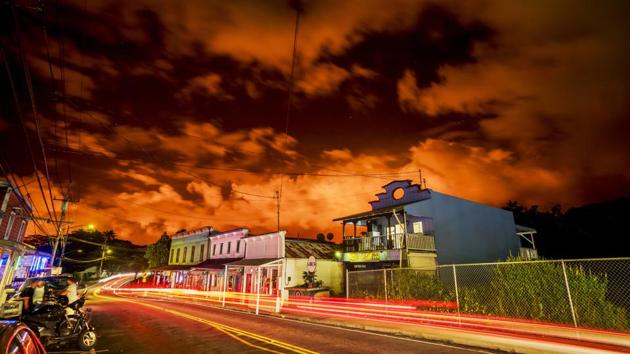
The night sky is illuminated by a lava eruption in Pahoa, Hawaii. Stunning images of Kilauea volcano erupting have captivated people around the world. But it’s nearly impossible for residents and visitors on the ground to see the lava -- a fact that’s squeezing the tourism dependent local economy. Businesses are calling for a lava viewing site, but authorities say it’s difficult to set one up safely. (Dennis Oda / AP)
2/8
 View Photos in a new improved layout
Updated on Jul 21, 2018 1:03 PM
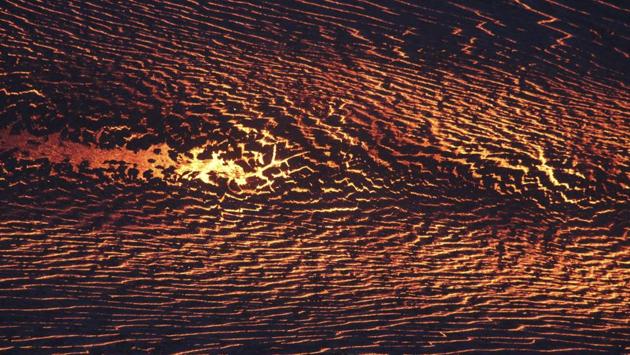
The area where lava is bursting from the ground is under a mandatory evacuation order. Residents nearby may go to their homes, but the county restricts access for everyone else except scientists, authorities like the National Guard and a handful of escorted media. Officials have cracked down on violators, issuing citations to more than 80 people for loitering in a restricted disaster area. (US Geological Survey via AP)
3/8
 View Photos in a new improved layout
Updated on Jul 21, 2018 1:03 PM
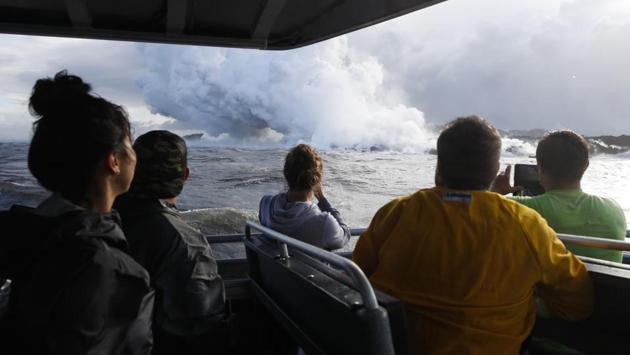
People watch a plume of steam as lava enters the ocean. One explosion sent lava flying through the roof of a tour boat off Big Island, injuring at least 13 people. Diane Ley, Hawaii County’s director of research and development, said she’s been working on setting up a lava viewing site for nearly two months. The injuries from the tour boat only validate the county’s caution, she said. (Jae C. Hong / AP)
4/8
 View Photos in a new improved layout
Updated on Jul 21, 2018 1:03 PM
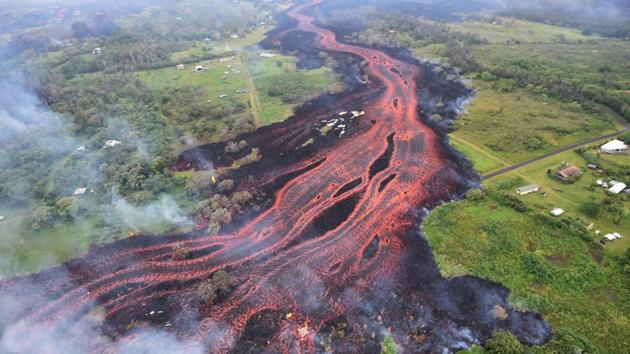
Pahoa, which is just a few miles from where the volcano is pumping a river of molten rock into the ocean, serves as a gateway to Hawaii Volcanoes National Park, which is normally the state’s most popular tourist attraction but has closed indefinitely. “Our town is dying very, very fast and very, very dramatically,” said State Sen. Russell Ruderman, who owns a natural foods store in Pahoa. (US Geological Survey via AP FIle)
5/8
 View Photos in a new improved layout
Updated on Jul 21, 2018 1:03 PM
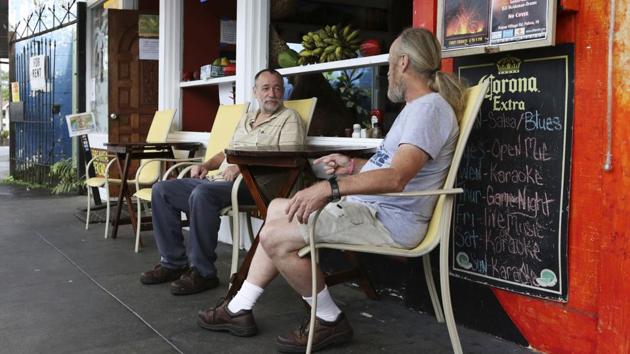
Brothers Ed (L), and Mike Arends, who evacuated their homes in the Leilani Estates area sit outside Pele’s Kitchen restaurant in Pahoa. Restaurants and shops in Pahoa have lost 50 to 90% of their business, said Matthew Purvis, president of the Mainstreet Pahoa Association. This is partly because many residents have lost their homes and moved, but a significant chunk is because fewer tourists are visiting. (Caleb Jones / AP File)
6/8
 View Photos in a new improved layout
Updated on Jul 21, 2018 1:03 PM
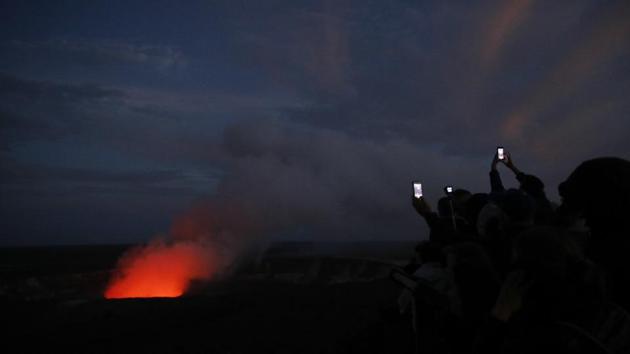
Currently, only helicopter and boat-tour passengers — paying about $250 each — are able to see the lava in person. John Tarson, owner of Epic Lava Tours, said the current restrictions are crushing him. “They’ve effectively cut my business’ legs off. And there’s nothing that can be done to save it unless they reopen the tourism industry, unless they stop criminalizing people for wanting to see lava,” Tarson said. (Jae C. Hong / AP)
7/8
 View Photos in a new improved layout
Updated on Jul 21, 2018 1:03 PM
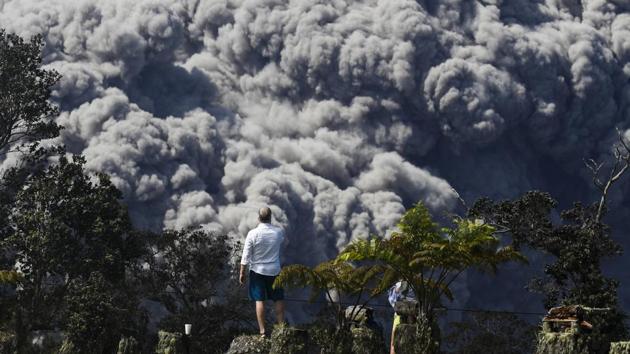
Jack Jones, visiting from Madison, Wisconsin, takes pictures at a country club in Volcano, Hawaii as a huge ash plume rises from the summit of Kiluaea. The volcano has been erupting continuously for 35 years, attracting travellers. But now, Kilauea is behaving differently, erupting as much as 3,500 cubic feet per second compared with about 141 cubic feet two years ago. (Jae C. Hong / AP)
8/8
 View Photos in a new improved layout
Updated on Jul 21, 2018 1:03 PM


