
 E-Paper



Photos: Henri Cartier-Bresson’s India photos fetch high price at NY auction
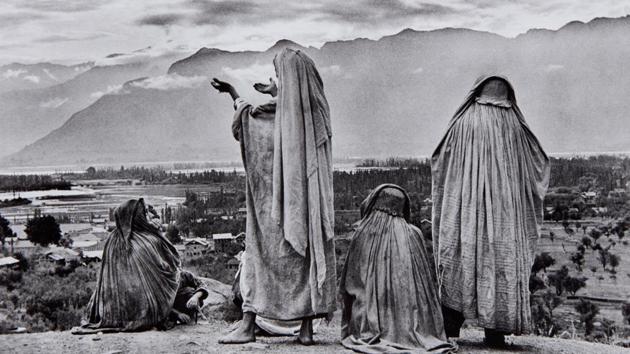
Henri Cartier-Bresson's photographs from the personal collection of Peter Fetterman were recently auctioned in New York. A photograph of Srinagar from 1948 sold for $32, 500 among other India works.
Updated on: Dec 15, 2017 9:47 AM IST

Share via


Copy link

1/8
 View Photos in a new improved layout
Updated on Dec 15, 2017 9:47 AM
Srinagar, Kashmir, 1948. This photograph, estimated at $8000- 12000, sold for $32,500 at Phillips auction house in New York. Arguably one of Cartier-Bresson’s finest India images, this depicts Muslim women praying on Hari Parbat Hill, with the rising sun illuminating the Himalayas. (Henri Cartier-Bresson / Magnum Photos)
2/8
 View Photos in a new improved layout
Updated on Dec 15, 2017 9:47 AM
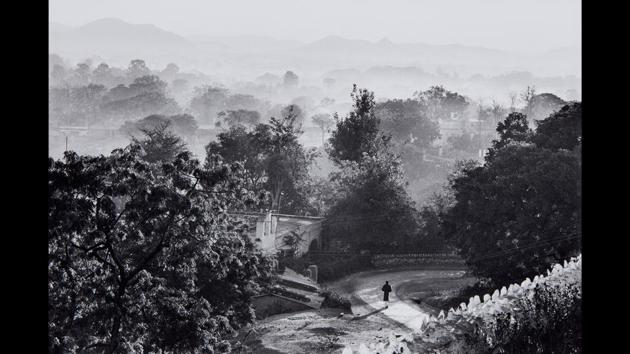
Udaipur, Rajasthan, India, 1966. Part of Phillips auction house’s fall sale titled “Henri Cartier-Bresson: The Eye of the Century, Personal Photographs from the Collection of Peter Fetterman,” this sold for $18,750. (Henri Cartier-Bresson / Magnum Photos)
3/8
 View Photos in a new improved layout
Updated on Dec 15, 2017 9:47 AM
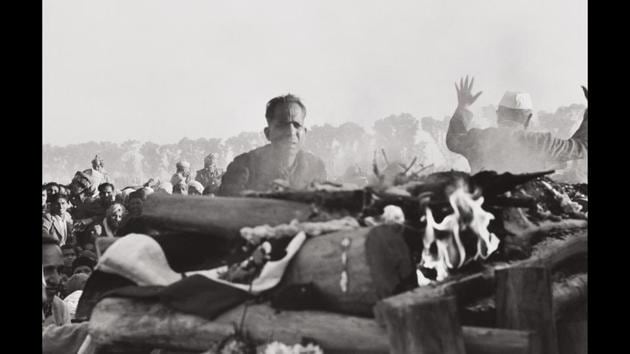
Gandhi’s secretary watches the first flames of the funeral pyre, Delhi, India, 1948. Only 90 minutes after Henri Cartier-Bresson and Mahatma Gandhi’s meeting on January 30, Gandhi was assassinated, and Cartier-Bresson became a witness to history. (Henri Cartier-Bresson / Magnum Photos)
4/8
 View Photos in a new improved layout
Updated on Dec 15, 2017 9:47 AM
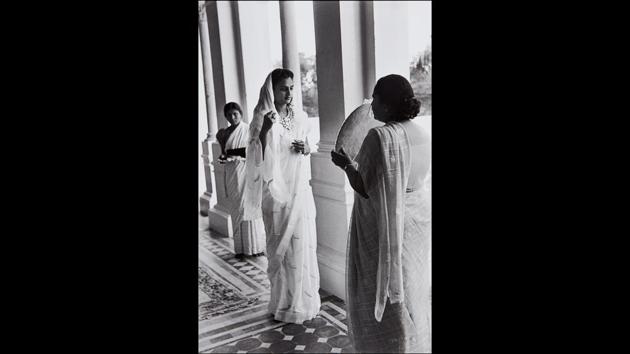
Festivities for the 39th Birthday of the Maharajah (the diamonds once belonged to Napoleon), Gujarat, Baroda (Vadodara), India, 1948. Cartier-Bresson first travelled to India in December 1947, making a 6,888 nautical mile journey by sea from England. (Henri Cartier-Bresson / Magnum Photos)
5/8
 View Photos in a new improved layout
Updated on Dec 15, 2017 9:47 AM
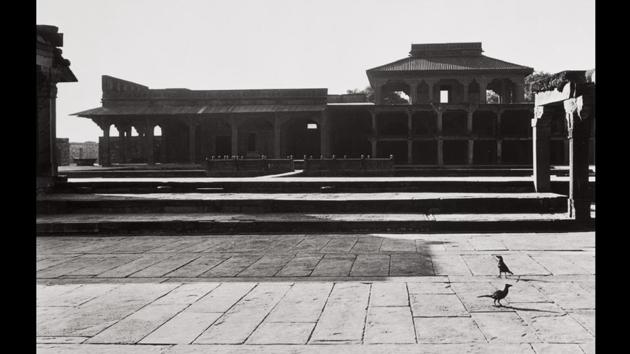
Fatehpur Sikri, India, 1966. Cartier-Bresson’s geometrically rich composition embraces the exquisite architecture of the place with the delicate inclusion of two small birds in the foreground, void of human presence. (Henri Cartier-Bresson / Magnum Photos)
6/8
 View Photos in a new improved layout
Updated on Dec 15, 2017 9:47 AM
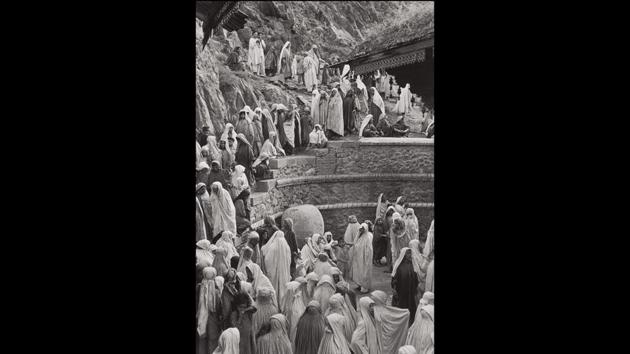
Women at the Makhdum Shah Ziarat mosque, Srinagar, Kashmir, 1948. Over the course of the next 40 years, Cartier-Bresson continued to return to India, traveling there six times through 1987. (Henri Cartier-Bresson / Magnum Photos)
7/8
 View Photos in a new improved layout
Updated on Dec 15, 2017 9:47 AM
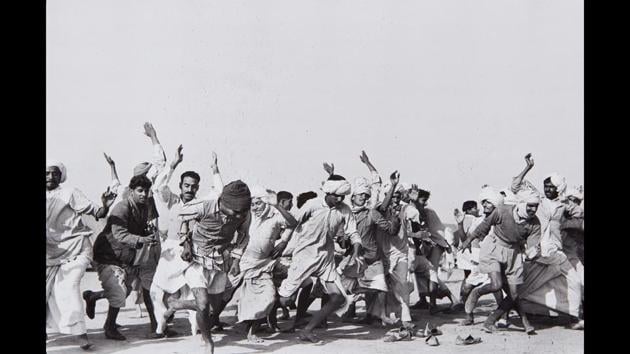
Games in a refugee camp at Kurukshetra, Punjab, India, 1947. “There is idleness and despair where people are gathered without homes. At the Kurukshetra camp, they were given simple gymnastics to distract them, to work off their energies,” wrote Cartier-Bresson. (Henri Cartier-Bresson / Magnum Photos)
8/8
 View Photos in a new improved layout
Updated on Dec 15, 2017 9:47 AM


