
 E-Paper



Photos: Kuwaiti women use Kajukenbo against bullies and violence
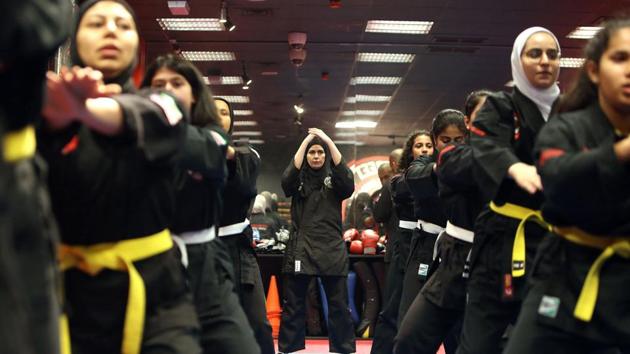
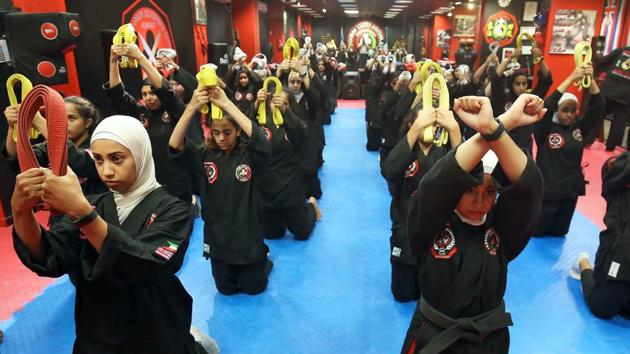
In a small hall in Kuwait City, women and girls in black uniforms gather to learn the basics of self-defence. On their left sleeves are the flags of Kuwait and the US state of Hawaii, where the hybrid martial art of kajukenbo was developed in the 1940s. Kajukenbo derives its name from the various aspects of martial arts it includes: karate (KA), judo and jujitsu (JU), kenpo (KEN) and boxing (BO). Each form teaches techniques that can be used to fend off an attack and practitioners report greater self-confidence and courage since picking up this increasingly popular sport.
Updated on: Jan 11, 2019 9:50 AM IST

Share via


Copy link

1/9
 View Photos in a new improved layout
Updated on Jan 11, 2019 9:50 AM
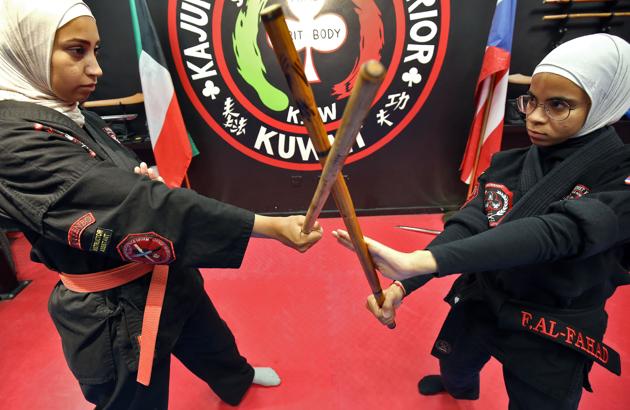
Asma Hasnawi (L) and Fai al-Fahad, Kajukenbo assistant-master, practise in Kuwait City. Hasnawi and her daughter Riham spend more than 12 hours a week learning kajukenbo, a mixed martial art the mother says boosts her child’s confidence and thwarts bullying. The sport’s name was derived from the various forms of martial arts it includes: karate (KA), judo and jujitsu (JU), kenpo (KEN) and boxing (BO). (Yasser Al-Zayyat / AFP)
2/9
 View Photos in a new improved layout
Updated on Jan 11, 2019 9:50 AM
In a small hall, women and girls in black uniforms gather to learn the basics of self-defence. On their left sleeves are the flags of Kuwait and the US state of Hawaii, where the hybrid martial art of kajukenbo was developed in the 1940s. Each form teaches techniques that can be used to fend off an attack, said Hasnawi, 33, who stands in class alongside her 12-year-old daughter and other girls. (Yasser Al-Zayyat / AFP)
3/9
 View Photos in a new improved layout
Updated on Jan 11, 2019 9:50 AM
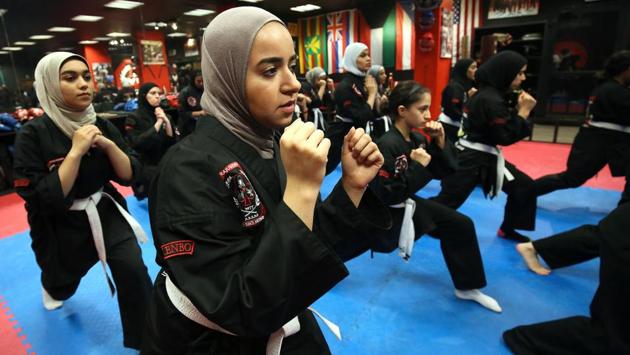
Hasnawi remembers being bullied as a child -- something her daughter struggled with at school too. But she said Riham has “changed a lot” since they started kajukenbo, gaining patience and strength through the sport. “She has transformed. At school, she used to get really angry and quickly agitated if someone would say something to her,” Hasnawi said. “Now, it’s something normal that she can (healthily) deal with.” (Yasser Al-Zayyat / AFP)
4/9
 View Photos in a new improved layout
Updated on Jan 11, 2019 9:50 AM
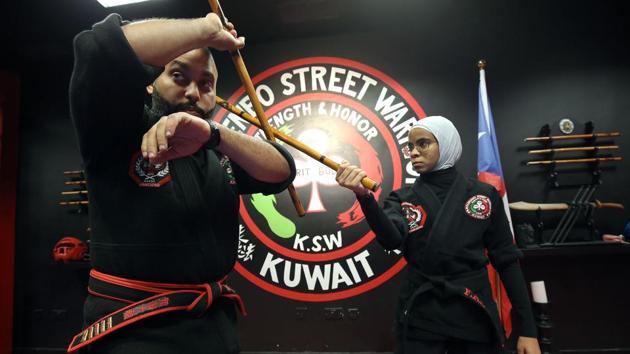
The students closely watch their instructor Faisal al-Gharib (L), as he explains how to counter an attack. In another instance, the instructor’s son mimicked an attack with a wooden knife on one of the more experienced pupils. The student explained: “I pretend that I have surrendered... and then I grab his hand on my neck, push it down and move it away.” (Yasser Al-Zayyat / AFP)
5/9
 View Photos in a new improved layout
Updated on Jan 11, 2019 9:50 AM
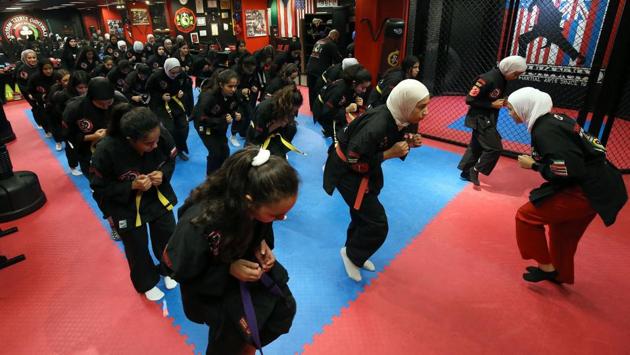
More than 120 girls and women between the ages of four and 50 participate in the academy’s different kajukenbo classes, which are held in a room with training weapons lining its walls. Some 40 men and boys also currently take part in kajukenbo classes at the club on different days from the women. (Yasser Al-Zayyat / AFP)
6/9
 View Photos in a new improved layout
Updated on Jan 11, 2019 9:50 AM
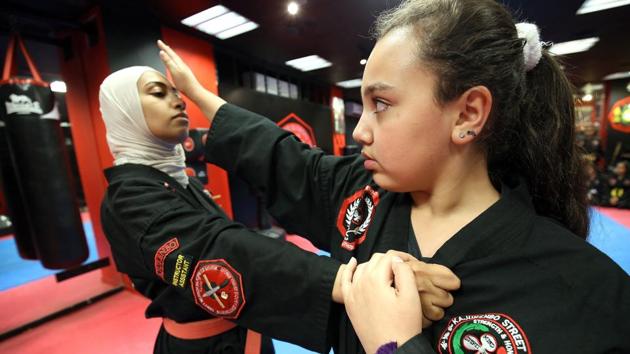
Asma Hasnawi (L), practises with her daughter Riham. The girls pair up to take what they have learnt and put it to practise. On the walls of the Street Warrior Academy is a poster of two men practising the sport. “Kajukenbo teaches your child the methods and arts of self-defence,” it read, complimenting the mottos of “strength and honour” and “street warrior” on the backs of the girls’ uniforms. (Yasser Al-Zayyat / AFP)
7/9
 View Photos in a new improved layout
Updated on Jan 11, 2019 9:50 AM
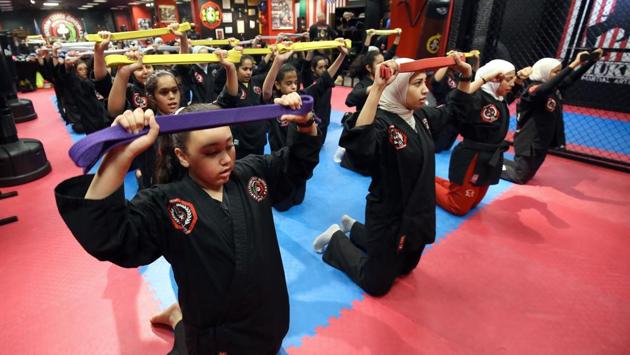
Gharib established the academy in 2014 after learning kajukenbo in the US. He said he wanted to teach the sport to women back home as a way to stay fit and to defend themselves. “We focus on self-defence skills and place the girls in conditions similar to those on the street so we can build their self-confidence and teach them exactly when and where to expect the hit,” Gharib said. (Yasser Al-Zayyat / AFP)
8/9
 View Photos in a new improved layout
Updated on Jan 11, 2019 9:50 AM
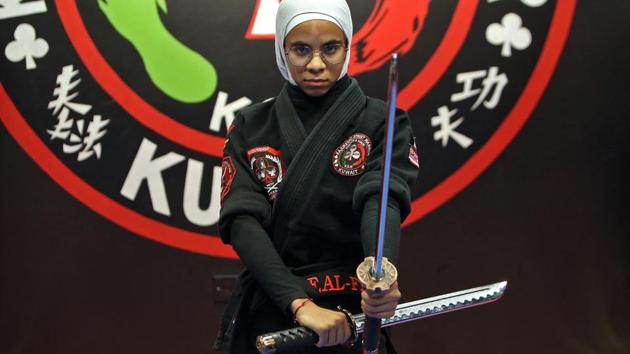
The academy, which has a strict confidentiality policy, has become a safe haven for many girls and women. It is one of dozens of similar clubs and academies in Kuwait as kajukenbo gains popularity. In the rest of the Gulf, the sport remains relatively unknown. “Ultimately, girls are embracing this kind of martial art and we see it boosting their self-confidence,” said Fai al-Fahed, one of the instructors. (Yasser Al-Zayyat / AFP)
9/9
 View Photos in a new improved layout
Updated on Jan 11, 2019 9:50 AM


