
 E-Paper



Photos: Pesticides replaced by insects in Spain’s ‘Sea of Plastic’
“Sea of Plastic” is a 30,000 hectares cluster of greenhouses in south-eastern Spain’s Almeria province, where much of Europe’s fruits and vegetables are grown. For over a decade, Spanish farmers no longer put on suits to spray their crops with insecticides but instead hangs small bags of mites on their plants which attack parasites while sparing the plants.
Updated on: Jul 25, 2019 12:47 PM IST

Share via


Copy link

1/10
 View Photos in a new improved layout
Updated on Jul 25, 2019 12:47 PM
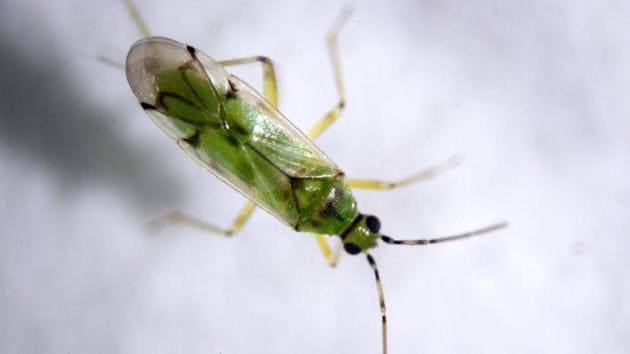
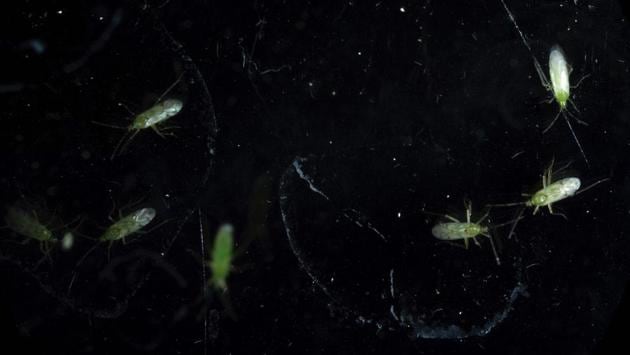
“Nesidiocoris tenuis”, a predator of the whitefly sucking instect, at Bioline Agro sciences Company in El Ejido. Spanish farmers no longer put on suits to spray their crops with insecticides but instead hangs small bags of mites on their plants which attack parasites while sparing the plants. (Jorge Guerrero / AFP)
2/10
 View Photos in a new improved layout
Updated on Jul 25, 2019 12:47 PM
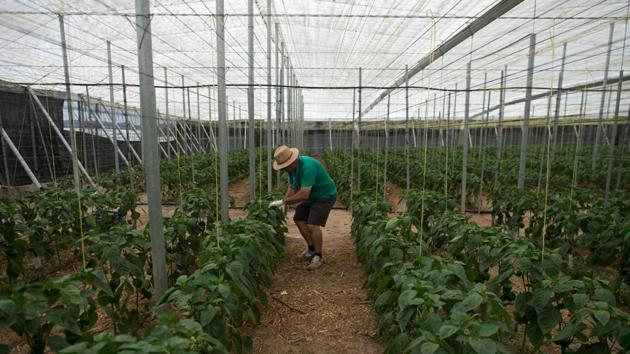
Spanish farmer Antonio Zamora works at his pepper plant’s greenhouse in Dalias, near El Ejido. “They work for me night and day,” smiles Antonio Zamora, standing in his greenhouse. His minuscule employees are bugs that feed on the parasites threatening his peppers. (Jorge Guerrero / AFP)
3/10
 View Photos in a new improved layout
Updated on Jul 25, 2019 12:47 PM
Zamora owns two hectares in the so-called “Sea of Plastic”, some 30,000 hectares of greenhouses in southeastern Spain’s Almeria province. The sparkling mosaic of white plastic bordering the Mediterranean -- which is visible from space -- produces tomatoes, cucumbers, courgettes, peppers and aubergines all year round to supply Europe’s supermarkets. Last year 2.5 million tonnes of produce was exported from Almeria, half of Spain’s total vegetable exports. (Jorge Guerrero / AFP)
4/10
 View Photos in a new improved layout
Updated on Jul 25, 2019 12:47 PM
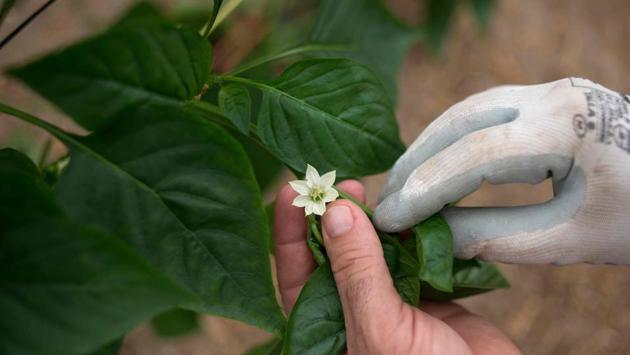
Farmer Antonio Zamora shows a flower of pepper plant in his greenhouse in Dalias. Like Zamora, virtually all pepper growers in Almeria have replaced insecticides with so-called “biological control” using insects. (Jorge Guerrero / AFP)
5/10
 View Photos in a new improved layout
Updated on Jul 25, 2019 12:47 PM
About 60 percent of tomato growers have done the same, along with a quarter of courgette producers, according to the producers’ association Coexphal. (Jorge Guerrero / AFP)
6/10
 View Photos in a new improved layout
Updated on Jul 25, 2019 12:47 PM
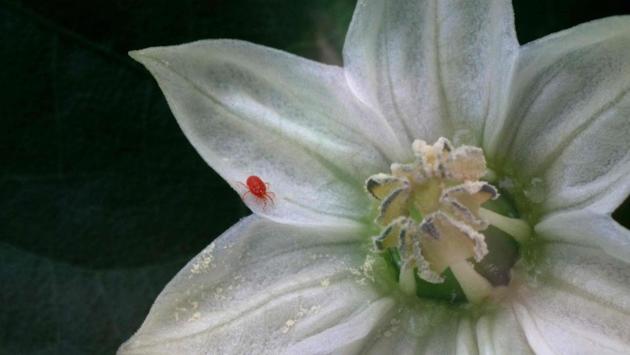
A red velvet mite walks on a pepper plant flower. Consumption of insecticides in Almeria -- where agriculture employs some 120,000 people and accounts for 20 percent of economic output -- has dropped by 40 percent since 2007, according to local authorities. (Jorge Guerrero / AFP)
7/10
 View Photos in a new improved layout
Updated on Jul 25, 2019 12:47 PM
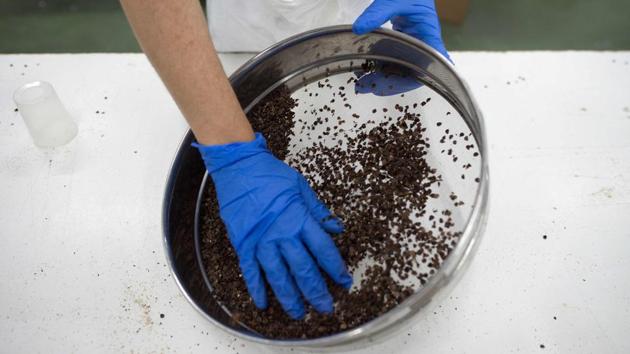
The use of insecticides surged in the 1960s, but farmers have adopted new methods under pressure from consumer groups as well as the fact that their crops have become increasingly resistant to the chemicals. “We have had to change course. The use of pesticides became excessive,” said Jan van der Blom, an expert in biocontrol at Coexphal. (Jorge Guerrero / AFP)
8/10
 View Photos in a new improved layout
Updated on Jul 25, 2019 12:47 PM
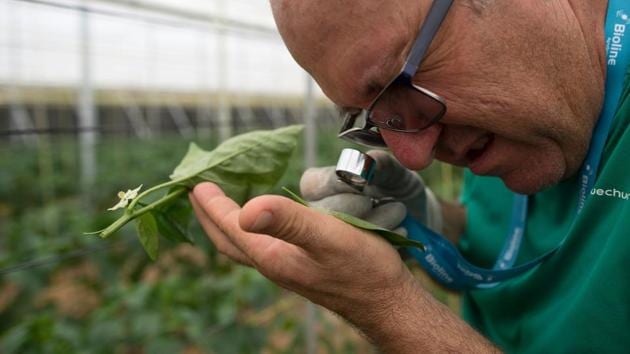
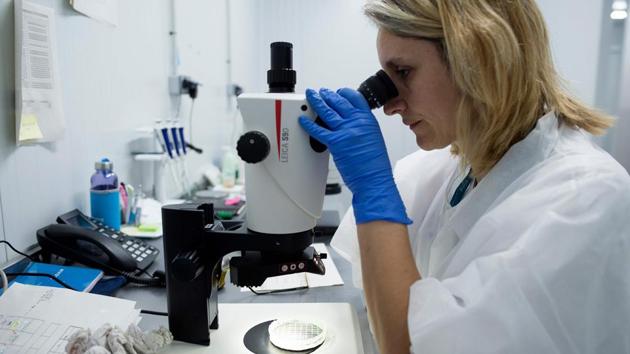
A worker uses a microscope at Bioline Agro sciences Company in El Ejido. Encarnacion Samblas of environmental group Ecologists in Action described the change as a “very positive step.” “In many cases the reduction in the use of chemical products has been drastic, and the substances that are still in use are softer,” she said. (Jorge Guerrero / AFP)
9/10
 View Photos in a new improved layout
Updated on Jul 25, 2019 12:47 PM
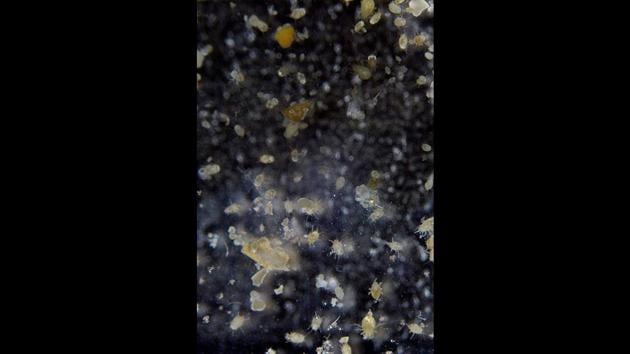
“Farmers continue to use chemicals in a not very rational way, because they are recommended, they are sold to them. Often they use them as a routine, without really knowing why,” Samblas said. Even “organic” greenhouses -- with 2,000 hectares certified as such or seeking the label -- often pay little heed to biodiversity or fail to take proper care of the soil, the ecologist said. (Jorge Guerrero / AFP)
10/10
 View Photos in a new improved layout
Updated on Jul 25, 2019 12:47 PM


