
 E-Paper



Photos| Uneasy neighbours: Israeli settlers, Palestinians in the West Bank
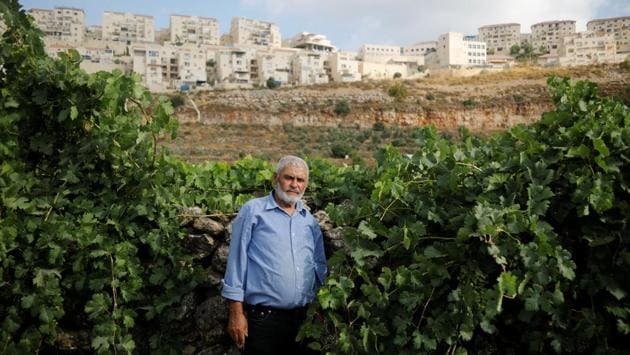
His people's link to the land goes back to biblical times, says the comics illustrator. His neighbour, a farmer, says the land belonged to his ancestors and has been stolen. One is an Israeli settler, the other a Palestinian living across the road. Israel has built more than 120 settlements in the occupied West Bank, and Israeli Prime Minister Benjamin Netanyahu, in the run-up to a Sept. 17 election, has renewed his pledge to annex them, alarming the Palestinians.
Updated on: Sep 10, 2019 3:16 PM IST

Share via


Copy link

1/15
 View Photos in a new improved layout
Updated on Sep 10, 2019 3:16 PM
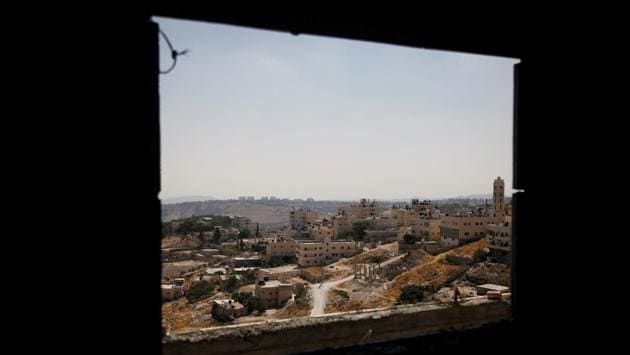
A view shows Palestinian houses in al-Eizariya village, close to the Jewish settlement of Maale Adumim, in the Israeli-occupied West Bank. Israel’s settlements in the occupied West Bank are one of the most heated issues in the Israeli-Palestinian conflict. The Palestinians want the area, captured by Israel in a 1967 war, for a future state. (Raneen Sawafta / REUTERS)
2/15
 View Photos in a new improved layout
Updated on Sep 10, 2019 3:16 PM
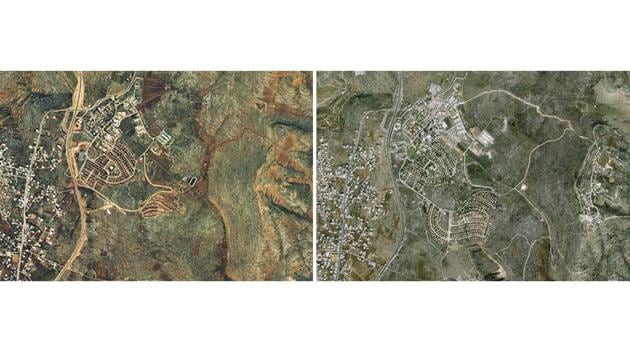
(L) An aerial view shows the Israeli settlement of Ofra in the occupied West Bank as seen in 1997. (R) The same view as seen in 2014. Most of the international community sees the settlements established in the West Bank after Israel captured the territory in 1967 Middle East war as illegal and major obstacles to Israeli-Palestinian peace, a view Israel disputes. (Peace Now / Handout via REUTERS)
3/15
 View Photos in a new improved layout
Updated on Sep 10, 2019 3:16 PM
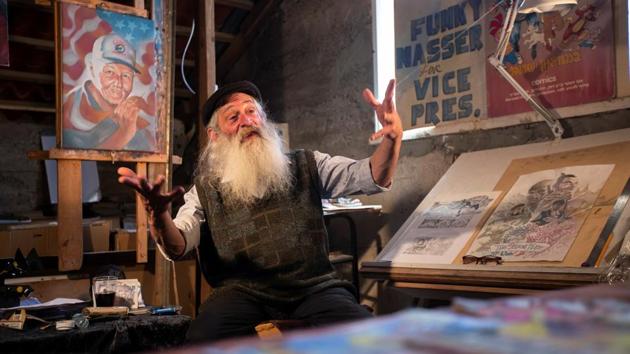
Michael Netzer, 63, a comic artist, in his attic studio at his home in the settlement of Ofra, one of Israel’s first. “It’s ridiculous to say that Jews can’t live here,” said Netzer. “The Bible is a part of it. I would ask anybody: Is it so easy to lose your connection to your ancestors and your land? Of course it isn’t. For the Jewish people, that history is what made us what we are.” (Ronen Zvulun / REUTERS)
4/15
 View Photos in a new improved layout
Updated on Sep 10, 2019 3:16 PM
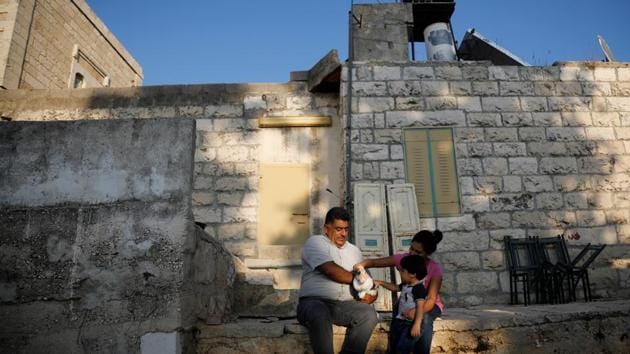
Palestinian farmer Azmi Musleh, 53, holds a rabbit as he spends time with his daughter and grandson in his yard in the village of Ein Yabrud. The red roofs of Ofra’s homes are easily seen from Ein Yabrud "That land is my heart and soul. It is my family's heart and soul. We used to grow sesame, figs, olives, back to the time of my father, his father, and his father before him," Musleh said. (Raneen Sawafta / REUTERS)
5/15
 View Photos in a new improved layout
Updated on Sep 10, 2019 3:16 PM
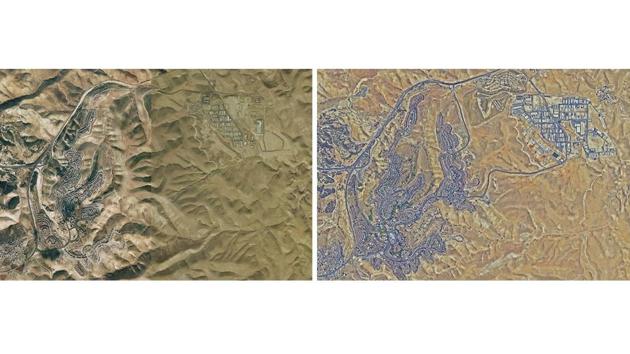
(L) An aerial view shows the Israeli settlement of Maale Adumim as seen in 1997. (R) The same view as seen in 2018. Israel’s settler communities are hardly homogeneous. Some settlers are driven by burning ideology. Others are just looking for a cheap apartment. Some of the settlements adjacent to Israel are seen by many Israelis as just regular towns, unlike the more isolated enclaves deep in the West Bank. (Peace Now / Handout via REUTERS)
6/15
 View Photos in a new improved layout
Updated on Sep 10, 2019 3:16 PM
Michele Coven-Wolgel, 60, goes for a walk with her daughter in Maale Adumim, a large settlement on the outskirts of Jerusalem - part of its appeal to many residents who sought affordable housing near the city. “I don’t feel like a settler,” said Coven-Wolgel “Should we be annexed? Yes, we’re a city of 41,000 people, we’re a city, we have a mall.” (Ronen Zvulun / REUTERS)
7/15
 View Photos in a new improved layout
Updated on Sep 10, 2019 3:16 PM
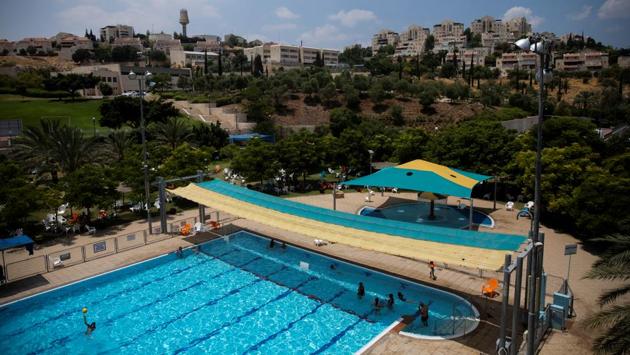
A view of a public pool in the settlement of Maale Adumim. Against the backdrop of desert hills, the villas of Maale Adumim provide their inhabitants with a comfortable life. Education is good and transport to the city is easy. (Ronen Zvulun / REUTERS)
8/15
 View Photos in a new improved layout
Updated on Sep 10, 2019 3:16 PM
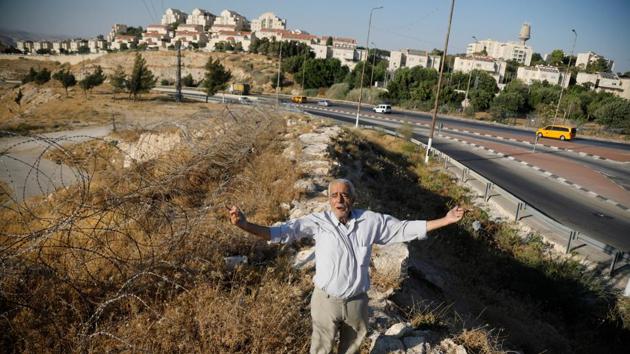
Ali Farun, 74, gestures by a road in al-Eizariya town with the Jewish settlement of Maale Adumim in the background. About 1.5 km from Maale Adumim, this resident of al-Eizariya has little hope of the territory ever coming under Palestinian control. “It doesn’t matter if they annex it to Jerusalem or if it remains West Bank - they control it man, one way or another,” said Farun. (Raneen Sawafta / REUTERS)
9/15
 View Photos in a new improved layout
Updated on Sep 10, 2019 3:16 PM
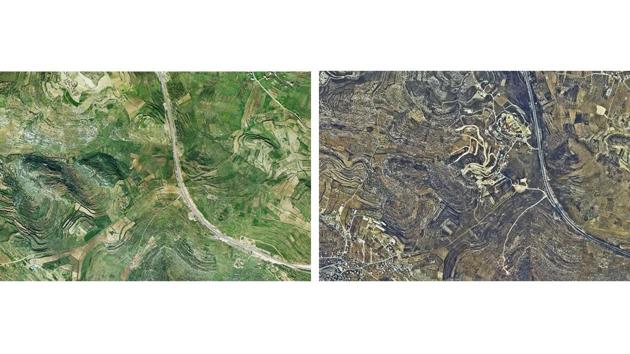
(L) An aerial view shows the Israeli settlement of Ofra in the occupied West Bank as seen in 2002. (R) The same view as seen in 2018. Havat Gilad, a cluster of prefab huts sprinkled across a hilltop, is home to about 45 families. Its residents say their presence in the West Bank fulfils God’s biblical promise to the Jewish people and secures Israel’s safety. (Peace Now / Handout via REUTERS)
10/15
 View Photos in a new improved layout
Updated on Sep 10, 2019 3:16 PM
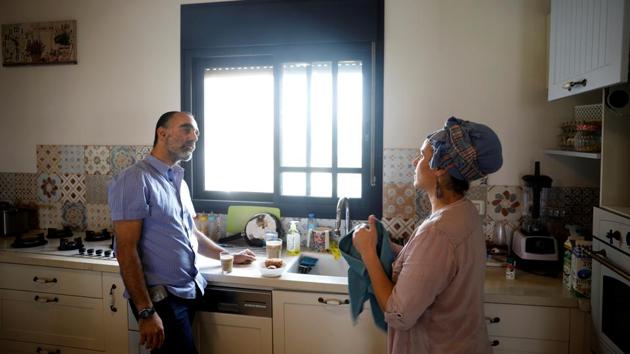
Itai Zar, 43 and Bat-Zion Zar, 41, founders of the Havat Gilad settlement chat in the kitchen of their home. “This belongs to the people of Israel, there's no question about it.” said Zar, who founded Havat Gilad in 2002 after his brother was shot dead by Palestinian militants nearby. “Eighteen years ago we came here, one family, and today we have a flourishing community.” (Ronen Zvulun / REUTERS)
11/15
 View Photos in a new improved layout
Updated on Sep 10, 2019 3:16 PM
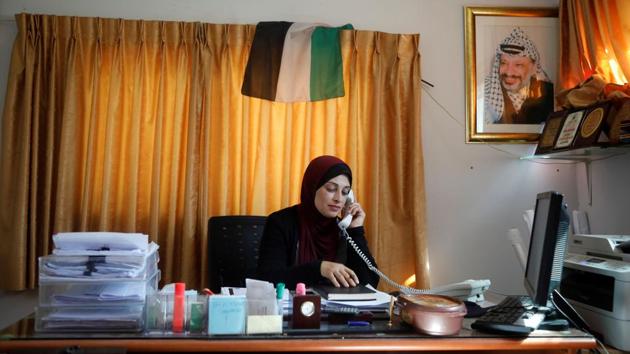
Bothena Turabe, 47, speaks on the phone as she works from her home in the village of Sarra near Havat Gilad. Turabe, saw the settlement’s growth from her Palestinian village Sarra, across the way. “In the night you look at them and you think there is nothing, and the next morning you look and you see there are more caravans,” said Turabe, a member of the village council. “This land is not yours to take - you're stealing it.” (Raneen Sawafta / REUTERS)
12/15
 View Photos in a new improved layout
Updated on Sep 10, 2019 3:16 PM
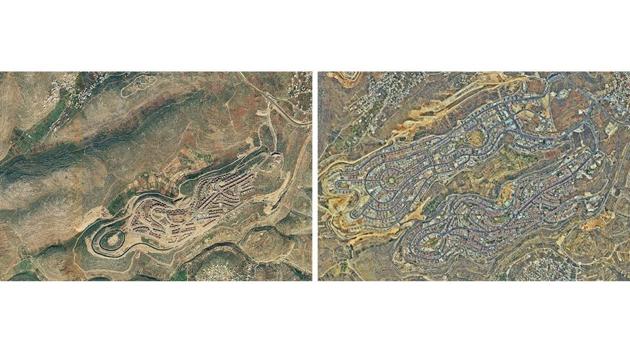
(L) An aerial view shows the Israeli settlement of Beitar Illit in the occupied West Bank as seen in 1997. (R) The same view as seen in 2018. Beitar Illit is a settlement built for Israel’s fast-growing ultra-Orthodox Jewish community. According to Peace Now, an Israeli anti-settlements watchdog, Beitar Illit saw the most construction of all of Israel’s West Bank settlements in 2018. (Peace Now / Handout via REUTERS)
13/15
 View Photos in a new improved layout
Updated on Sep 10, 2019 3:16 PM
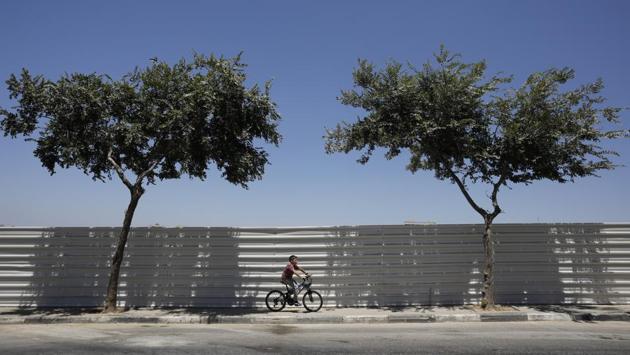
A boy rides his bicycle in Beitar Illit. Its densely built apartment blocs and Dollar stores seem a world apart from Havat Gilad’s huts and dirt roads. And unlike in Zar, residents cite financial concerns for moving here. (Nir Elias / REUTERS)
14/15
 View Photos in a new improved layout
Updated on Sep 10, 2019 3:16 PM
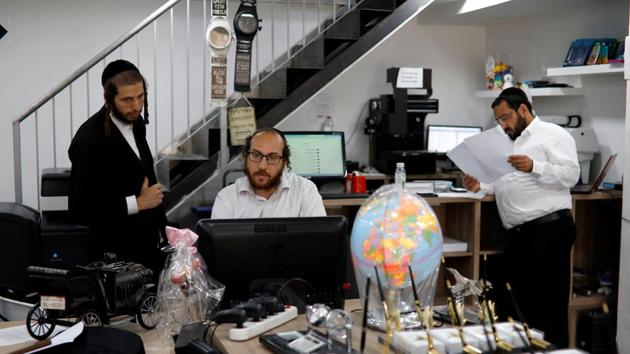
“We’re not here for ideological reasons,” said thirty-six year old David Hamburger, (C), a Beitar Illit shop owner. “There’s no way for us to buy houses anywhere else besides settlements.” With large families, seven children on average, high unemployment and poverty, the ultra-Orthodox Jews seek cheap housing that will allow their close-knit community to live together. (Nir Elias / REUTERS)
15/15
 View Photos in a new improved layout
Updated on Sep 10, 2019 3:16 PM


