
 E-Paper



Photos: World’s oldest cultured farms still glisten with pearls in Japan
In Japan's picturesque Ago Bay, a couple sits in a little hut picking out oysters from a net, cleaning them carefully one-by-one before replacing them gently back in the water. Their hope: in several months, these oysters will produce a glistening white pearl from a cultured farming technique invented in Japan but in decline as experts die out in the ageing country.
Updated on: Apr 11, 2019 9:37 AM IST

Share via


Copy link

1/12
 View Photos in a new improved layout
Updated on Apr 11, 2019 9:37 AM
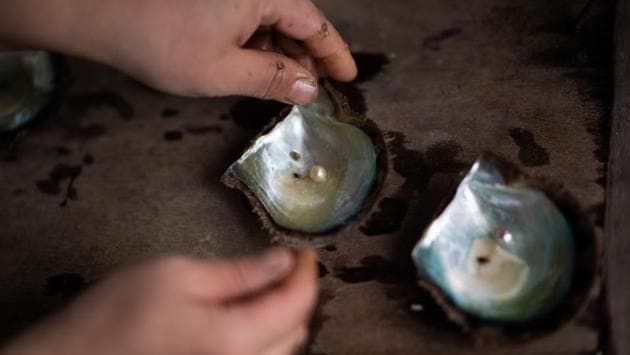
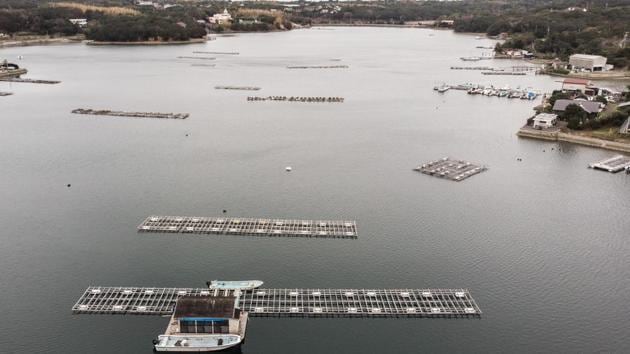
A farmer of the Sakaguchi Akoya pearl farm displays oysters with pearls on a table in Shima, Japan. Cultured pearl farming was first commercialised in Ago Bay and spread throughout the world. There are still dozens of farms plying the trade there, which look from the sky like a series of rafts floating between the steep coast and tiny islets. (Martin Bureau / AFP)
2/12
 View Photos in a new improved layout
Updated on Apr 11, 2019 9:37 AM
The Sakaguchi Akoya pearl farm. In 1893, an Ago Bay local called Kokichi Mikimoto became worried the oyster pearls avidly sought in his waters were becoming extinct. So he began introducing artificial foreign bodies into the oysters in a bid to replicate natural process in which they secrete thousands of layers of nacre when a grain of sand or shell finds its way inside the pearl pocket. (Martin Bureau / AFP)
3/12
 View Photos in a new improved layout
Updated on Apr 11, 2019 9:37 AM
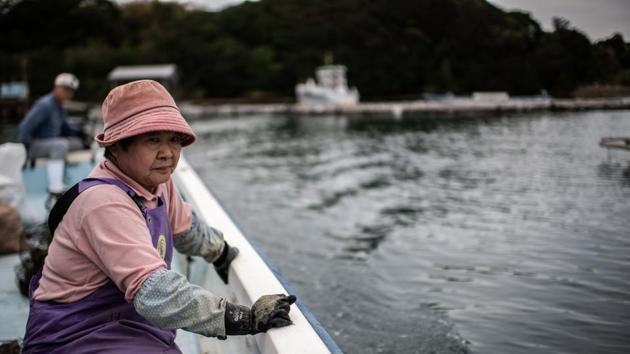
After several setbacks -- including a bacterial virus that decimated his crop -- Mikimoto finally hit jackpot: one day in July 1893 a semi-spherical pearl appeared, clinging to the oyster. A decade or so later, he had refined his method to produce a perfectly round specimen and immediately patented his technique -- the cultured pearl. (Martin Bureau / AFP)
4/12
 View Photos in a new improved layout
Updated on Apr 11, 2019 9:37 AM
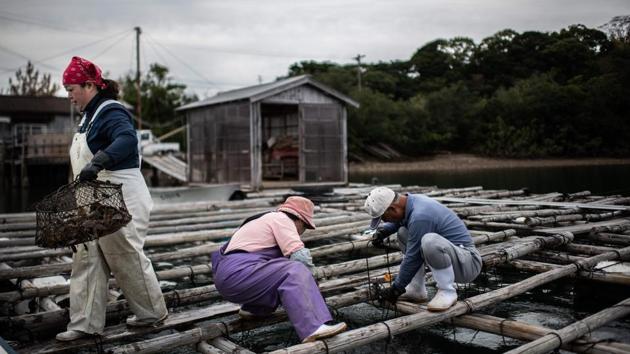
Pearl farmers harvest oysters. Success was not immediate -- several viewed the cultured pearl as a vulgar replica of the “natural” variety -- but eventually Mikimoto built a global empire and Japan became the reference for the small pearls known as “Akoya.” Around the same time, two other Japanese, Tatsuhei Mise and Tokichi Nishikawa, applied for a patent. (Martin Bureau / AFP)
5/12
 View Photos in a new improved layout
Updated on Apr 11, 2019 9:37 AM
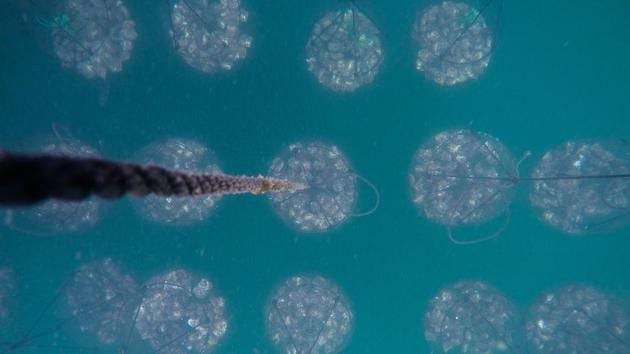
Oysters nets seen underwater. The Sakaguchi family has been crafting these pearls between three and 10 millimetres in diameter for three generations. Kasuhiro, 73, and Misayo, 68, are now supported by daughter Ruriko. “Our job is to look after the oysters as well as we can for three to four years,” explained the 43-year-old Ruriko. (Martin Bureau / AFP)
6/12
 View Photos in a new improved layout
Updated on Apr 11, 2019 9:37 AM
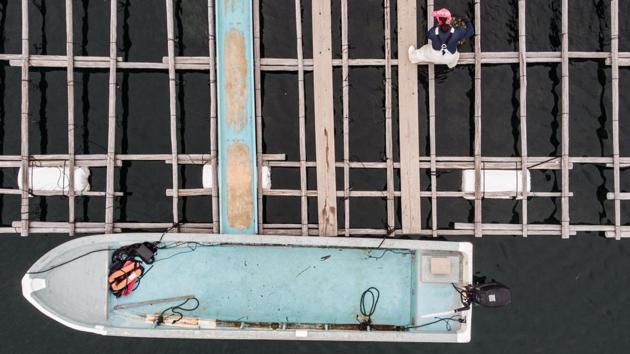
A farmer removes a net of oysters. The delicate operation rests of the insertion of a nucleus -- a small round polished ball made out of shellfish -- and the “graft”, a piece of donor mantle tissue from another oyster. Over a period of several months, the oyster reacts to the foreign bodies by secreting nacre which forms the pearl. (Martin Bureau / AFP)
7/12
 View Photos in a new improved layout
Updated on Apr 11, 2019 9:37 AM
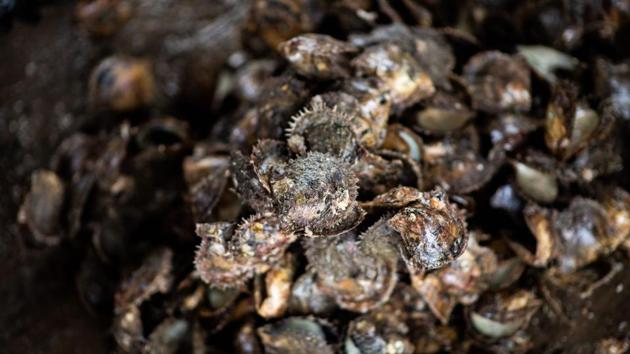
The pearls are harvested in December, when the water is around 15 degrees, said Ruriko. “Below this, the pearl will lack strength. Above that, it will lack shine,” she explained. It is a thankless task. Of the 100,000 oysters harvested annually, half die immediately after the operation. (Martin Bureau / AFP)
8/12
 View Photos in a new improved layout
Updated on Apr 11, 2019 9:37 AM
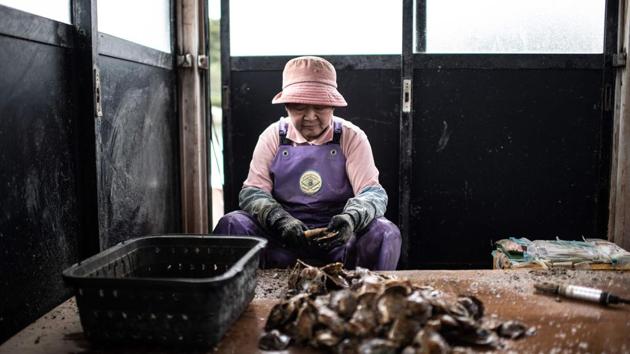
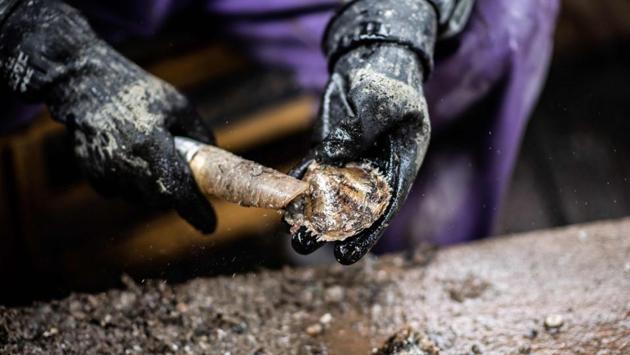
A farmer cleans harvested oysters. The vast majority produce either mediocre pearls or nothing at all. Only around 5% of the oysters harvested will result in pearls of sufficient quality to adorn the windows of chic jewellers far away in Tokyo. (Martin Bureau / AFP)
9/12
 View Photos in a new improved layout
Updated on Apr 11, 2019 9:37 AM
The Sakaguchis are lucky to have Ruriko take up the family trade. The number of specialised pearl farmers has dropped from 3,760 in the 1960s to just 680 in 2013, according to the most recent data from the Fisheries Agency. But despite this, Japan dominates the global market, accounting for around 30% in terms of value -- helped by concentrating on quality pearls. (Martin Bureau / AFP)
10/12
 View Photos in a new improved layout
Updated on Apr 11, 2019 9:37 AM
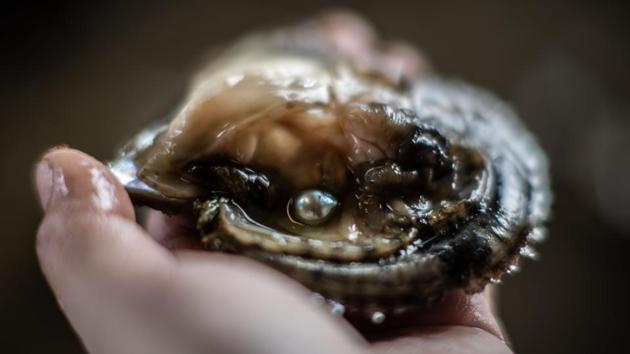
What sets Japanese cultured pearls apart, aside from centuries of know-how, is climate said Yuichi Nakamura, vice-chairman of the Mie Pearl promotion council. “The key is the winter season in Japan. It gives the pearls a better shine and sets them apart from the rest of world,” Nakamura told AFP. (Martin Bureau / AFP)
11/12
 View Photos in a new improved layout
Updated on Apr 11, 2019 9:37 AM
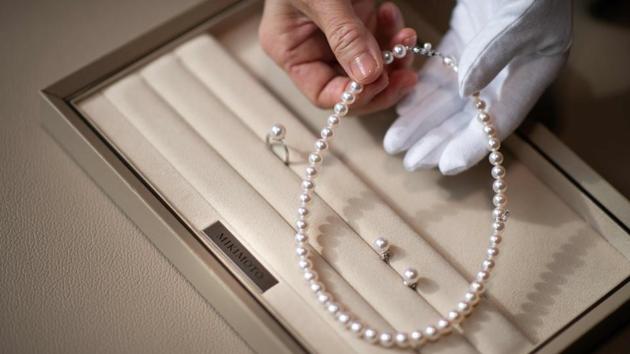
An employee of Mikimoto jewellery tries a necklace made of cultured Akoya pearls. Rivals from China at one point looked set to threaten Japan’s dominance but “they focused in quantity... whereas we concentrated on quality.” That quality is on glittering display at the flagship Mikimoto store in Tokyo. Pearls here can range from a few hundred to a million dollars. (Martin Bureau / AFP)
12/12
 View Photos in a new improved layout
Updated on Apr 11, 2019 9:37 AM


