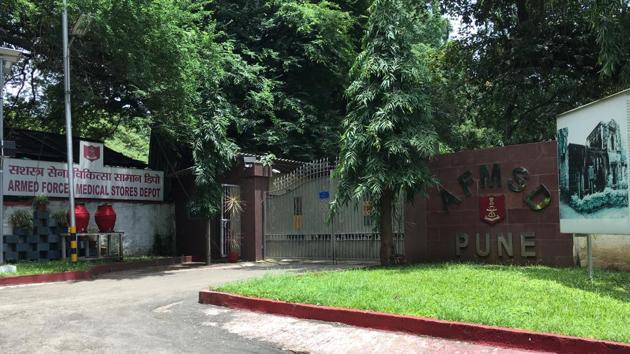
A dilapidated structure of the gatehouse to what was once the residence of the man who held the reins of the city of Pune, stands on the defence-controlled land near Pulgate in Camp. The name, Ghashiram Kotwal, still resonates from the era of the Peshwas, who had their headquarters in this city.
Kotwal, as the name suggests, was the person who held civic duties including sanitation, health, fixing house tax, municipal staff and their salaries. He formed a police force which operated from six chowkies (police post) with 115 men. Not only did Kotwal have the money to operate the same, but he also had strong relationships with officials ranging from the police force to a spy network that operated for him. He was considered by many as a very influential man.
The rise of Ghashiram has historically been credited to Nana Phadnavis, an important name in the Peshwa politics and government. After 10 years of reign, from 1781 to 1791, the Kotwal’s death was brutal. According to the piece of history displayed outside the remnants of his house beyond the gates of the Armed Force Medical Drug Store (AFMDS), when Kotwal's power was at its peak, so were the responsibilities that came with it.
“One night, his men, (most likely without his knowledge) locked up a group of Telangi Brahmins found roaming the streets after night curfew. Next morning 21 out of the 34 were found dead. The Kotwal was held responsible for this needless tragedy. The angry Brahmins of Pune stormed his house, dragged him out and stoned him to death,” reads the chilling account of his death, posted right outside the structure, which was once his house.
{{/usCountry}}“One night, his men, (most likely without his knowledge) locked up a group of Telangi Brahmins found roaming the streets after night curfew. Next morning 21 out of the 34 were found dead. The Kotwal was held responsible for this needless tragedy. The angry Brahmins of Pune stormed his house, dragged him out and stoned him to death,” reads the chilling account of his death, posted right outside the structure, which was once his house.
{{/usCountry}}The structure had decayed when the British took over the country. The space was used to build stores and workshops. What remains now is only a symbol of its glory in the form of a window, the only part that can be viewed without seeking the defence authorities’ permission.
A play on the story of Ghashiram, written by Vijay Tendulkar in 1972, ran into controversy due to its portrayal of Nana Phadnavis. Directed by Jabbar Patel, Ramesh Tilekar played Ghashiram Kotwal while Nana Phadnavis was played by Mohan Agashe.