Thanks mainly to the largesse of 10,000 tubewells and mass switch from whitefly-shadowed cotton, Punjab’s paddy yield is going to be an all-time high of 186-lakh tonnes. What could be worse.
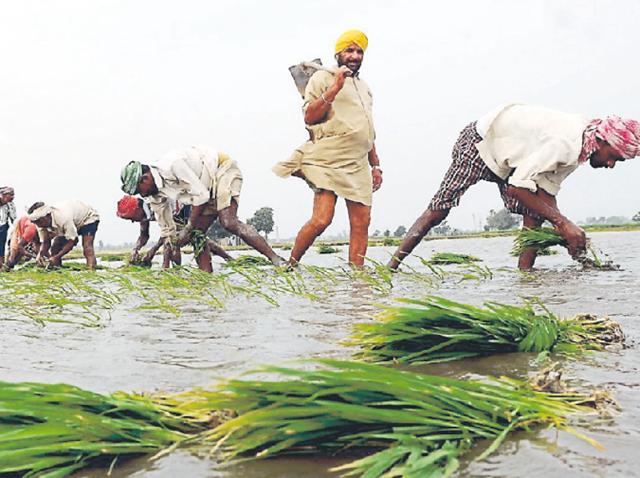
The experts are worried that this non-native crop may bring “momentary respite” to farmers but “spell doom for Punjab”. Paddy — never grown over 30-lakh hectares or 94-lakh acres before — has eaten into the area of other kharif crops such as maize, cotton, and basmati. The state’s diversification plan has taken a severe beating.
Also read | Agriculture experts expecting bumper paddy crop due to heavy rain this year
“Farmers are jubilant. It’s a bumper crop, highest-ever yield since Punjab started growing paddy to make the country self-sufficient in food,” Punjab Agricultural University (PAU) vice-chancellor BS Dhillon said. “But it’s not good for the future generations.”
The V-C advised “a level playing field for all crops. The Centre offers minimum support price and assured procurement for wheat and paddy, while selling other crops is a struggle.
{{/usCountry}}The V-C advised “a level playing field for all crops. The Centre offers minimum support price and assured procurement for wheat and paddy, while selling other crops is a struggle.
{{/usCountry}}The agriculture directorate prepared for paddy cultivation over 27-lakh hectares but farmers went way beyond. “We are happy that they will earn well after a long bad spell,” said agriculture director JS Bains. “We advise diversification but farmers need immediate profit.”
Cotton experts feel helplessness. “What can we do? We can’t impose anything on farmers,” said Pankaj Rathore, director of the PAU’s research centre in Faridkot. “Paddy’s invasion into cotton area which is not a good trend, because the subsoil water is brackish and the other conditions are also not conducive. Also, once farmers get used to growing paddy, it is difficult to bring them back to cotton. Paddy requires less labour.”