E-Paper



Mumbai rains: Here’s how waterlogging impacts the financial capital's real estate market
Consultants say that real estate values and rentals may command 10-20% less in areas prone to waterlogging in Mumbai

 Prefer HTon Google


With the monsoon having officially made its onset in Mumbai, the focus is back on the city’s real estate market, which is one of the biggest casualties as both heavy rain and waterlogging throws life out of gear in the financial capital and impacts both property values and rentals.
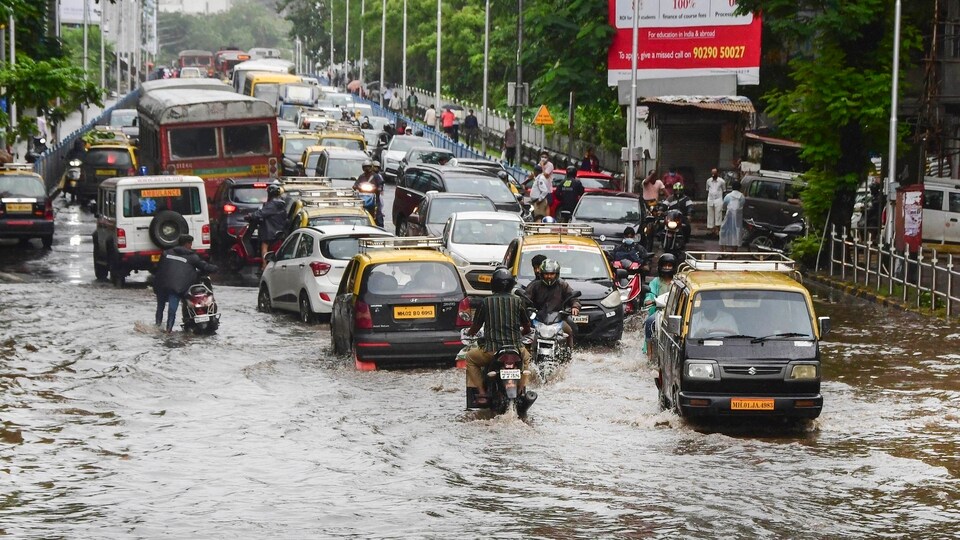
Mumbai’s civic body, the Brihanmumbai Municipal Corporation (BMC), has identified around 100 waterlogging spots in the city. HT Digital looks at five micro markets that homebuyers may want to avoid investing in if they want to avoid water logging at least once a year.
Consultants point out that waterlogging is a major factor that impacts India's costliest real estate market. The areas in Mumbai where waterlogging is reported every year both the property value and rental value is 10 to 20% less when compared to areas that are not prone to it.
1 Gandhi Market (Sion)
It takes only 10 minutes of heavy rainfall in Gandhi Market in Central Mumbai to report waterlogging. The area is famous for its wholesale market.
The residential rates in and around Gandhi Market area are anywhere between ₹30,000 and ₹50,000 per square foot depending on several factors, according to local real estate brokers.
Also read: Mumbai real estate: As redeveloped apartments hit the market, will rental growth in the city start to cool off?
2 Hindmata (Dadar)
Like Gandhi Market, Hindmata area also takes around 15 to 20 minutes of heavy rainfall to get waterlogged. Hindmata near Dadar in Central Mumbai has several Grade A office buildings and a few swanky luxury condominiums.
Property rates in the area range between ₹30,000 and ₹50,000 per square foot. The rates may be higher for luxury projects in the area, said local real estate brokers.
3 Nana Chowk (Grant Road)
Nana Chowk in south Mumbai is one of the costliest areas in Mumbai. Nana Chowk is surrounded by Tardeo, one of the most expensive real estate markets in the financial capital. The area is walking distance from the Grant Road Railway and is surrounded by a market and old residential buildings.
Property prices in the area are in the range of ₹50,000 to ₹70,000 per sq ft, according to local real estate brokers.
Also read: Why are real estate developers making a beeline for Mumbai and Bengaluru markets?
4 Milan subway (Vile Parle)
Milan subway located between Vile Parle and Santacruz is in close proximity to the Mumbai International Airport, the second busiest airport in the country after Delhi. However, this does not stop Milan subway from getting water logged every year during monsoon. This is in a low lying area prone to waterlogging every year.
The per sq ft rate in the area is around ₹40,000 per sq ft to ₹70,000 per sq ft, according to local brokers.
Also read: Monsoon arrives in Mumbai, IMD forecasts moderate to heavy rains
5 Dahisar subway
Dahisar subway like Milan subway is another low lying area located on the northernmost tip of Mumbai. The vehicular subway gets waterlogged within 30 minutes of heavy rainfall.
The per sq ft rate of apartments in this area hovers between ₹17,000 to ₹25,000 per sq ft, according to local brokers.