E-Paper



Mumbai redevelopment to unlock more than 44,000 homes worth ₹1.3 lakh crore by 2030: Knight Frank
Mumbai will add 44,277 apartments worth ₹1.3 lakh crore via redevelopment by 2030, but rising costs and developer commitments may hamper progress

 Prefer HTon Google


As many as 44,277 apartments worth ₹1.30 lakh crore are expected to enter Mumbai’s real estate market through the redevelopment segment by 2030, according to a report by Knight Frank India. The free-sale component from society redevelopments is projected to generate around ₹7,830 crore in stamp duty and ₹6,525 crore in Goods and Services Tax (GST).
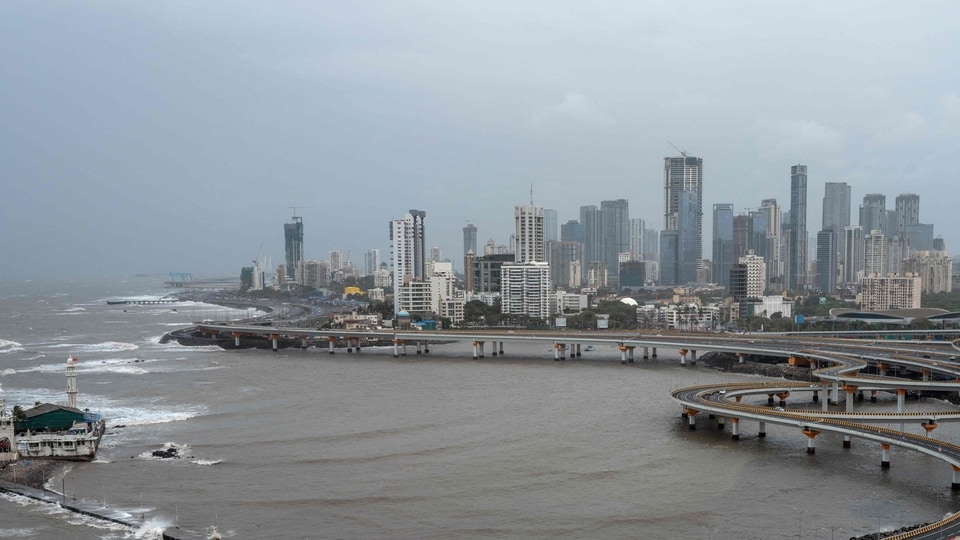
Mumbai redevelopment projects are poised to unlock Mumbai’s residential market potential and transform the city’s skyline. However, the segment now appears overheated and is nearing an inflection point. Escalating property prices have led to unsustainable commitments from developers, while society members’ expectations have grown disproportionately, the report noted.
The report notes that redevelopment is a long-cycle process, typically taking 8–11 years from initiation to handover. Many societies that began the process in 2020 are only now reaching the construction or early delivery phase. Given this extended timeline, projects are exposed to multiple market cycles, changing interest rates, and shifting policy environments.
While frameworks like Mumbai’s city plan Development Control and Promotion Regulation) 2034 has improved project viability; key challenges persist, especially around consensus building, title clarity, and civic clearances, the report says.
The report said that Borivali, Andheri, and Bandra micro-markets emerge as the top three redevelopment hotspots, together contributing over 139 acres of activity. By contrast, Central and South Mumbai recorded just 43 redevelopment agreements, underscoring the challenges of fragmented ownership, legacy tenancies, and higher entry costs.
According to the report, a total of 910 housing societies have signed development agreements (DA) since 2020, unlocking nearly 326.8 acres (1.32 mn sq m) of potential land area in the Mumbai limits, based on Floor Space Index (FSI) utilisation norms and average unit sizes across the regions.
The report notes that, according to 2017 estimates of the Mumbai Civic Body, also known as Brihanmumbai Municipal Corporation (BMC), an estimated 160,000 societies were over the age of 30 and eligible for redevelopment.
The report states that these society redevelopment projects would unlock the city's residential market potential and alter Mumbai’s skyline.
"Society redevelopment in Mumbai is both inevitable and essential, given the city’s limited avenues of greenfield growth and the constant rise in demand. The free sale component from society redevelopment is expected to generate approximately ₹7830 crores in stamp duty and another ₹6,525 crores as GST. However, the segment today appears overheated and is fast reaching a point of inflection," Shishir Baijal, Chairman and Managing Director, Knight Frank India said.
"Rising prices have fuelled commitments that stretch well beyond sustainable limits, while society members’ expectations have grown disproportionately. At this juncture, it is imperative for both societies and developers to leave adequate headroom in their arrangements and to structure finances prudently," Baijal said.
Redevelopment hotspots in Mumbai
According to the report, Western Suburbs, which include the high-density population locations of Bandra to Borivali, can expect to see the addition of 32,354 new homes, which will form 73% of the total addition to stock from society redevelopment, while South Mumbai would add 416 new housing units.
The report underlines the dominance of the suburban market. Between 2020 and H1 2025, the Western Suburbs alone accounted for 633 out of 910 society deals, recording 70% of all agreements signed since 2020.
Central Suburbs may add another 234 societies, pushing the suburban contribution to almost 96%.
The report said that Borivali, Andheri, and Bandra micro-markets emerge as the top three redevelopment hotspots, together contributing over 139 acres of activity. By contrast, Central and South Mumbai recorded just 43 redevelopment agreements, underscoring the challenges of fragmented ownership, legacy tenancies, and higher entry costs.
Maximum redevelopment activity in Mumbai is driven by small societies
According to the report, redevelopment remains concentrated in compact societies. Over 80% of registered development agreements since 2020 were for plots below 0.49 acres, highlighting the operational challenges of land aggregation in dense city precincts. Since 2020, as many as 754 societies with plot areas up to 0.49 acres have signed deals for society redevelopment.
The report said that despite smaller average plot sizes, the scale of transformation remains substantial, reflecting the city’s fragmented but deeply active redevelopment ecosystem.
Over the years, the deal size has also increased. This shift signals the emergence of larger society clusters, better aggregation efforts, and more efficient land utilisation, thus marking a maturing redevelopment ecosystem, the report said.
State government’s revenue from redevelopment
The report said that the state government is expected to generate estimated revenues of ₹6,500 crore on account of the sale of the free sales from the society redevelopment in the next five years.
Additionally, the free sales will generate an estimated Goods and Services Tax (GST) of 6,525 crore in the same period, the report said.
"The economics of society redevelopment must be viewed through the lens of sustainability. With overheated market conditions and sharply rising prices, we are at a stage where excessive demands and aggressive offers threaten long-term viability," said Gulam Zia, Senior Executive Director, Research, Advisory, Infrastructure and Valuation, Knight Frank India.
"Our assessment suggests that in markets below ₹40,000 per sq ft, developers should not share more than 30–35% of the total area with the society. This may increase to 35–40% where prices range between ₹40,000 and ₹60,000 per sq ft, and up to 50% in locations priced over ₹75,000 per sq ft. Beyond these thresholds, cash flows lose flexibility and projects become vulnerable. Both societies and developers must therefore plan with adequate buffers so that if the cycle tilts downward, there remains enough room for redressal and completion," Zia said.
Challenges include prolonged redevelopment timelines and a lack of consensus
The report highlights that redevelopment is inherently a long-cycle endeavour, with projects typically spanning 8–11 years from initiation to final handover. Societies that began their journey in 2020 are only now entering construction or early delivery phases.
According to the report, this extended horizon exposes projects to multiple market cycles, interest rate environments, and policy shifts. While redevelopment has gained viability under DCPR 2034 and other supportive frameworks, challenges remain around consensus building, title clarity, and civic permissions.
The report stresses that societies with clear titles, robust documentation, and unified member consent tend to attract stronger developers and achieve faster closures. By contrast, weak documentation or overextended negotiations can stall projects for years, eroding trust and market opportunity.