
 E-Paper



Iran-Backed Houthis Threaten Coast Along Red Sea Chokepoint
The rebels have stepped up attacks near the Bab al-Mandeb Strait and shut down operations at a strategic seaport in recent days.


 Prefer HTon Google


Yemen’s Iranian-allied Houthi rebels are escalating attacks along the country’s Red Sea coast, shutting down operations at a strategic seaport and pushing closer to the Bab al-Mandeb Strait, an important global shipping chokepoint.
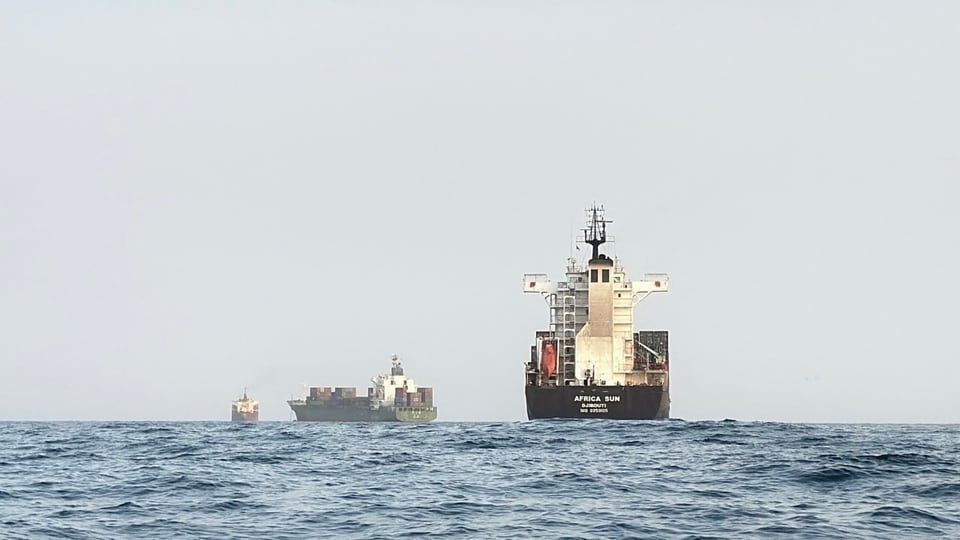
The militant group’s recent missile and drone attacks forced the closure of the port of Mokha, a key logistics hub for civilian shipping and for anti-Houthi forces operating along the coast, Yemeni authorities said.
The escalating fighting in Yemen, the worst in the country in years, shows how the war in Iran is fueling instability throughout the Middle East and heightening the risk of further disruption to global energy flows after months in which Iran’s closure of the Strait of Hormuz caused the worst oil supply disruption in recent history.
“This is the most significant escalation in quite a few years, maybe since 2020,” said Adam Baron, a Yemen expert and fellow with New America, a policy institute in Washington.
Baron called the port of Mokha the key logistics hub for anti-Houthi forces on the Red Sea. The Houthis control mountainous terrain inland from the Bab al-Mandeb but not the coast along the crucial waterway, which is held by opposing forces.
Shutting down the port makes it harder for the anti-Houthi forces to resupply and resist Houthi attacks.
The port’s general director, Abdulmalik Al-Sharabi, told Yemeni state media that Houthi attacks hit commercial and service facilities, workshops, equipment and the port’s pier, killing 16 people and wounding 22. More than 1,500 workers are off the job as a result of the shutdown, he said.
A Houthi attack last week killed four workers on a cargo ship in the Bab al-Mandeb, which links the Red Sea with the Indian Ocean and is an important alternative route for Saudi oil exports that would otherwise be stranded behind the Iranian chokehold on the Strait of Hormuz.
Houthi attacks on shipping in the Bab al-Mandeb threaten to intensify Iran’s strategy of disrupting global energy supplies to put economic pressure on the U.S. and its allies to end the war.
Yemen’s internationally recognized government, which is supported by Saudi Arabia, says it is fighting back. Deputy Defense Minister Samir al-Sabri said Sunday that a large number of Houthi fighters had been killed along the front lines in the regions of Marib and Taiz.
“New fronts will open in areas within the Houthis’ own sphere of influence,” he said.
The Houthis are part of an array of militia groups throughout the Middle East that receive weapons and training from Iran and its Islamic Revolutionary Guard Corps as a part of Tehran’s strategy to project power in the region. The group has grown closer with Iran in recent years but is seen as having more independence from Tehran than other militant groups like Lebanon’s Hezbollah.
The Houthis had remained largely on the sidelines of the current war between the U.S. and Iran until a ceasefire in Yemen unraveled in July. Fighting escalated in the country after warplanes from the Saudi alliance bombed the international airport in the Yemeni capital to stop a plane carrying a delegation of Houthi officials returning from Iran from landing.
Yemen fell into a civil war after the Houthis, a militia based in the country’s north, seized control of the capital San’a in 2014, a few years after a popular uprising that ejected a longtime autocrat from power during the 2011 Arab Spring.
The group advanced into the major port city Aden just outside the Bab al-Mandeb in 2015 but was pushed back by opposing forces with the support of Saudi Arabia and the United Arab Emirates.
Saudi Arabia and a coalition of other Arab countries carried out a campaign of airstrikes on Yemen, further destabilizing the country but failing to dislodge the Houthis from power. The group today remains in control of the capital along with a swath of the rest of the country stretching along the Red Sea coast.
Last month, the Houthis declared a blockade of Saudi Arabia’s nearby ports and began a series of attacks on shipping in the Bab al-Mandeb.
The attacks have further stressed global supply chains while Iranian threats have cut into Persian Gulf oil and gas exports and the escalating conflict resulting from the Russian invasion of Ukraine is disrupting key shipping lanes for energy and food in the Black Sea.
Shipping industry analysts said traffic through the Bab al-Mandeb continues despite the attack.
From Aug. 10 to 16 there were 254 confirmed transits through Bab al-Mandeb, up slightly from the previous week when there were 238, according to data from the global energy analytics company Kpler.
“It’s an extremely complex situation,” said Naveen Das, a senior analyst at Kpler. “Despite the risks, it still seems, I would say, a fairly resilient picture in the Red Sea.”
Write to Jared Malsin at jared.malsin@wsj.com


