Mumbai, Sep 25 (PTI) India's insolvency regime has helped more than 1.4 lakh homebuyers move closer to or receive possession of homes stuck in stalled real estate projects, with financially stronger developers stepping in to revive distressed developments through the Insolvency and Bankruptcy Code (IBC), analysts and industry officials said.
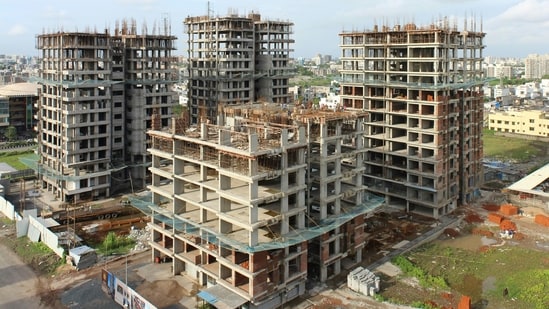
Large developers including Adani Realty, Lodha and others have acquired or taken over distressed projects through insolvency proceedings, bringing fresh capital and execution capabilities to developments that had remained stalled for years.
The scale of the challenge, however, remains significant. Nearly 2.5 lakh homebuyers are associated with the 553 real estate insolvency cases admitted under the IBC, of which about 17 per cent have been successfully resolved, they said. Another 1.1 lakh homebuyers across 221 cases remain awaiting resolution as proceedings continue before judicial forums.
Projects resolved under the insolvency framework represent investments of about ₹84,000 crore, while another ₹65,000 crore remains tied up in unresolved developments, according to industry estimates.
Homebuyers were recognised as financial creditors under the IBC in 2018, making the insolvency framework an increasingly important route for resolving stalled housing projects.
The Insolvency and Bankruptcy Board of India (IBBI), in a recent report, proposed a series of reforms to real estate insolvency proceedings, with project completion rather than liquidation emerging as the central objective.
{{/usCountry}}The Insolvency and Bankruptcy Board of India (IBBI), in a recent report, proposed a series of reforms to real estate insolvency proceedings, with project completion rather than liquidation emerging as the central objective.
{{/usCountry}}The recommendations include project-wise insolvency proceedings, ring-fencing of project cash flows, simplified claims processes and stronger coordination between RERA authorities and insolvency courts.
Speed remains a major challenge, however, with prolonged litigation and multiple rounds of appeals often delaying project completion, analysts said.
For developers, delays between an NCLT approval of a resolution plan and its actual execution can also significantly affect project viability. Successful bidders may have to deliver homes at prices agreed five to 10 years earlier, even as construction, labour and financing costs have risen sharply.
"Real estate resolutions under IBC are slower than most other sectors, and that's structural. These are typically long-gestation projects with layered claims across homebuyers, lenders and land partners, and whoever steps in has to fund construction upfront while returns come later. It requires patient capital and a longer holding horizon than most balance sheets are set up for. Recently, the steady end-user demand and firmer pricing in the larger markets have made some stalled assets viable to complete again," said Nikhil Bhatia, Managing Director – Land & Capital Markets, CBRE India.
Industry observers say financially stronger developers are often better placed to inject fresh capital, restore lender confidence and complete projects that might otherwise face liquidation.
"The growing pool of distressed real estate under the IBC is creating an opportunity for financially stronger developers to expand through acquisitions. Real estate accounts for 22 per cent of all CIRP admissions, making it the second-largest sector, while resolution plans have on average realised 94.7 per cent of the fair value assessed.
"We are seeing large developers such as Adani, Reliance, JSW, Prestige, etc., stepping in to acquire or resolve distressed real estate platforms and projects. This suggests that IBC is increasingly becoming an alternative route for established developers to access projects, land and development potential, while bringing in the capital and execution capability needed to revive them. The ultimate beneficiaries are the stuck home buyers who are at last getting possession of their dream homes," said Gulam Zia, International Partner and Senior Executive Director at Knight Frank.
One example is Take Ten BKC, a luxury residential redevelopment project in Mumbai's Bandra-Kurla Complex that stalled in 2020 following the financial distress of its original developers. The project had left 176 original MHADA families and hundreds of homebuyers stranded.
Following an NCLT-led resolution process, Adani Realty acquired the project, committing more than ₹1,000 crore towards completion, including over ₹400 crore of fresh capital, while securing nearly ₹1,200 crore in construction financing. The project has since delivered completed homes to 903 buyers.
In another BKC project, Adani Realty took over the long-delayed Bharat Nagar Slum Rehabilitation Project following the collapse of HDIL. The project had inherited negative cash flows, unpaid statutory dues and pending transit-rent obligations to slum dwellers. Construction has since resumed, with rehabilitation housing being developed for nearly 1,000 families.
Other projects have also seen progress through insolvency resolutions. In Gurugram, the Hills-77 project was revived, enabling 724 homebuyers to receive possession. The Centre Court project, which had claims of about ₹1,250 crore, was acquired through a resolution process and has since secured an occupancy certificate, benefiting more than 300 homebuyers after the default of its original developer, Ashiana Landcraft Realty Pvt Ltd.
The IBC has also been used by major developers to expand their commercial property portfolios. Oberoi Realty, along with a consortium, took over Hotel Horizon in Mumbai, while Macrotech Developers used the insolvency process to acquire V Hotels.