Bengaluru: The flight of the javelin has always captivated the imagination of fans. Only 26 throwers in the world have ever crossed the magical 90-metre mark. Neeraj Chopra achieved the feat earlier this year. Those who have reached this landmark, speak of the immense physical toll it takes on the body and why maintaining such a high level is difficult.
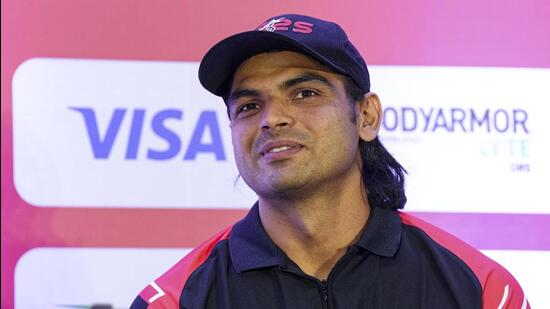
Thomas Rohler, the 2016 Olympic Champion, has breached the mark multiple times, and compares the impact with the weight of a small car on the body. “Any 90m throw has a huge impact on the body. So, once you throw 90m, the next thing you need to do is to take rest because the impact is so high. We need to understand that the impact is like the weight of one one-ton small car on the block foot,” said Rohler.
“Doing it again and again is a mental challenge besides dealing with the pressure from outside,” said Rohler who is on a comeback trail.
2016 World champion and Rio Olympics silver medallist Julius Yego has also touched the 90m more than once and said a thrower can never prepare enough for the mark.
“The most difficult thing is to maintain it and to do it again because you never know what really happened inside your body. I remember when I did my first 90m in my body completely shut down. I was struggling to throw even 80m but then after sometime it came again (92m). A thrower is lucky if he is not injured and he can have it again but you really struggle,” the Kenyan told HT.
{{/usCountry}}“The most difficult thing is to maintain it and to do it again because you never know what really happened inside your body. I remember when I did my first 90m in my body completely shut down. I was struggling to throw even 80m but then after sometime it came again (92m). A thrower is lucky if he is not injured and he can have it again but you really struggle,” the Kenyan told HT.
{{/usCountry}}Achieving such distance is not only about strength, but technique, power, fluidity – everything has to come together at the right moment.
The one exception to this, according to Yego, is Jan Zelezný, the world record holder (98.48m). “He was able to throw 90m for a long time. The other person who has done it consistently is Johannes Vetter but you can see how it impacted his body.”
“It’s everything about javelin, not just strength. Of course, technique is a large part, but you have to combine it with power, speed, and mental preparedness. I feel when you have the javelin on the runway you need the technique, the distance will come.”
Zelezny is currently Chopra’s coach and they know that big throws have become a norm in major championships. The upcoming world championships in Tokyo would be no exception where the likes of Anderson Peters (93.07m), Arshad Nadeem (92.97m), Chopra (90.23m), Julian Weber (91.06m), Yego (92.72m), Jakub Vadlejch (90.88m), Keshorn Walcott (90.16m) will have a go at each other. Chopra will be looking to defend his title in such a strong field.
“Neeraj is a super talented athlete. His flexibility and speed, if he can maintain his strong points he can be there for a long time,” said Yego.
“I have felt that for the last few years to win a major event in javelin you have to throw the javelin over 90m. Even in Tokyo it will be expected because the level has grown.”
Once a thrower reaches 90m expectation grows, as Chopra will know.
“As soon as you throw 90m, and I did it often, we mess up with expectations. We need to look back at the London Olympics where the gold came in 84m. Now people expect you to throw 90m and if you don’t do it people will ask ‘was it a bad day.
“We need to see that the percentage of people that ever threw 90m is so small. It’s still a magical mark and we would appreciate every moment we witness these throws,” said Rohler.