Bengaluru: Bodhana Sivanandan is eleven and strikingly unflappable. While brave attacks and flashy sacrifices are often the currency of players her age, the chess phenom from north-west London has a curious fondness for the quieter, more exacting demands of the endgame.
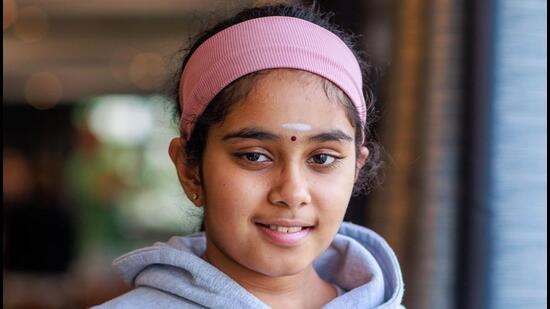
As of last weekend, she’s also the youngest-ever British Women’s Champion.
The Indian-origin tween broke the record held by Elaine Pritchard, who won the British Women’s Championship outright at the age of 13 in 1939.
“I was happy that I won,” she told HT in an interview. “But I don’t want to stop at just winning the women’s championship.”
Did she celebrate afterwards?
“I didn’t do much,” she says, offering a peek into her discipline. “I just kind of went back to chess and started preparing for the Olympiad.”
Bodhana is part of the England team for the Chess Olympiad in September. Two years ago, she made her Olympiad debut at just nine.
At this point, shattering records seems almost routine for her.
She has a stack of them already – youngest-ever player to earn a Woman Grandmaster (WGM) norm and youngest-ever female player to earn the Woman International Master (WIM) title. In 2025, she also became the youngest girl ever to defeat a grandmaster. More recently, at 11 years and four months, she became the youngest girl ever to score an International Master (IM) norm.
{{/usCountry}}She has a stack of them already – youngest-ever player to earn a Woman Grandmaster (WGM) norm and youngest-ever female player to earn the Woman International Master (WIM) title. In 2025, she also became the youngest girl ever to defeat a grandmaster. More recently, at 11 years and four months, she became the youngest girl ever to score an International Master (IM) norm.
{{/usCountry}}She stumbled upon the game during the pandemic after finding a chess set among belongings a family friend, who was returning to India, had given her father. She was five then.
“I just liked how the pieces looked, and then when I learnt the basics, I enjoyed it. So I kept watching videos and wanting to learn. I suppose I was a bit competitive at the start, but after I began playing chess, I think I’ve become a lot more competitive.”
Her last trip to India was four years ago. Her father, Sivanandan, is from Tiruchirappalli, Tamil Nadu.
“My memory of India is the culture. My parents speak to me in Tamil, so they do kind of all the normal things that they would do in India, but we do it here instead. I understand quite a lot, but I don’t really speak the language.”
Asked to pick a player whose style she resonates with, Bodhana names José Raúl Capablanca, the gifted and technically elegant Cuban world champion of the early 20th century.
One of the finest wins of her career came against former women’s world champion Mariya Muzychuk who she outplayed with the white pieces to pull off a major upset at last year’s European Club Cup. No flashy attacks, just unrelenting pressure until her opponent cracked.
“Yeah, that was one of my best games for sure. I’m not really sure why I love endgames. Maybe because that’s what I learnt first.”
Bodhana won her British title after a playoff against Ireland’s first WGM, Trisha Kanyamarala. She had only one loss in the tournament, against fellow Indian-origin player and eventual open champion Shreyas Royal.
Finding her feet after defeats, she says, was never too hard.
“I just kind of look at the game I lost and try and correct my mistakes. Then I move on to the next one. I did that from a young age. I think it came naturally.”
Bodhana attends a regular school and will enter Class 7 next year. She loves maths and plays a bit of the violin and piano. She has twin younger sisters, although she has little time to pick fights with them as she juggles school and chess while carrying the tag of being her country’s top female talent and one of the best young players in the game.
Reigning world champion Gukesh was 11 when he spoke of his ambition to become world champion. Bodhana has never followed a World Championship match live.
“Afterwards, I just look at the interesting moments and tactics that took place in the games.”
Does she dream of becoming a world champion too?
“Yeah, I’ll try, I guess,” she says, her voice barely rising in inflection.
The answer is characteristically understated.
There is no grand declaration, no elaborate five-year plan. Just the next tournament, the next game, the next position to crack. She isn’t thinking beyond that, just yet.
She’s already etched her name in history with her British Women’s Championship win. The celebration, if there was one, was brief.
There was chess to get back to.