Earbuds are one of those purchases where spending a little more can make a noticeable difference, particularly if you use them for music, calls, commuting or watching videos. The good news is that the under- ₹5,000 segment now offers features that were once reserved for more expensive models, including active noise cancellation, high-resolution audio support and multi-device connectivity. For this Diwali, I've shortlisted five options from JBL, Oppo, OnePlus and Nothing. Each has a different selling point, whether it is stronger noise cancellation, extended battery life, call features or a design that stands out from the usual TWS crowd. Here is what makes each one worth considering.
Choose better. Buy smarter.
NEHA by HT Tech generates recommendations using proprietary AI analysis built on years of editorial expertise.{{#product}}{{/product}}
The JBL Tune Beam 2 would be on my list for its combination of everyday audio features and practical connectivity. It uses 10mm dynamic drivers with JBL Pure Bass Sound and Spatial Sound, while Adaptive Noise Cancelling adjusts how much outside noise gets through. The six-microphone setup is another useful addition for calls. With multipoint connectivity and up to 48 hours of total playback, it is a well-rounded option.
Why we picked it
I would consider the JBL Tune Beam 2 if I wanted a familiar sound profile with useful everyday features. Its multipoint connection is particularly handy for anyone who regularly switches between a laptop and smartphone.
My take: This is a sensible all-rounder, especially for someone who listens to music throughout the day and takes frequent calls. JBL's app-based sound customisation also gives it some flexibility beyond its default tuning.
{{#product}}{{/product}}
Our Principles
Full Transparency
Every product review clearly lists the Pros and Cons, giving you a balanced view.
Brand Confidence
We focus on products from brands with a proven reputation and long-standing market trust.
The Oppo Enco Air5 Pro is worth a closer look if noise cancellation is high on your priority list. It offers up to 55dB ANC, a 12mm driver and LHDC 5.0 support. Oppo also lists Bluetooth 6.0 and IP55 water resistance. Its battery figures are particularly interesting: the earbuds are rated for up to 54 hours with the case when ANC is switched off, under the stated AAC playback conditions.
Why we picked it
The headline attraction here is its 55dB ANC, supported by LHDC 5.0 and a 12mm driver. I would shortlist it for commuters and frequent travellers who want noise cancellation alongside high-resolution audio support.
My take: Oppo has put together an interesting feature set here. The combination of ANC, a high-resolution codec and long claimed battery life gives the Enco Air5 Pro a strong case. Just remember that the 54-hour figure is with ANC off. Oppo lists up to 29 hours with ANC on using AAC, which is a more relevant figure for buyers who expect to use noise cancellation regularly.
{{#product}}{{/product}}
OnePlus has focused heavily on noise cancellation and bass with the Nord Buds 4 Pro. The earbuds feature 55dB real-time ANC, 12mm titanium-coated drivers and six microphones for calls. There is also spatial audio, Bluetooth 6.0 and dual-device connectivity. Battery life is rated at up to 54 hours with ANC off, while a 10-minute charge is claimed to provide up to 13 hours of playback.
Why we picked it
The Nord Buds 4 Pro stand out for combining strong ANC with six-mic call noise cancellation, spatial audio and dual-device connection. I would consider them for a mix of commuting, calls, entertainment and everyday listening.
My take: This is one of the more feature-heavy options in this selection. The dual-device connection is a practical advantage, while the volume swipe control is a small but welcome convenience. I would particularly look at this pair if I wanted earbuds that could move between work calls, gaming and music without constantly changing devices.
{{#product}}{{/product}}
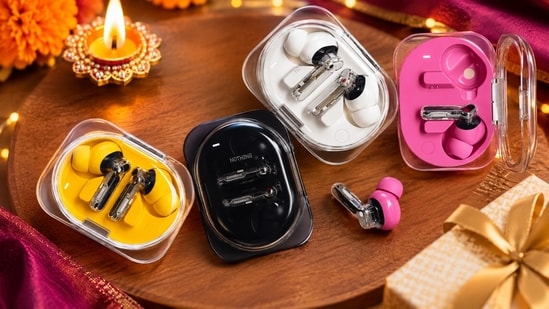
I know the Nothing Ear (a) is not a new launch, but its design still has plenty of character. The transparent case and distinctive earbud styling make it stand apart from conventional TWS models. There is more than appearance to consider, too: it supports up to 45dB ANC, an 11mm dynamic driver and LDAC for high-resolution audio. Nothing claims up to 42.5 hours of playback with the case.
Why we picked it
I would pick the Ear (a) for its distinctive transparent design, LDAC support and a feature set that still holds up. It is worth considering if appearance matters as much as everyday listening features.
My take: This is the design-led choice in the list and I still think it looks more interesting than many newer alternatives. The 45dB ANC and LDAC support give it substance beyond its appearance.
{{#product}}{{/product}}
The CMF Buds 2 take a slightly different approach, pairing 48dB Hybrid ANC with an 11mm PMI driver and Dirac Opteo tuning. They also feature six HD microphones, spatial audio and IP55 water and dust resistance. Battery life is another selling point, with Nothing claiming up to 55 hours of total playback. There is dual-device connectivity as well, which adds to their everyday usefulness.
Why we picked it
The CMF Buds 2 bring together hybrid ANC, Dirac Opteo tuning, spatial audio and a long battery claim. I would shortlist them for buyers who want a feature-rich pair without spending their entire budget.
My take: The CMF Buds 2 make a strong case on paper, especially with their combination of noise cancellation, call features and battery life. I also like that they offer dual connection, which is useful if you regularly move between two devices. If you prefer a more understated purchase over a design statement, these are worth comparing with the Nothing Ear (a).
Top 3 features of wireless earbuds under ₹5,000
Factors to consider when buying wireless earbuds
- Noise cancellation: Do not compare earbuds only by their maximum ANC figures. Fit, ear-tip seal and the type of background noise also affect how much sound is reduced.
- Battery with ANC enabled: Check the playback figure with ANC switched on. The advertised total battery life often uses ANC-off conditions.
- Comfort and fit: Earbuds that feel uncomfortable after an hour can become frustrating, regardless of their sound quality. Check the available ear-tip sizes and design.
- Phone compatibility: Features such as LDAC and LHDC need compatible devices to deliver their intended benefits. Check codec support before making a decision.
Similar stories for you:
I would skip predictable tech gifts this Diwali and consider these smartwatches instead
- Are ANC earbuds under <span class='webrupee'>₹</span>5,000 worth buying?
Yes. This price segment includes models with active noise cancellation, app-based controls and multiple microphones. The actual experience still depends on fit and how well the ANC handles the noise around you.
- Does a higher ANC rating mean better noise cancellation?
Not necessarily. The rating indicates the maximum noise reduction depth under specific test conditions. Fit, ear-tip seal and noise frequency also affect real-world performance.
- How much battery life should I look for in TWS earbuds?
Look at both single-charge playback and total playback with the case. If you use ANC regularly, prioritise the battery figure with ANC enabled rather than the maximum advertised figure.
- Are wireless earbuds compatible with both Android and iPhones?
Most Bluetooth TWS earbuds work with both platforms for basic audio and calls. However, certain features, codecs and app functions may vary depending on the phone.
- Is water resistance important in wireless earbuds?
It is useful if you exercise, sweat frequently or use earbuds outdoors. Check the exact IP rating and remember that water resistance does not make earbuds suitable for swimming or submersion.
Disclaimer: At Hindustan Times, we help you stay up-to-date with the latest trends and products. Hindustan Times has an affiliate partnership, so we may get a part of the revenue when you make a purchase. We shall not be liable for any claim under applicable laws, including but not limited to the Consumer Protection Act, 2019, with respect to the products. The products listed in this article are in no particular order of priority.