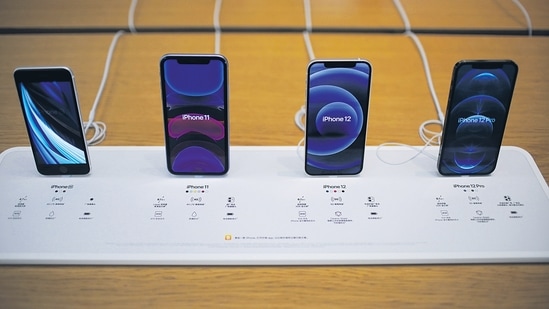
Cut to 2024, Apple iPhones in India might be different from those in EU nations
According to the EU policymakers, the single charger rule will simplify the lives of Europeans while reducing the mountain of ‘obsolete’ charges and also reduce costs.
The European Union parliament has passed a new law making it mandatory for all smartphones, tablets and cameras to have the USB-C single charger from late 2024. The move adopted with 602 votes in favour and 13 against will push technology giant Apple to drop its Lightning port on its iPhones, at least in Europe, AFP reported. The makers of laptops will have extra time as they will have to adapt the new charger by 2026. According to the EU policymakers, the single charger rule will simplify the lives of Europeans while reducing the mountain of ‘obsolete’ charges and also reduce costs.
Apple already uses USB-C charging ports on its iPads and laptops, but has resisted a EU legislation to force a change away from its lightning ports on the iPhones. (MINT_PRINT)
{{^htLoading}} {{/htLoading}}
According to report, it is set to save at least 200 million Euros per annum and cut more than a thousand tonnes of electronic waste in the EU every year, the European bloc's competition chief Margrethe Vestager told AFP.
Apple already uses USB-C charging ports on its iPads and laptops, but has resisted a EU legislation to force a change away from its lightning ports on the iPhones.
It is another fact that some users of its latest iPhone models have complained that the Lightning cable transfers data at only a bare fraction of the USB-C cable.
The customers buying a device will now have a choice to get one with or without a USB-C charger, as they might already have one at home. The makers of electronic consumer items except Apple in Europe had agreed to a single charging norm a decade ago under a voluntary agreement with the European Commission, the AFP report added.
{{^htLoading}} {{/htLoading}}
{{^usCountry}}
However, Apple had refused to abide by it, while other manufacturers continued keeping their alternative cables like USB-A, mini-USB and USB-micro.
{{/usCountry}}
{{#usCountry}}
However, Apple had refused to abide by it, while other manufacturers continued keeping their alternative cables like USB-A, mini-USB and USB-micro.
{{/usCountry}}
The USB-C ports are capable of charging at up to 100 Watts, can transfer data up to 40 gigabits per second and can serve to hook up to external displays. Cupertino-based Apple also offers wireless charging for its latest iPhone models. There are speculations that it might do away with charging ports for cables in future, AFP reported.
Follow the latest breaking news, major developments and agenda-setting stories from India and around the world with the newsdesk at Hindustan Times. Operating round the clock, the desk brings together experienced editors, reporters and correspondents to deliver fast, accurate and contextual reporting across subjects that influence public policy, governance, business, society and international affairs. The HT News Desk covers politics, elections, government policies, the economy, business and markets, science and technology, the environment, law and order, infrastructure, education, climate issues and geopolitics, while closely tracking developments across states, institutions and global capitals. The team also leads coverage of major breaking news events, policy announcements, court proceedings, natural disasters, public emergencies and significant international developments. Reports published by the newsdesk are based on information gathered from reporters on the ground, official statements, government agencies, court records, regulatory filings, recognised institutions and other authoritative sources. Stories undergo editorial scrutiny and verification processes to ensure accuracy, fairness and relevance, and are updated as events evolve and additional information becomes available. Whether covering a key political decision in New Delhi, an economic policy shift affecting millions, a landmark court ruling or a major global event, the HT News Desk aims to provide readers with reliable, fact-based journalism that delivers not only the latest developments but also the context and analysis needed to understand their wider implications.
Stay updated with the latest Technology News, gadget launches, app updates, artificial intelligence and digital trends. Find reviews, comparisons and useful insights from the world of tech.
Stay updated with the latest Technology News, gadget launches, app updates, artificial intelligence and digital trends. Find reviews, comparisons and useful insights from the world of tech.
Home/Technology/Cut to 2024, Apple iPhones in India might be different from those in EU nations