There is a certain freedom in leaving your laptop behind and slipping a slim tablet into your bag. For students and professionals constantly on the move, it means carrying less while still having the tools to get work done. As tablets become more capable of handling documents, video calls and everyday multitasking, replacing a laptop no longer seems far-fetched.
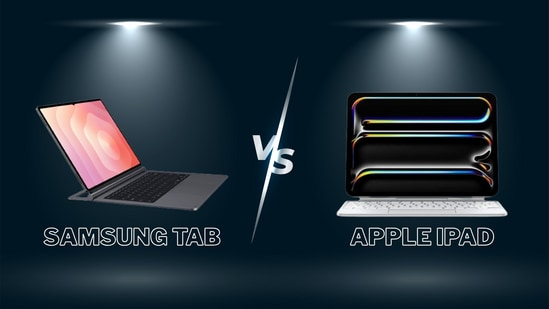
With the Amazon Great Indian Festival Sale 2026 bringing tablet discounts, this could also be a chance to explore devices that suit your work needs without stretching your budget. However, convenience alone doesn't guarantee a seamless work experience. When deadlines pile up, keyboard support, app compatibility, software and multitasking can make all the difference. Read on to compare Apple iPads and Samsung Galaxy Tab tablets and see which comes closest to replacing your laptop in 2026.
Design and build quality
A tablet that replaces your laptop needs to feel comfortable on a commute and practical enough for hours of work. The flagship match-up pits two premium designs with different priorities against each other. Samsung's Galaxy Tab S11 Ultra has a substantially larger display, giving users more room to arrange apps side by side or work on a video timeline. The iPad Pro M5, meanwhile, has a more compact footprint, which may make it easier to hold and carry around. Both are exceptionally slim, though Samsung's larger tablet can feel more cumbersome without a stand or keyboard case.
Accessories also shape how these tablets fit into a work routine. Samsung includes its S Pen, while Apple sells the Pencil separately. The iPad Pro's Magic Keyboard offers a trackpad, which may help users who regularly switch between typing, selecting text and navigating apps. Samsung's keyboard accessories and DeX mode take a different approach, offering a desktop-like interface that can help when working across multiple windows. The Ultra's microSD card slot also offers a convenient way to expand storage on supported configurations.
The standard Galaxy Tab S11 and iPad Air M4 are closer in size, so portability matters less. Both have aluminium construction and flat-sided designs, while Samsung offers water resistance and includes an S Pen. The iPad Air remains a straightforward option for Apple users, though buyers should factor in the extra cost of a keyboard and stylus if they plan to use it as a laptop replacement.
Performance and software
In terms of processing power, the flagship iPad Pro M5 and Galaxy Tab S11 Ultra can handle demanding productivity tasks, from editing large documents to working in creative apps. The iPad Pro's M-series chip gives it an advantage in several demanding workloads, while Samsung's flagship hardware is well suited to multitasking, entertainment and everyday productivity. Neither device should be viewed as merely a large-screen companion to a smartphone. The more important question is how effectively its software supports the work you need to do.
Samsung DeX is a notable part of the Galaxy Tab experience. It offers a desktop-like interface and helps you arrange multiple windows or connect the tablet to an external display. Apple's iPadOS has its own multitasking features and external-display support, but it remains more tablet-oriented. Users who prefer a desktop-style environment may find Samsung more familiar, while Apple's ecosystem can appeal to those who already rely on Mac, iPhone, and iPad apps.
The standard Galaxy Tab S11 and iPad Air M4 are also closely matched for everyday use, including browsing, office work, note-taking and multitasking. Apple's M4 chip has an advantage in several CPU-heavy tasks, while Samsung's hardware and software offer useful flexibility, including expandable storage and the included S Pen. The differences may be less noticeable when working with documents or attending meetings than when running demanding applications.
Apple still has an advantage in creative software, particularly for users working with video, music and illustration. Final Cut Pro and Logic Pro are available on supported iPad models, alongside a wider selection of creative apps optimised for Apple's tablet platform. Android tablets have made progress, with Adobe bringing Photoshop and Premiere to the platform, but availability and feature sets vary. Premiere on Android isn't equivalent to the full desktop Premiere Pro experience, and Samsung tablets don't currently offer direct alternatives to every iPad-exclusive creative app. Buyers should check compatibility with their preferred tools before deciding.
Battery
Battery life matters when a tablet needs to last through meetings, travel and stretches of work away from a power outlet. The Galaxy Tab S11 Ultra has a larger battery than the iPad Pro M5, partly because it has a larger body and display. However, battery capacity alone does not determine endurance. Screen brightness, background activity, video calls and demanding creative work can all influence how long either device lasts between charges. Independent testing shows that both can offer extended use, though results vary with workload and testing conditions.
For the standard models, the Galaxy Tab S11 has a larger battery and supports faster wired charging than the iPad Air M4. That may appeal to people who regularly top up their device between classes or meetings. Still, real-world battery life depends on how you use the tablet, and a larger battery doesn't automatically guarantee longer endurance in every scenario. Both suit everyday productivity, but users who spend hours gaming or editing video should look for battery tests that match their workload.
Display and audio
The display is one of the clearest differences between the flagship tablets. The Galaxy Tab S11 Ultra's expansive AMOLED screen gives users more room for split-screen work and a cinematic viewing experience. The iPad Pro M5 uses an OLED panel that delivers strong contrast and detailed visuals in a smaller footprint. Samsung's larger screen may be more convenient for timelines and multiple documents, while Apple's display and colour handling may appeal to photographers and video editors. Neither is automatically the better choice for every workflow.
The standard Galaxy Tab S11 also uses an AMOLED display with a high refresh rate, while the iPad Air M4 has a Liquid Retina LCD panel with a standard refresh rate. Samsung's screen may offer deeper blacks and smoother scrolling, making it attractive for films, games and everyday browsing. The iPad Air's display remains suitable for reading, writing and editing documents, although users who prioritise contrast and fluid motion may prefer Samsung's panel.
Audio matters if you use your tablet for video calls, online classes or entertainment. Both families offer multi-speaker systems on their premium models, although the listening experience can vary by device size and content. The Ultra's larger body may create a more spacious multimedia setup, while the iPad Pro and iPad Air can work well for everyday calls and media playback. For professional audio work, however, software compatibility and external accessories may matter more than the built-in speakers alone.
Ultimately, the right tablet depends on the work you expect it to handle. The Galaxy Tab Ultra may suit users who want a large AMOLED screen and a desktop-like interface, while the iPad Pro is worth considering for demanding creative workflows. In the standard category, the Galaxy Tab S11 offers display and stylus advantages, whereas the iPad Air brings Apple's chip performance and app ecosystem. Before you buy, consider your preferred software, keyboard needs and typical workload rather than relying on specs alone.
Q1. Are Samsung tablets or Apple iPads better for productivity?
Samsung tablets offer DeX on supported models for desktop-style multitasking, while iPads provide access to a wide range of tablet-optimised productivity and creative apps. Both support keyboard accessories and handle everyday office tasks, but software compatibility can determine how effectively they replace a laptop.
Q2. What are the main advantages of Samsung tablets and Apple iPads?
Samsung tablets offer features such as expandable storage on selected models, customisation, and an included S Pen on compatible Galaxy Tab devices. Apple iPads benefit from a broad app ecosystem and integration with Macs and iPhones, making them useful for creative work and for users already invested in Apple's ecosystem.
Also Read:
10 smartwatches with features that could make your phone less necessary
- What discounts are available on tablets during the Amazon Great Indian Festival Sale 2026?
Amazon is offering discounts on tablets from brands such as Samsung and Apple, alongside bank offers and other savings. Eligible shoppers can also access a 10% instant discount with SBI credit and debit cards, subject to the applicable terms.
- Which Samsung tablets are available at discounted prices during the Amazon Great Indian Festival Sale 2026?
The Samsung Galaxy Tab S10 Lite is listed at rupees 30,999, down from its listed original price of rupees 57,999. Additional bank discounts and eligible payment offers may reduce the effective price further.
- Can buyers save more on tablets during the Amazon Great Indian Festival Sale 2026?
Yes. Eligible purchases may qualify for SBI card discounts, no-cost EMI and exchange offers. Prime members may also receive additional savings on select deals. The final price depends on the tablet, configuration, payment method and offer eligibility.
Disclaimer: At Hindustan Times, we help you stay up-to-date with the latest trends and products. Hindustan Times has an affiliate partnership, so we may get a part of the revenue when you make a purchase. We shall not be liable for any claim under applicable laws, including but not limited to the Consumer Protection Act, 2019, with respect to the products. The products listed in this article are in no particular order of priority.