Poco finally launched the Poco F7 in the Indian market on June 24, and at first glance, it seems to follow the same winning formula that made the Poco F1 so popular: offering a powerful hardware package at an aggressive price. The F7 packs powerful internals, including a massive 7,550mAh battery that just keeps going, and the Snapdragon 8s Gen 4 chip, all starting at an aggressive price of ₹31,999. After testing the phone for a few weeks, here’s my full review, including where the phone truly excels, and areas where Poco could have done much better. Read on.
Premium design goes a long way
You may be interested in
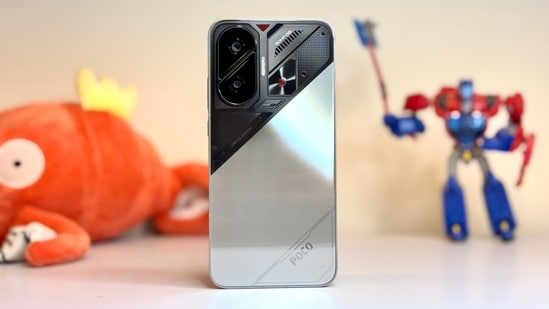
The design immediately feels premium in hand. When I first unboxed the Poco F7, I was genuinely impressed, the build feels solid and premium. The phone is made of glass and metal. The sides are flat, the screen is flat, the back is flat. It has an industrial look and feel that stands out.
There's also a good heft to the phone, which I personally enjoy. It weighs over 220 grams, and while that might not be to everyone’s taste, I like it, it makes the device feel like something from a higher segment.
The special edition of the phone features a Snapdragon logo on the back and a shiny finish with limited edition branding.
But it’s not just about aesthetics. Under the hood, the device is rated IP68 and IP69 for water resistance, making it well protected against the elements. It also features Corning Gorilla Glass 7i, offering added resistance to scratches. The buttons feel tactile and high quality, while the front display has symmetrical and minimal bezels, giving the phone a truly premium look. Having said that, if you are not into flashy designs, you may way to have a look at other colourways of the phone, such as the White one.
Battery life and performance is where the Poco F7 really shines
On paper, the 7,550mAh battery with support for 90W fast charging already sounds great. But after using it for a couple of days, I can confidently say this is a solid two-day phone for most users (or more if you are a light user). Even after a full charge, going through the setup process, installing apps, testing the camera, recording videos, taking photos, running benchmarks—by the second day, the phone still had 53% battery left.
So, even if you forget to charge it after the first day, it will easily last without any issues. Having said that, the charging time is around an hour, which is more than reasonable for such a massive battery. The good part is you won’t need to charge it that often.
{{/usCountry}}So, even if you forget to charge it after the first day, it will easily last without any issues. Having said that, the charging time is around an hour, which is more than reasonable for such a massive battery. The good part is you won’t need to charge it that often.
{{/usCountry}}The phone also provides battery stats in the settings menu. There are built-in battery protections, multiple charging options including standard and high-speed modes, as well as different battery-saving modes.
Now, coming to performance, the Poco F7 handles itself well. There are barely any hiccups. Apps open quickly, and memory management is solid. Apps remain in memory and reload swiftly from the recent apps section.
This is thanks to the Snapdragon 8s Gen 4. While it may not be as powerful as the Snapdragon 8 Gen 2, it still holds its own. In terms of benchmarks, the phone scored 1978 in Geekbench 6 single-core and 6210 in multi-core. These are numbers that give a good idea of its performance.
When compared to rivals like the Realme GT 7, which sits in the same price bracket and scored 2119 and 7184, the Poco F7 holds up well.
That said, one major downside is the preloaded apps on HyperOS 2.0, especially on the Poco F7. There were at least five or six games, multiple social media apps, and more that I had to uninstall to clean up the interface. For a phone that costs around ₹30,000, this is unacceptable. Yes, you can uninstall them, but it does create a jarring first impression.
There's also the App Vault that you can access by swiping right on the home screen, and it, too, had a lot of unnecessary content, which I had to manually remove for my view.
What about the camera?
The Poco F7 has a dual camera setup on the back, along with a 20MP front-facing camera. The main rear camera is 50MP and takes decent shots, though it’s not the best in terms of detail. Highlights can be patchy, and the phone can sometimes struggle with exposure. But under good lighting conditions, the results are detailed, colours are natural and not overly saturated, and overall output is quite usable.
The camera app is simple to use, with various modes just a tap away, including some genuinely fun filters.
Video performance is decent too. The footage is stable, and autofocus is quick. However, if you want to shoot in 4K, you'll be limited to the main 1x lens as the 0.6x ultra-wide lens doesn’t support 4K recording.
I wouldn’t call it the best camera in the segment, but it adds to the overall well-rounded nature of the phone. It’s not the best in class, but it does a reasonably good job.
You can check out the video below for image samples:
So, should you buy the Poco F7?
The Poco F7 costs ₹31,999 for the base variant with 12GB RAM and 256GB storage. If you want the 512GB storage model, it will cost you ₹33,999.
At this price, I believe the phone offers some of the best hardware in its class, including a premium design that rivals like the Realme GT 7 don’t quite match, and best-in-segment battery performance, which is easily one of the best I’ve experienced on any smartphone.
Performance is also excellent, with no noticeable slowdowns. But yes, the presence of bloatware is still a downside, even though it’s removable.
So, do I recommend the Poco F7 at this price? Yes, I do. It delivers the basics right, it doesn’t skimp on durability, and offers great value for the money you pay to the brand. 8.5 out of 10 stars for me.
MOBILE FINDER: iPhone 16 LATEST Price