For years, sleep was treated as the part of the day that happened after everything else was done. Work was finished, dinner was over, the phone was finally put away, and then it was time to go to bed. But our understanding of sleep has changed. It is no longer simply downtime between two days; it plays an important role in how we feel, recover and perform the following day.
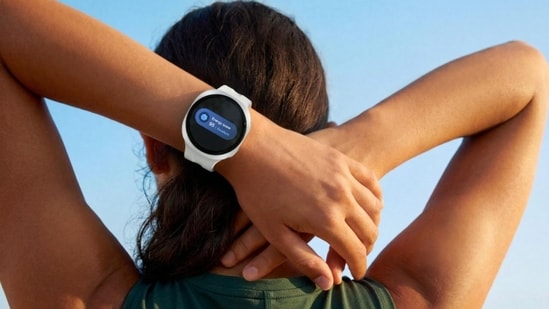
That also changes how we should think about being a “morning person”. It may have less to do with personality and more to do with whether your sleep routine is actually working for you. The difficult part is figuring that out. Most of us don't know exactly how consistent our sleep is, whether we are getting enough rest or how the previous day's activity affects the night that follows.
This is where wearable technology can be useful. The Galaxy Watch9 and Galaxy Watch Ultra2, Samsung Health App tracks sleep through sleep coach and combines that information with activity and other health data. The idea is not simply to collect more numbers, but to turn them into actionable insights that can help users understand their routines and make gradual changes.
Samsung Health App also brings together information such as heart rate, steps and activity data to provide an overall view of fitness, rather than simply counting individual workouts.
A better morning starts with understanding your sleep
{{/usCountry}}Samsung Health App also brings together information such as heart rate, steps and activity data to provide an overall view of fitness, rather than simply counting individual workouts.
A better morning starts with understanding your sleep
{{/usCountry}}The first step towards becoming a morning person isn't necessarily waking up earlier. It is understanding whether you are actually getting the rest you need.
Sleep tracking on the Galaxy Watch9 and Galaxy Watch Ultra2 provides information about sleep duration and different sleep stages, while also monitoring factors such as heart rate, movement and breathing during the night. Samsung Health brings this information together to give users a broader view of their sleep patterns.

The benefit becomes more apparent when you look at several nights rather than one. You might discover that your bedtime changes significantly between weekdays and weekends, that you regularly sleep less than you thought or that particularly active days affect your sleep. These patterns can be difficult to spot when you are simply going through your daily routine.
Samsung Health also offers Bedtime Guidance, which uses recent sleep information to suggest a suitable bedtime based on when you want to wake up. Instead of simply setting an earlier alarm, users can work backwards and create a routine that gives them enough time to rest.

Sleep Coaching turns tracking into action
Tracking sleep is useful, but data alone doesn't necessarily change behaviour. Knowing that your sleep schedule is inconsistent is one thing; knowing what to do about it is another.
Samsung's Sleep Coaching feature is designed to address that gap by analysing sleep patterns over time. Users need at least seven days of sleep data, including a workday and a day off, before Samsung Health can generate the information required for Sleep Coaching. It then identifies a sleep type represented by an animal and creates a personalised coaching programme designed around the user's sleep patterns.
Samsung describes the programme as lasting around three to four weeks, making it less about fixing one bad night and more about building better habits over time.
That approach fits the reality of changing a sleep schedule. Becoming a morning person rarely happens because of one big adjustment. It usually involves smaller changes, such as maintaining a consistent bedtime and getting enough sleep, repeated until they become part of your routine.
Energy Score connects sleep with the day ahead

Sleep doesn't exist in isolation. How active you were yesterday and how well you recovered can influence how ready you feel when the next day begins.
Energy Score is designed to provide an indication of daily readiness using information such as previous-day activity, sleep and heart rate during sleep.
Samsung Health combines health and activity information to provide a personalised Energy Score, helping users understand how prepared they may be for the day. The new Samsung Health experience surfaces this alongside daily wellness guidance, making it easier to connect overnight recovery with the demands of the day ahead.
This can provide useful context for everyday decisions. Someone planning a workout, for example, may choose to push harder when their recovery looks good or take a lighter approach when they haven't recovered as well.
A related feature, Daily Cardio Load, looks at the cardiovascular strain accumulated through daily activity and workouts. It can indicate whether you are under target, in an optimal range, over target or may need rest, helping take some of the guesswork out of deciding when to push harder and when to recover.
Energy Score is not a medical assessment and isn't intended to diagnose health conditions. It is a wellness indicator that puts recent sleep and activity into context, giving users another detail to consider alongside how they feel. Similarly, an ECG recorded by a Galaxy Watch is not a replacement for a clinical ECG test or a doctor's evaluation. Smartwatch ECG readings can be affected by movement, skin contact and other factors, and they should not be used to diagnose or rule out a heart condition. If you experience chest pain, fainting, severe breathlessness, unusual palpitations or other concerning symptoms, seek medical care promptly rather than relying on a smartwatch reading.
It is also worth keeping expectations realistic when comparing budget smartwatches in India. Their heart-rate and SpO₂ readings can be useful for observing general trends, but accuracy may vary with the sensor, fit, skin contact, movement and activity. Readings taken during exercise or when the watch is worn loosely may be less reliable. These measurements should not be treated as diagnostic results or used to make medical decisions. If a reading appears unusual or you have symptoms, repeat the measurement at rest with a suitable medical device and consult a healthcare professional.
Galaxy AI helps connect the dots
Modern smartwatches can collect a huge amount of health information, but more data doesn't necessarily mean better understanding. Most people don't want to spend their morning analysing graphs and individual measurements.
This is where Samsung's AI-powered health experience becomes relevant. Samsung Health brings together information across sleep, activity, cardiovascular health and recovery, while Galaxy AI can help turn that information into more personalised insights.
Beyond individual metrics, Samsung Health can also look at overnight signals such as heart rate, heart-rate variability, respiratory rate, skin temperature and blood oxygen. Its Vitals experience can flag meaningful deviations from a user's baseline, helping provide a clearer picture of changes in the body's signals rather than requiring users to interpret every number individually.
The newer Heart Health Score also brings together factors including sleep, stress, activity and body composition into a single score, helping users understand how everyday lifestyle habits can relate to their broader heart-health picture.
However, health features do not work identically on every phone or Galaxy Watch. ECG and some advanced heart-monitoring tools require a compatible Galaxy Watch, a compatible Samsung Galaxy smartphone and the Samsung Health Monitor app, which includes the Samsung Health Monitor ECG feature. Availability can also depend on the country, software version and device model. Before buying a smartwatch for ECG or health tracking, check Samsung's current compatibility list and ensure the watch and phone are updated. Users with non-Samsung Android phones may still access selected Samsung Health features, but ECG access and other advanced functions may be limited. A Galaxy Watch can support wellness tracking, but its readings are not a substitute for a clinical ECG or medical evaluation.
For users in India in 2026, ECG availability on a Samsung Galaxy Watch depends on more than owning a compatible watch. The ECG feature is accessed through the Samsung Health Monitor app, and support can depend on the specific Galaxy Watch model, compatible Samsung Galaxy smartphone, software version and local regulatory approval. Samsung Health Monitor availability and supported features may also change over time, so buyers should check Samsung India's current device and service list before purchasing a watch for ECG monitoring. A Galaxy Watch ECG can help record a single-lead reading for personal reference, but it is not a clinical ECG and cannot diagnose or rule out a heart condition. Users should not delay medical care because the app reports a normal result or because the feature is unavailable on their device.
For someone trying to improve their mornings, the advantage is seeing the bigger picture rather than treating every metric separately. Sleep, activity and recovery are connected parts of the same routine, and understanding those relationships can make the data more useful.
The Galaxy Watch9 and Galaxy Watch Ultra2 therefore aren't simply measuring what happened overnight. They can help users build a longer-term picture of their habits and identify areas where small changes may improve their overall routine.
That broader view also extends to fitness: the Fitness Index considers heart rate, steps and activity data to give users an overall view of their fitness level, while highlighting areas of strength and areas that may need improvement.
ECG availability in India varies by brand and ecosystem
If ECG is an important buying factor, availability in India depends on the watch model, the companion app, the phone it is paired with and local regulatory support. It should not be assumed that every smartwatch with an ECG sensor offers the same feature in every country.
The Fitbit Sense 2 includes ECG hardware, but the Fitbit ECG app and supported features depend on the model, software, account region and current local availability. Buyers in India should check Fitbit’s latest support information before purchasing, rather than assuming that the ECG app will be enabled simply because the watch has the required sensor. Fitbit’s SpO₂ and other wellness measurements are separate features and should not be treated as medical diagnoses.
Withings follows a similar model-specific approach. ECG support is available on selected products, including the Withings ScanWatch range and ScanWatch 2, but the Withings ScanWatch ECG feature can vary by model, country and regulatory approval. The presence of an ECG-capable sensor does not guarantee that the feature is activated in India. Buyers should confirm the exact model and the current Withings Health Mate support information before making a decision.
Apple Watch ECG support is also regional rather than universal. In India, ECG is supported on compatible Apple Watch models, including Apple Watch Series 4 and later, subject to the required software, region and device compatibility. Apple Watch Series 11 should therefore be viewed as part of Apple’s wider health ecosystem, but buyers should still verify the health features available for their specific model and market. Apple Watch requires an iPhone; it is not designed to provide its full health experience when paired with an Android phone.
For Android users, a smartwatch can be a strong all-rounder when it combines everyday essentials — such as notifications, calls and apps — with fitness and health tools. Galaxy Watch Ultra offers this connected experience, while Galaxy Watch features and phone compatibility can vary by model; some functions, including ECG through Samsung Health Monitor, require a compatible Samsung Galaxy smartphone, supported software and local availability. Check Samsung India’s current compatibility information before choosing a watch, especially if you want specific health features.
Smartwatch buying guide: what to check before you chooseBefore choosing a smartwatch in India, start with the phone you use and the features you need. Check that the watch works with your smartphone and that key functions — such as ECG, SpO₂, sleep tracking and notifications — are available for that model and in your region. If you want LTE, confirm that the watch supports it and that your mobile carrier offers compatible service.Next, consider how you plan to use the watch. Compare fitness tools, everyday features and battery life, including the manufacturer’s estimates for different modes; actual battery life can vary with settings and use. Try to find a comfortable fit and a design that suits your routine. Finally, compare the total price in India, including any LTE plan or other ongoing costs. Treat health readings as wellness information, not a substitute for clinical testing, and consult a healthcare professional if you have symptoms or concerns. For example, Apple Watch and Garmin Venu 3 offer different feature sets and phone ecosystems, so check current compatibility and availability before buying.
Choosing a smartwatch in India: fit, features and price
There is no single smartwatch that is right for every man — or every buyer. Start with the size and fit you find comfortable, the style you prefer, the phone you use and how you plan to use the watch. Everyday wear may call for notifications and convenient calling, while training-focused use may make activity tools and GPS more important. If you want a rugged design or LTE connectivity, check the exact model’s specifications and phone or carrier compatibility. A Garmin watch such as Garmin Venu 3, an Apple Watch and a Galaxy Watch offer different features and ecosystems, so compare them against your needs rather than treating them as interchangeable.
Smartwatch prices in India vary by brand, model, case size, connectivity and retailer offers. Budget models generally focus on everyday essentials, while mainstream and premium watches may add more advanced fitness tools, materials, apps or LTE options. Prices and availability can change, so check current listings and compare the exact model before buying; the Galaxy Watch EMI offer mentioned above is a financing option, not a guide to the full market price range.
Budget smartwatch buyers can typically look for features such as notifications, step and activity tracking, sleep summaries and heart-rate monitoring. Calling, built-in GPS and other tools depend on the model, so check the specifications rather than assuming they are included. These readings are useful for observing general trends, but they are not a substitute for clinical testing or medical advice.
Design is another useful way to narrow your choices. Round-faced watches, including Garmin Venu 3, may have a more traditional watch appearance, while Apple Watch models use a rectangular display. The look also depends on the case, dial and strap, so consider comfort and personal style alongside features.
Becoming a morning person is about changing the night
There is an irony to the idea of becoming a morning person. We tend to think it means waking up earlier, but the more important changes often happen long before the alarm goes off.
If your sleep schedule is inconsistent, simply changing your wake-up time won't solve the underlying problem. If you don't know how much sleep you are actually getting, it becomes difficult to make meaningful changes. And without seeing whether those changes are working, it is easy to return to old habits.
This is where the Galaxy Watch9 and Watch Ultra2 approach makes sense. This is because Samsung Health's Sleep tracking can help establish a picture of your routine, Bedtime Guidance can help plan your bedtime, Sleep Coaching can turn your patterns into a longer-term programme, and Energy Score can connect your recent sleep and activity with your readiness for the day ahead.
Together with features such as Fitness Index, Daily Cardio Load, Vitals and Heart Health Score, the experience moves beyond simply tracking individual measurements towards helping users understand how sleep, activity, recovery and everyday habits fit together.
The Galaxy Watch9 is advertised at ₹1,417 per month and the Galaxy Watch Ultra2 at ₹2,438 per month on a 24-month EMI plan. These figures include cashback or upgrade offers and are conditional promotional payments, not standard smartwatch prices; eligibility and terms may apply. Offers and prices can change. Check Samsung India for the latest details and terms: [Samsung India](https://www.samsung.com/in/).
You may be interested in
3% OFF
Samsung Galaxy Watch9 (44mm Bluetooth, Graphite)
Samsung Galaxy Watch9 (44mm Bluetooth Graphite)
₹40,906
₹41,999Get This
29% OFF
DHK RETAIL For Samsung Galaxy Watch9 40mm / 44mm / Watch8 40mm / 44mm / Watch8 Classic 46mm Dual Color Silicone Strap - Grey/Orange
DHK RETAIL For Samsung Galaxy Watch9 40mm / 44mm / Watch8 40mm / 44mm / Watch8 Classic 46mm Dual Color Silicone Strap - Grey/Orange
₹2,469
₹3,459Get This
6% OFF
Samsung Galaxy Watch9 (44mm LTE, Silver)
Samsung Galaxy Watch9 (44mm LTE Silver)
₹43,105
₹45,999Get This
4% OFF
Samsung Galaxy Watch9 (40mm LTE, Graphite)
Samsung Galaxy Watch9 (40mm LTE Graphite)
₹41,206
₹42,999Get This
43% OFF
Samsung Galaxy Watch8 (44mm, LTE, Silver) with 3nm Processor | Dual GPS | Sapphire Glass & Armor Aluminum | 5ATM & IP68 | BP, ECG, IHRN & Vascular Load Monitoring | Anti-oxidant Index
Samsung Galaxy Watch8 (44mm LTE Silver) with 3nm Processor | Dual GPS | Sapphire Glass & Armor Aluminum | 5ATM & IP68 | BP
₹25,999
₹45,999Get This
Samsung Galaxy Watch9 User Guide For Seniors And Beginners: A Simple Step-By-Step Manual To Set Up, Navigate, Customize, Connect, And Use Your Galaxy Watch9
Samsung Galaxy Watch9 User Guide For Seniors And Beginners: A Simple Step-By-Step Manual To Set Up Navigate Customize
₹599
Get This
17% OFF
Samsung Galaxy Watch9 User Guide: A Step-by-Step Manual for Setup, Customization, Samsung Health, Galaxy AI, Fitness Tracking, Notifications, Apps, Battery Management, and Troubleshooting
Samsung Galaxy Watch9 User Guide: A Step-by-Step Manual for Setup Customization Samsung Health
₹2,277
₹2,755Get This
29% OFF
DHK RETAIL For Samsung Galaxy Watch9 40mm 44mm / Watch8 40mm 44mm Jelly Texture Silicone Smart Watch Strap - Pink
DHK RETAIL For Samsung Galaxy Watch9 40mm 44mm / Watch8 40mm 44mm Jelly Texture Silicone Smart Watch Strap - Pink
₹1,199
₹1,679Get This
48% OFF
Samsung Galaxy Watch8 (44mm, Bluetooth, Graphite) with 3nm Processor | Dual GPS | Sapphire Glass & Armor Aluminum | 5ATM & IP68 | BP, ECG, IHRN & Vascular Load Monitoring | Anti-oxidant Index
Samsung Galaxy Watch8 (44mm Bluetooth Graphite) with 3nm Processor | Dual GPS | Sapphire Glass & Armor Aluminum | 5ATM & IP68 | BP
₹21,999
₹41,999Get This
SAMSUNG GALAXY WATCH9 MADE SIMPLE FOR SENIORS AND BEGINNERS: A Step-by-Step Guide to Wear OS 7, One UI 9 Watch, Gemini AI, Samsung Health, Fitness & Sleep Tracking...,Messages, Apps, Customization
SAMSUNG GALAXY WATCH9 MADE SIMPLE FOR SENIORS AND BEGINNERS: A Step-by-Step Guide to Wear OS 7 One UI 9 Watch Gemini AI
₹380
Get This