Aviation security watchdog Bureau of Civil Aviation Security (BCAS) has suggested installing Computer Tomography (CT) scanners at airports, thus eliminating the need for taking out electronic devices from hand baggage before going through the scanner and further easing the process, a report from PTI states.
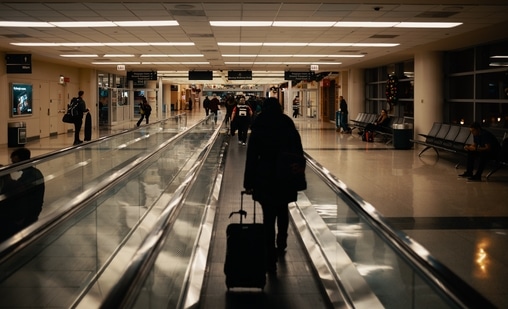
Presently, the scanners used at airports provide a two-dimensional view of the objects inside a hand baggage. However, it requires passengers to remove the devices because the batteries and some electronics items have so dense metallic material that they hide what’s beneath.
Jaideep Prasad, Joint Director General of BCAS, on Wednesday said the regulator has recommended installing scanners based on computer tomography technology at airports to scan hand baggage in a three-dimensional view.
"With such scanners, passengers will not be required to take out their electronic devices from hand baggage before going through the scanner," he told PTI.
Establishment of such scanners is also supposed to help in speeding up the security check-in procedure at airports, the report adds.
BCAS, which works under the civil aviation ministry, is yet to reveal the detailed information about the recommendation.
What is computer tomography (CT) scanner?
CT scanners are used in airports for security screening purposes to create detailed images of the contents of luggage, which can be used to identify any potential threats such as explosives or other prohibited items.
{{/usCountry}}CT scanners are used in airports for security screening purposes to create detailed images of the contents of luggage, which can be used to identify any potential threats such as explosives or other prohibited items.
{{/usCountry}}The CT technology involves sophisticated algorithms for the probe of explosives and other threats by creating a 3-D image that can be examined and rotated 360 degrees for a thorough investigation, states the US’s Transportation Security Administration (TSA).
CT scanners for security screening at airports work in a similar way to medical CT scanners, but are typically larger and more powerful, designed to be able to scan larger objects such as luggage, quickly and efficiently.
Working of CT scanners in airports:
The luggage is placed on a conveyor belt and moved into the CT scanner. Then x-ray tube rotates around the luggage, producing a series of x-ray images from different angles. X-ray detectors in the machine detect the x-rays as they pass through the luggage and convert them into electrical signals.
The computer processes the electrical signals and creates a detailed image of the contents of the luggage. It displays detailed 3D images on a monitor, and a security officer or other trained individual interprets the images to identify any potential threats.
In recent , there have been complaints about congestion and long waiting hours at various airports, especially at the airport in the national capital. Centre has taken several steps to curb congestion.