Every sale season, I end up with two tabs open: a pair of wireless earbuds with a discount banner that looks too good to ignore and a humble wired pair that costs a fraction of the price. If you have been in the same spot, you already know the problem. The listings make wireless sound like the obvious upgrade, yet plenty of people quietly go back to a cable after a few months. Here in this article I'll walk you through what actually changes in daily use, from sound and battery to calls and long-term costs, so you can decide what you should actually buy in the ongoing Amazon Great India Festival Sale 2026.
Wired vs Wireless Earphones: Major differences
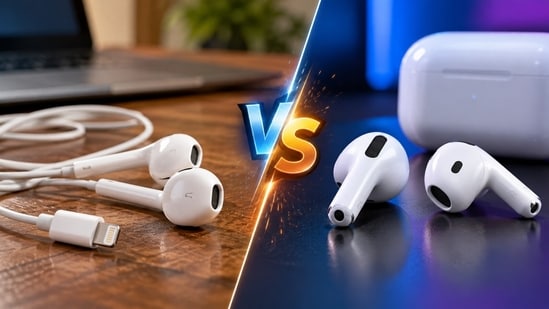
| Feature | Wired Earphones | Wireless Earphones |
|---|---|---|
| Sound quality per rupee | Usually better at lower prices | Depends on codec support, costs more for similar quality |
| Battery | None needed | Needs regular charging, a few hours per charge |
| Latency | Essentially none | Noticeable on standard modes, better with low-latency mode |
| Noise cancellation | Rare, mostly basic | Common, even on mid-range models |
| Convenience | Cable can tangle or snag | No cable, easy for travel and workouts |
| Compatibility | May need USB-C version or adapter on newer phones | Works with any Bluetooth device |
| Typical price | Lower | Higher, though sale discounts can be steep |
| Lifespan | Cable wear, cheap to replace | Battery degrades over time, hard to replace |
| Best suited for | Budget buyers, gamers, desk and home use | Commuters, gym users, frequent callers |
| Main drawback | The cable itself | Cost and battery ageing |
Sound quality: what you really hear
On paper, wired earphones have a built-in advantage. A cable carries the audio signal straight to your earpieces, so nothing gets compressed along the way. Wireless earphones have to squeeze that audio through a Bluetooth connection first, using a codec (basically a method of packing and unpacking audio data). Better codecs preserve more detail, but what you get depends on both your earphones and your phone supporting the same one. In practice, most people listening to streaming music on a commute will struggle to spot the difference. It shows up more when you listen closely, on lossless tracks or through a pair of well-tuned wired earphones. If sound per rupee is your main concern, a wired pair usually gives you more for less.
Best wired earphones to buy during Amazon Great India Festival Sale 2026:
Convenience and everyday use
This is where wireless earns its reputation. No cable means no tangles in your bag, nothing snagging on a door handle and no tug on your ear when you reach for your phone. At the gym or on a run, that freedom is hard to give up once you have felt it. Wired earphones are the opposite: plug in and play, with no pairing, no menus and no connection dropping because your phone is in the other pocket. I notice the difference most in small moments. Answering a quick call while carrying groceries is effortless with wireless earbuds, while a wired pair is easier to grab and use at a desk without thinking about whether anything is charged or connected. Neither is better in the abstract; it comes down to how often your day involves moving around.
Best wireless earphones to buy during Amazon Great India Festival Sale 2026:
Battery and charging
A wired pair never needs charging, which is a bigger advantage than it sounds. Wireless earbuds typically manage a handful of hours per charge, with the case topping them up a few times over. That is fine for most days, but the one time you forget to charge them before a long journey, you will think about your old cable.
Charging habits matter too. If you are someone who already juggles a phone, a smartwatch and a laptop charger, adding one more thing to top up is a real cost, not a trivial one. Some wireless models also offer quick top-ups, where a short stint in the case gives an hour or so of playback, which softens the problem without removing it.
Latency for gaming and video
Latency is the small delay between something happening on screen and you hearing it. Standard Bluetooth connections can add a gap that is often noticeable while watching video or playing fast games, which is why many wireless earphones now offer a low-latency mode. It helps, though wired earphones still have the edge, with essentially no delay at all. If you play competitive mobile games, this one matters.
Calls and noise cancellation
Active noise cancellation, which uses microphones to cancel out ambient sound, is far more common on wireless earphones. If you travel by train or work in a noisy space, that feature alone can justify the extra spend. Wired earphones can have decent microphones for calls, but you will rarely find real noise cancellation in the budget range.
Compatibility: the missing headphone jack
Many phones no longer have a 3.5mm headphone socket, so a standard wired pair may need an adapter, or you will need to buy a wired pair that connects through USB-C. It is a small thing, but check your phone before assuming a cable will simply work. Wireless earphones sidestep this entirely, as long as your phone supports Bluetooth, which nearly all do.
Price and value in the sale
Wired earphones are cheaper, and the gap stays wide even during sales. Wireless pairs often see steeper discounts, but a discount only helps if the product suits you. Compare the sale price with what the same model has recently sold for, not just the crossed-out price on the listing, and check the warranty and return terms before you buy.
Durability and long-term value
Wired earphones usually fail at the cable, and replacing a cheap pair is easy on the wallet. Wireless earbuds have a different weak point: the tiny built-in batteries, which gradually hold less charge and cannot be easily replaced. After a couple of years of daily use, many pairs are noticeably weaker than they were on day one. If you want something to last, treat wireless as a product with a lifespan, not a permanent purchase.
Who should buy which
If you commute, work out, take a lot of calls or simply hate cables, wireless will make your day easier, and the sale is a sensible time to buy. If you care about sound for the money, play latency-sensitive games, or want something you never have to charge, a wired pair is the smarter pick. Plenty of people end up owning both, a wireless pair for moving around and a cheap wired one for the desk.
There is no single winner here, and the sale price should not be the deciding factor. Choose wireless if freedom of movement, calls and noise cancellation matter more to you than squeezing out the most sound for your money. Choose wired if you value reliability, zero charging and better value at a lower budget. If you can, think about where you will use them most, because the right pair is usually the one that fits your routine, not the one with the biggest discount.
Similar stories for you:
Amazon Sale: I found 7 cool iPhone accessories, and some are too good to miss
Should you spend more on a MacBook or save with Windows? These Amazon deals make the choice harder
- Do wired earphones sound better than wireless ones?
Often, at the same price, yes. A cable carries audio without Bluetooth compression, though many casual listeners will not notice the gap with a good wireless pair.
- Can I use wired earphones with a phone that has no headphone jack?
Yes, through a USB-C wired pair or a suitable adapter, depending on your phone. Check the port on your device before buying.
- How long do wireless earbuds usually last?
Most pairs manage a few hours per charge, and the built-in battery typically weakens noticeably after a couple of years of regular use.
- Is there lag when gaming with wireless earphones?
Standard Bluetooth connections can introduce a small delay. Many models offer a low-latency mode that reduces it, though wired remains the most responsive.
- Is the sale a good time to buy earphones?
It can be, provided you compare the sale price against the model's recent price history and check warranty and return terms first.
Disclaimer: At Hindustan Times, we help you stay up-to-date with the latest trends and products. Hindustan Times has an affiliate partnership, so we may get a part of the revenue when you make a purchase. We shall not be liable for any claim under applicable laws, including but not limited to the Consumer Protection Act, 2019, with respect to the products. The products listed in this article are in no particular order of priority.