E-Paper



Bengaluru vs Singapore: Zoho's Sridhar Vembu on what it takes to make Indian cities livable
Sridhar Vembu says India must build robust public transport to make cities livable.

 Prefer HTon Google


As Bengaluru debates its public transport priorities, Zoho Corporation CEO Sridhar Vembu has drawn attention to Singapore’s robust public transport model, highlighting it as a path Indian cities must consider to remain livable.
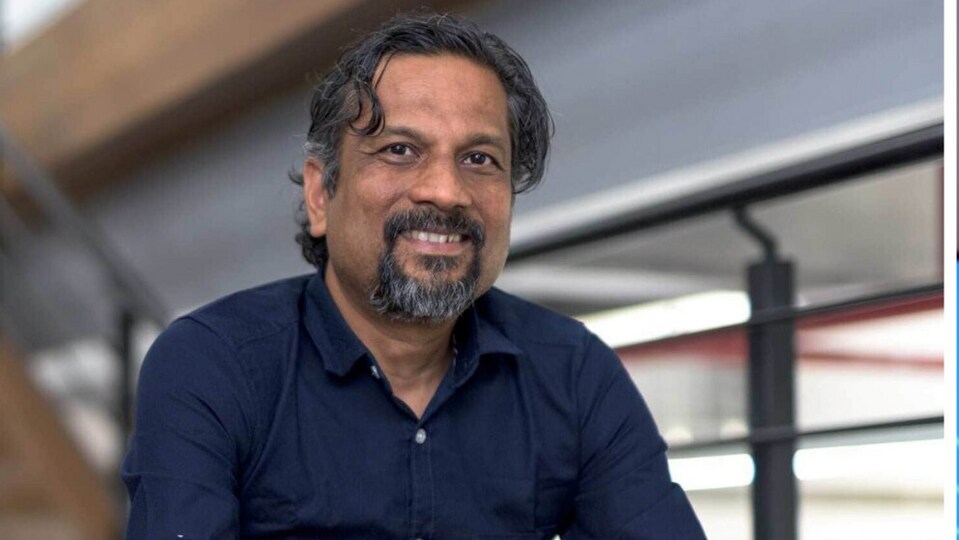
In a post on X (formerly Twitter) on Monday, Vembu said, “Singapore, one of the most advanced economies in the world and one of the most livable cities, relies extensively on public transport. Singapore also limits the number of private cars through the mechanism of open market trading of Certificate of Entitlement (COE) needed to own a car, and the certificate costs more than Singapore $100K (and the car price is on top of that).”
“Indian cities are far more dense than Singapore. We have to build extensive public transport to make our cities livable. It can be done,” he added.
Check out his post here:
Vembu’s remarks came in response to Bengaluru South MP Tejasvi Surya, who had shared a post criticising the proposed ₹18,500 crore Tunnel Road in Bengaluru. Surya argued that the massive project would benefit only the top 10% of residents who own private cars, and that the city should instead prioritise BMTC buses and Metro expansion.
“The ₹18,500 Cr Tunnel Road is a deadweight on Bengaluru, designed not for the common man, but for the elite 10% who own private cars,” Surya wrote on X.
“What the city actually needs: 16,580 BMTC buses by 2031. We have just 6,800. 317 km Metro by 2031. Only 78 km operational today,” he added.
Surya also highlighted long-pending infrastructure projects in the city, including the unopened Yellow Line and over 20 stalled flyover and road projects.
While Vembu did not mention the tunnel project directly, his comments were widely seen as a reaffirmation of the need for strong, inclusive public transport infrastructure, particularly in densely populated Indian cities like Bengaluru.
How did X users react?
Sridhar Vembu’s post advocating for public transport over private car ownership in Indian cities struck a chord with many users on X, who echoed his views and expanded the conversation around sustainable urban planning.
One user pointed out the importance of a top-down approach, stating, “Yes, the top-down approach should be followed. First provide great public infrastructure, and people will naturally shift away from private vehicles.”
Another user raised a pertinent question about urban development challenges, “Is it easier to build new infrastructure from scratch, or to upgrade existing infrastructure into something better? That’s the real challenge in cities like Bengaluru.”
Others focused on people-centric planning over car-centric models, “Thanks for saying it loud and clear. We need to rethink our approach, quality public transport must be paired with walkable infrastructure that connects residential areas to commercial zones.”
One user emphasised a common misconception about public infrastructure, “People often confuse public infrastructure with wider roads and flyovers. True public infrastructure means creating systems that even the elite are willing to use, through reliable, world-class public transport.”
(Also Read: Bengaluru auto fares to go up from August 1: Here’s what you’ll pay now)