An IndiGo flight operating from Delhi to Chennai was diverted to Hyderabad on Sunday after smoke was detected from a passenger’s personal electronic device onboard. The incident prompted a swift response from the cabin crew and forced the flight to make an emergency diversion to Rajiv Gandhi International Airport in Hyderabad.
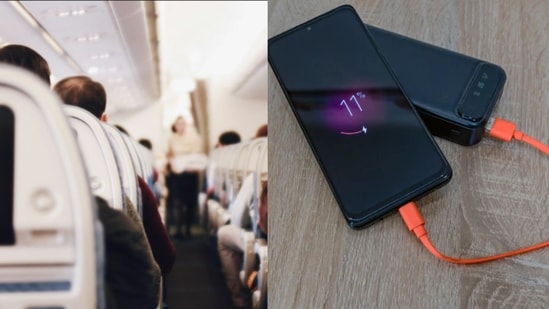
“IndiGo flight 6E 6115, operating from Delhi to Chennai on October 11, 2026, was diverted to Hyderabad after smoke was detected from a customer’s personal electronic device,” the airline said in a statement, adding that the situation was brought under control after the cabin crew acted promptly.
The flight landed safely at Rajiv Gandhi International Airport in Hyderabad, where arrangements were made for an alternate aircraft to continue the journey to Chennai. “We regret the inconvenience caused to our customers due to this unforeseen situation and making all efforts to minimise it including offering refreshments and sharing timely updates,” IndiGo statement further read.
(Also Read: Delhi-Chennai IndiGo flight diverted to Hyderabad after smoke detected from 'electronic device’)
What are the rules for carrying power banks and electronic gadgets on flights?
The incident has again brought into focus the risks associated with carrying such gadgets. According to IndiGo’s baggage policy, power banks and spare or loose lithium batteries are permitted only in hand baggage.
{{/usCountry}}The incident has again brought into focus the risks associated with carrying such gadgets. According to IndiGo’s baggage policy, power banks and spare or loose lithium batteries are permitted only in hand baggage.
{{/usCountry}}The airline specifies that such batteries must remain within the passenger’s personal reach at all times, such as under the seat, in the seat pocket, or carried on one's person. It adds that they "must not be stowed in overhead compartments or checked baggage".
In this case, the video clip showed the fire was in the overhead compartment.
Under IndiGo’s policy, passengers may carry a maximum of two spare lithium-ion batteries, including power banks, rated up to 100 watt-hours (Wh), subject to airport security clearance. It was not immediately clear what the capacity of the device involved in Sunday’s incident was. Consumer-grade power banks commonly have capacities of 10,000 to 20,000 mAh.
Batteries rated above 100 Wh and up to 160 Wh are permitted in limited circumstances, subject to the airline’s conditions. IndiGo’s policy specifies that batteries in this category are allowed only if they are used for portable medical devices, with a maximum of two and prior approval from the airline at the check-in counter.
IndiGo’s baggage policy also lays down precautions for carrying spare batteries and power banks.
The airline states these devices must be packed in their original retail packaging or in separate plastic bags. Their terminals must be taped and insulated to prevent short circuits. Passengers are also prohibited from recharging power banks or using them to charge other devices while onboard an aircraft.
What does the DGCA say about power banks on flights?
The Directorate General of Civil Aviation (DGCA) also issued a Dangerous Goods Advisory Circular last year prohibiting passengers from using power banks to charge electronic devices during flights, including through aircraft seat power outlets.
The circular also mandates that power banks and spare batteries must not be stored in overhead compartments. Such fires can be difficult to detect and contain when the devices are kept in closed overhead bins, making their placement within a passenger’s reach an important safety precaution.
(Also Read: Patna-Lucknow IndiGo flight’s nose suffers damage, lightning strike among suspected causes)
Why lithium-ion batteries catch fire?
One of the principal risks associated with lithium-ion batteries is a phenomenon known as thermal runaway. It occurs when a battery cell generates heat faster than it can get rid of it, potentially causing a rapid rise in temperature, smoke and fire.
Thermal runaway can be triggered by factors such as internal short circuits, physical damage, manufacturing defects or overheating. Once it begins, the battery can release heat and flammable gases, potentially causing the fire to spread to nearby materials.
A fire originating inside an overhead compartment can pose an additional challenge because it may be harder for passengers and crew to identify and access the source immediately.