The European Space Agency (ESA) shared an incredible picture of a star that has left people mesmerised. Calling it the “Cosmic dance of fire and ice”, the agency posted a series of images which together form the entire picture of the symbiotic star system Mira HM Sge.
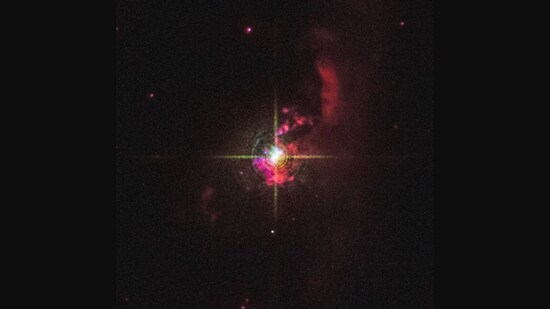
“It’s a tale of two stars: a red giant generously donates material to its white dwarf companion, creating a dazzling display. The red haze? That’s the red giant’s powerful wind! ️ But Mira HM Sge is a real enigma. In 1975, it surprised astronomers with a nova-like outburst, but unlike most novae, it hasn’t faded. Since then, it’s gotten hotter yet dimmer!” they wrote.
Also Read: NASA Hubble Telescope captures dazzling collection of stars, netizens stunned by universe's beauty
“The mystery continues: why is Mira HM Sge dimming? How fast is material flowing between the stars?” they added.
Take a look at the post here:
Since being shared, the post has collected more than 7,900 likes. It has also accumulated several likes and comments.
What did Instagram users say about this picture?
{{/usCountry}}Since being shared, the post has collected more than 7,900 likes. It has also accumulated several likes and comments.
What did Instagram users say about this picture?
{{/usCountry}}A researcher reacted to the post and wrote, “Really amazing this dance of swapping material between the red giant and the white dwarf”. Another person joined and posted, “This is sooo beautiful and enigmatic, love it”.
Also Read: NASA sheds light on the Whirlpool Galaxy through a series of unseen images. Seen the viral pics yet?
While a third added, “This is mindblowing,” a fourth showed their reactions using a heart emoticon.
Symbiotic Star Mira HM Sge is located 3,400 light-years away in the constellation Sagitta, according to a NASA report. This star system first flared up as a nova in 1975. As per an ESA report, it grew 250 times brighter. “With data from NASA's flying telescope SOFIA, which retired in 2022, the team was able to detect the water, gas, and dust flowing in and around the system,” stated the report.
What are your thoughts on this picture shared by ESA?