An opportunity to pitch an idea to the Prime Minister is rare, but Tejas Parthasarathi Sudarshan got his chance during a Chennai Metro ride. The founder of AI startup Winsen Labs had around 90 seconds to present two proposals to Narendra Modi.
Who is Tejas Sudarshan?
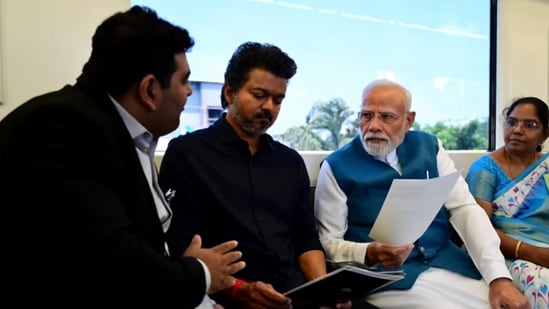
Sudarshan is an entrepreneur and the founder of Winsen Labs, an applied artificial intelligence startup. Before launching the company, he worked at KPMG India and founded Fanpit, an events and community platform, according to his professional profile on LinkedIn.
He was among 17 startup founders selected for an interaction with Modi during the Prime Minister’s Chennai visit on October 11. The interaction took place aboard the Metro, where the founders had an opportunity to discuss how their work could address real-world challenges.
(Also Read: Satya Nadella recalls when he was told ‘you need more empathy’ during Microsoft interview)
In a LinkedIn post, Sudarshan also looked back at an earlier moment that shaped his interest in technology and education. In 2017, while addressing his school during the pupil leader elections, he had proposed using Google Classroom to improve learning.
Nearly nine years later, he was discussing how students could apply AI to practical problems with the Prime Minister.
What were his 2 ideas for PM Modi?
{{/usCountry}}Nearly nine years later, he was discussing how students could apply AI to practical problems with the Prime Minister.
What were his 2 ideas for PM Modi?
{{/usCountry}}In his YouTube video, Tejas Sudarshan explained that his first proposal was to bring students closer to real-world applications of AI. He suggested that government departments work with universities to give students practical problems to solve, allowing them to apply their skills to real administrative challenges.
His second proposal focused on simplifying access to government services through a unified, AI-powered service desk.
(Also Read: Goa-based airline Fly91 surprises young pilot by bringing her parents onboard: ‘Imagine the pride’)
Under the proposed system, citizens could submit requests and upload documents once. An AI agent could then track each request and direct it to the appropriate department, potentially reducing the need to approach multiple offices or navigate different processes.
The two ideas explore how AI could help students gain practical skills and make government services easier to access. However, they remain proposals, not announced government initiatives.