Swedish geneticist Svante Pääbo was awarded the Nobel Prize for medicine "for his discoveries concerning the genomes of extinct hominins and human evolution." He sequenced the genome of an extinct relative of modern-day humans, Neanderthal. He also discovered a previously unknown hominin, Denisova. Since the announcement, many have taken to social media to talk about the geneticist and his achievements. Amid those posts, a special video has created a buzz. The clip shows Pääbo returning to work after winning the prestigious award.
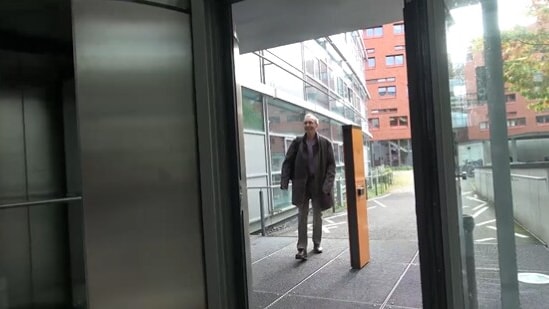
The Max Planck Institute for Evolutionary Anthropology, the place where Pääbo conducted his studies, took to Twitter to share the video. “This morning, everyone @MPI_EVA_Leipzig joined in to welcome and congratulate our very own #NobelPrize laureate, Svante Pääbo, one of our institute's founding directors and brilliant mind! We are totally ecstatic and delighted!,” they shared.
The video shows Pääbo entering the building amid cheers and applause from his colleagues. He keeps walking with a huge smile on his face and at one point also bows down to show his gratitude.
Take a look at the video:
The video has been posted a day ago. Since being shared, it has accumulated close to 78,000 views and nearly 3,900 likes. The video has also prompted people to post various comments.
{{/usCountry}}The video has been posted a day ago. Since being shared, it has accumulated close to 78,000 views and nearly 3,900 likes. The video has also prompted people to post various comments.
{{/usCountry}}“I am so thrilled that the much awaited, much deserved and long due honour came this year. I'm so fortunate to have met him and listen to him interact with students and researchers, sitting on the floor, when I was a visiting scholar at MPI in 2015. Congratulations to you all!,” wrote a Twitter user. “Oh my. The double checking before he comes into the building. He looks so delighted and slightly shocked. Lovely,” shared another. “Aww, this is cute,” expressed a third. Many also wrote “congratulations” to show their reactions.