A former undercover CIA officer has revealed how to spot a liar, explaining why changes in body language, unusual reactions and inconsistencies in a conversation can offer clues that someone is hiding something.
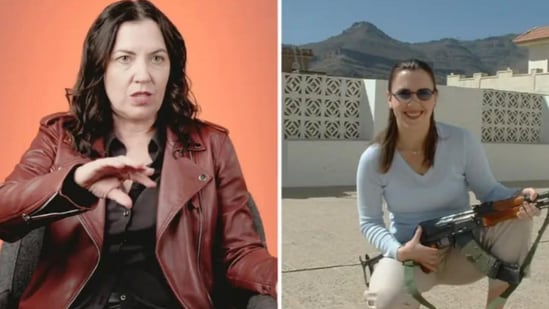
Michele Rigby Assad, who spent 10 years working undercover for the CIA in the Middle East, learnt to recognise such behavioural changes while assessing intelligence sources. Her experience offers an insight into the subtle signs that can give away someone concealing information.
Why a person's usual behaviour matters
In an interview with Business Insider, Assad recalled assessing an Arab intelligence officer suspected of secretly working for another country's intelligence service.
She spent hours speaking to him, first observing his usual body language before bringing up more sensitive subjects. Rather than directly questioning him about her suspicions, she began mentioning different countries to see whether his reactions changed.
When she mentioned one particular country, the man's behaviour changed almost immediately. He sat upright, pulled a cushion from behind him and began hugging it.
(Also Read: Canadian ultrarunner Stephanie Case becomes first woman to complete 100 miles in Antarctica)
{{/usCountry}}(Also Read: Canadian ultrarunner Stephanie Case becomes first woman to complete 100 miles in Antarctica)
{{/usCountry}}Assad noticed that he relaxed when she moved on to another subject. However, when she brought up the same country again, he reached for the cushion once more.
"He doesn't even know he's doing it," she recalled.
Years later, she learnt that her suspicion had been correct. The officer had been secretly working with another country's intelligence service.
She also encountered other unusual reactions during her career. One source began building a wall of Coca-Cola cans between them while answering uncomfortable questions. Another suddenly got up and ran to the bathroom after she asked about his wife.
However, Assad's point was not that such gestures automatically indicate dishonesty. Someone clutching a cushion or avoiding a question may simply be uncomfortable. What matters is whether their reaction stands out from how they usually behave.
Pay attention to what someone leaves unsaid
Assad also believes that listening carefully to what a person does not say can be just as revealing as observing their behaviour.
She recalled spending eight hours questioning a source suspected of being a double agent. At the end of the interview, she felt she had not learnt anything particularly useful.
It was only when she went through her notes nearly two weeks later that she noticed something she had overlooked.
The man had never once spoken negatively about the government he claimed to oppose. That was significant because he was actually working for that government in secret.
Looking back at the interview, Assad realised that the missing criticism was the clue she had failed to pick up on earlier.
Her experience shows why small details matter. Changes in behaviour, unusual reactions and missing details can sometimes reveal more than words.