As the central Chinese city of Wuhan grapples with a previously unknown strain of virus and is on the verge of getting physically sealed from the outside world, ironically, the top laboratory in China equipped to find a cure for it lies right in the middle of the city’s 11 million population.
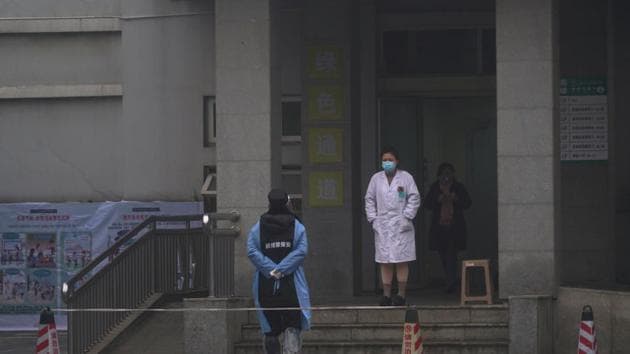
Neither national health commission (NHC) vice-minister, Li Bin, nor Gao Fu, director of the Chinese Centre for Disease Control and Prevention said anything about it at Wednesday’s briefing in Beijing, though they talked a lot about the unknown origins of the novel Coronavirus: It’s dangerous, of mutating nature, a Class B virus, getting Class A prevention and control treatment.
It’s not clear if they had any reason not to do so: There were plenty of technical questions from journalists about the virus at the packed briefing.
It was in January 2018 that China inaugurated the Wuhan bio-safety level four (BSL-4) laboratory of the Chinese Academy of Sciences (CAS) or the Wuhan P4 lab in the Jiangxia district of the city.
The lab was built precisely to look into dangerous pathogens like the novel Coronavirus, conduct research on them and find a cure for them - part of a long-term planning in the aftermath of the SARS outbreak in China in 2002-03 that claimed over 700 lives.
{{/usCountry}}The lab was built precisely to look into dangerous pathogens like the novel Coronavirus, conduct research on them and find a cure for them - part of a long-term planning in the aftermath of the SARS outbreak in China in 2002-03 that claimed over 700 lives.
{{/usCountry}}Laboratories across the world are classified between 1-4 levels depending on how dangerous the microbes they probe are - a BSL-4 lab researches the most dangerous pathogens and have to follow the maximum safety or “biocontainment” levels.
There are only a handful of such labs in Asia; India has one at the National Institute of Virology in Pune.
It’s the stuff of movies that Hollywood makes on viral outbreaks.
According to CAS, lab staff at the Wuhan P4 lab, “...wear positive-pressure protective suite to make them totally insulated to the environment with potential pollution, just like an astronaut in space with the needed air being supplied with a controllable and safe pipe from the breathing air supply station. The lab staff will complete the decontamination procedure for positive pressure work through chemical shower before leaving...”
The WHO said it “...represents one of China’s major investments in strengthening the public health system and biosafety management following the SARS outbreak.” It was built under a Sino-French collaboration at the cost of some 300 million yuan.
The CAS described the lab’s nature: “This will also make up for the weakness that China’s public health emergency response system is imperfect, and there is no adequate and effective technical support and drug reserve. By doing this, at the outbreak of a new infectious disease, active and scientific prevention and control measures can be taken, forming a new normal state for dealing with emerging disease and biological defence in the future.”
According to a report on it in Nature, the lab will “...focus on the control of emerging diseases, store purified viruses and act as a WHO ‘reference laboratory’ linked to similar labs around the world.”
Gao himself told the Nature in 2017: “It (the lab) will offer more opportunities for Chinese researchers, and our contribution to the BSL‑4-level pathogens will benefit the world.”
The time is ready to reap those benefits. So is the novel Coronavirus.