
 E-Paper



Afghanistan has massive opium stockpiles despite Taliban ban: UN report
A majority of drugs trafficked to India comes from Afghanistan, and Pakistan’s Inter-Services Intelligence agency controls the network.

 Prefer HTon Google


Afghanistan continues to have massive stockpiles of opium that can be used to meet the needs of narcotics trafficking networks despite a ban imposed by the Taliban on poppy cultivation, according to a new report by the United Nations Security Council.
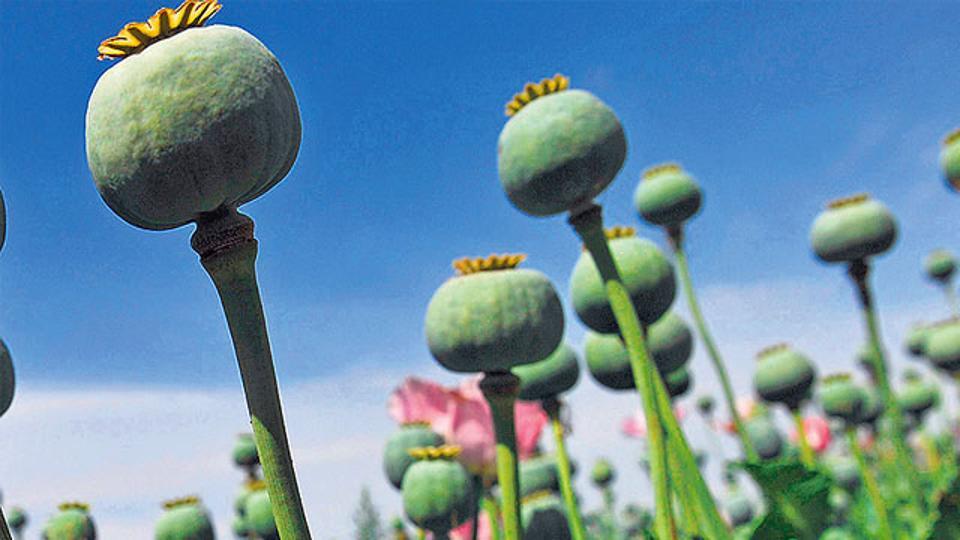
A majority of drugs trafficked to India comes from Afghanistan, and Pakistan’s Inter-Services Intelligence (ISI) agency controls the network that is used to smuggle the narcotics to different Indian regions, particularly via the maritime route, Indian officials said.
“As a result of sizeable stockpiles, the trade in narcotics continues to be significant, notwithstanding the ban on the cultivation of opium poppy,” the UN report, prepared by the team that monitors sanctions on the Taliban, said.
The opium stockpiles in Afghanistan are so great that “no noticeable difference in exports of the drug can be detected from seizure data”, according to the report. “Estimates of the scale of stockpiles vary, but it could be several years before the effect of the cultivation ban can be assessed fully,” it said.
The UN report further said it was “still too early to judge the impact” of the ban on poppy cultivation imposed by the Taliban setup in April 2022. Senior Taliban figures and well-connected traders continue to profit from drug trafficking, it said.
“Numerous de facto authority figures are involved with and profit from continued drug trade, while the Haqqani Network maintains long-established middlemen to promote their interests in heroin trafficking and the more profitable methamphetamine market,” the report said.
Citing examples, the report said the Taliban governor of Nangarhar province, Mohammad Naim Barich Khudaidad, controls the eastern route for narcotics trafficking, while the governor of Balkh province, Yousuf Wafa, controls the northern route.
The Indian officials, who declined to be named, said the network of Karachi-based Haji Salim, who works for the ISI, is a key in trafficking narcotics to India. Salim, the officials said, coordinates with drug lords in Afghanistan for his supplies.
“Not only does Haji Salim work with ISI, but also anti-India terror groups such as Lashkar-e-Taiba (LeT) for funding their terror attacks. Drugs procured from Afghanistan are labelled with different symbols or inscriptions such as ‘555’, ‘999’, ‘Unicorn’ and ‘Dragon’ in clandestine laboratories in Balochistan,” said a counter-terrorism official.
“Drug money being used by terror groups is also a worrisome trend,” the official added.
While the Taliban have taken steps to eradicate drug production following their April 2022 decree banning poppy cultivation, such as the destruction of 834 laboratories and 14,000 hectares of crops, the UN report said there was “significantly less progress in limiting heroin trafficking and synthetics (methamphetamine) production and trade”, with the Taliban “continuing to receive significant revenue from narcotics trafficking”.
Methamphetamine seizures “have continued to increase, and recently fentanyl has appeared and been recorded in significant quantities”, the report said. Farah, Herat and Nimroz are the main hubs for producing methamphetamine, with active labs in Bahramcha, Dishu district and Helmand province.
Methamphetamine has also been seized with heroin in Kandahar and Nangarhar, suggesting that “trafficking of the two drugs may be through the same networks”.
Indian security agencies have also found direct links between Kandahar-based cartels and the networks smuggling large consignments of drugs to India.
For instance, a National Investigation Agency (NIA) probe into the September 2021 seizure of 3,000 kg of heroin at Mundra port revealed that a total of five large consignments of heroin were despatched between November 2020 and September 2021 by Kandahar-based masterminds identified as “the Dad brothers” – Hussain and Hasan Dad.
Several Afghan nationals were arrested by the NIA during its investigation. The Dad brothers, who run a company named Hasan Hussain Ltd in Kandahar, allegedly used an Indian firm to send 2,988.21 kg of heroin hidden within a talc shipment.
“The duo [has] smuggled multiple consignments of heroin concealed in apparently innocuous consignments of goods such as semi-processed talc stones and bituminous coal imported into India. These consignments were imported through different Indian ports including Mundra (Gujarat) and Kolkata port and further moved to New Delhi via trucks,” NIA said in a statement in September 2022.
The network of drug traffickers and their international facilitators use fake or shell companies, distributors and local retailers, and all of them are part of a huge international smuggling racket spread across countries such as Afghanistan, Iran and the United Arab Emirates, according to the NIA.
Union home minister Amit Shah has repeatedly asked security agencies to be ruthless with networks involved in smuggling drugs, even as the central government is working on installing container scanners at all ports and land border crossing across India.



