
 E-Paper



Amish Tripathi looks to widen appeal and outreach as director of London’s Nehru Center
Categorising his ideas in what he calls four ‘buckets’, Tripathi has plans for infrastructure, programming, thought leadership and promoting the centre as a brand.


Writer Amish Tripathi, the new director of Nehru Centre, has ‘buckets’ of plans and ideas for the cultural wing of the Indian high commission to combine change with continuity and leverage his marketing background to promote the centre as a ‘brand’.
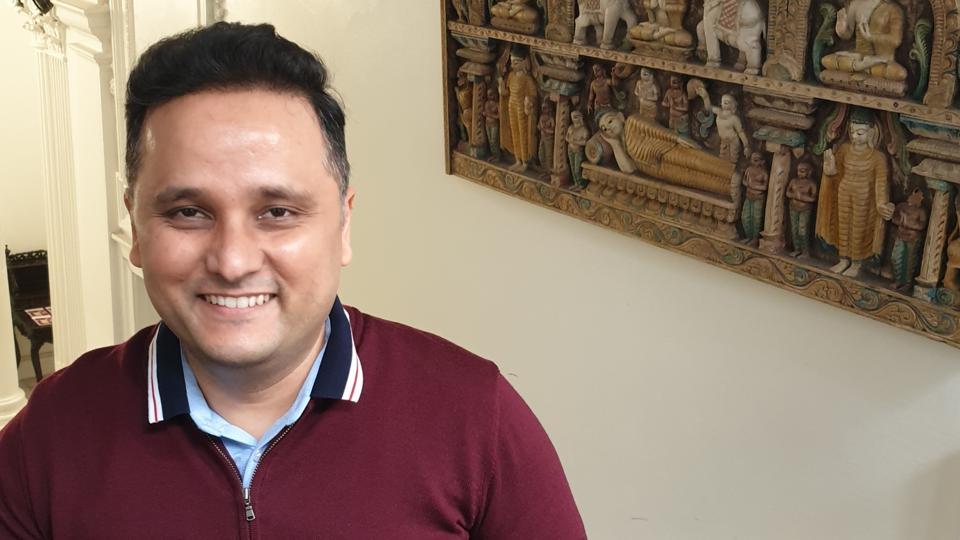
A flagship post of the Indian Council for Cultural Relations, the centre, established in London in 1992, has previously been directed by actor-director-playwright Girish Karnad and diplomats such as Gopalkrishna Gandhi and Pawan Varma, among others.
Tripathi, 45, who succeeds career diplomat Srinivas Gotru in the post, has begun dealing with challenges of pushing his ideas in what is essentially a government department, but believes “India is a force for good” in the world and has several initiatives in the pipeline.
Writer of best-selling books, Tripathi, an alumnus of the Indian Institute of Management, puts his plans and ideas in four ‘buckets’, as he puts it: infrastructure, programming, thought leadership and promoting the centre located near Hyde Park and Park Lane as a brand.
Tripathi plans to enhance the centre’s Indian cultural orientation while retaining its Georgian era facade and heritage. This includes playing Indian music playing constantly in its rooms and high-ceiling corridors, and inviting ideas from heritage architects in India.
Film music plays softly in the background as he says: “How do we make this centre feel a little more Indian, more cultural. Music has to be playing all the time. Any person who comes in, we have to see them as guests, we have speakers in every place, music sets the mood”.
“Our remit is not just as a cultural centre for one part of the Indian diaspora. We are for the native British as well. How to get people of non-Indian origin coming in: British, African-British, Arab British, whatever background. They will enrich us, we will enrich them; we are exploring plans with other such centres”.
Keen to widen the centre’s appeal and outreach, Tripathi also intends to make it a centre for ‘chintan’, or thought leadership, in the form of a think-tank, reviving ancient Indian ideas of ‘shastrartha’ (philosophical debates) and ‘dharam sabha’.
He says: “This need not just be a place for the performing arts, but also for ‘chintan’ a place for effective dialogue, discussion, debate, ‘manthan’. One of the things about Indian culture through most of human history is its thought leadership”.
“We came out with new concepts, new ideas, we had a few bad centuries of colonialism and invasions before that, but it is a very small period in a very long history where we were among the thought leaders”.
This agenda could be driven by initiatives such as a thinkfest, and inviting intellectuals and thought leaders to share experiences. The ‘dharma sabhas’, he notes, were not only about spirituality, but about the pursuit of knowledge in all its dimensions through ‘shastrartha’.
Three weeks into the post, Tripathi says he has met several MPs, members of the House of Lords, writers, artistes and leaders cultural organisations in the UK to exchange ideas. He insists his tenure as the director will not affect his writing.
“I am not a social person normally…I wrote my first two books along with my job. I do very little besides work. There is enough time to do work and write”, he says.


