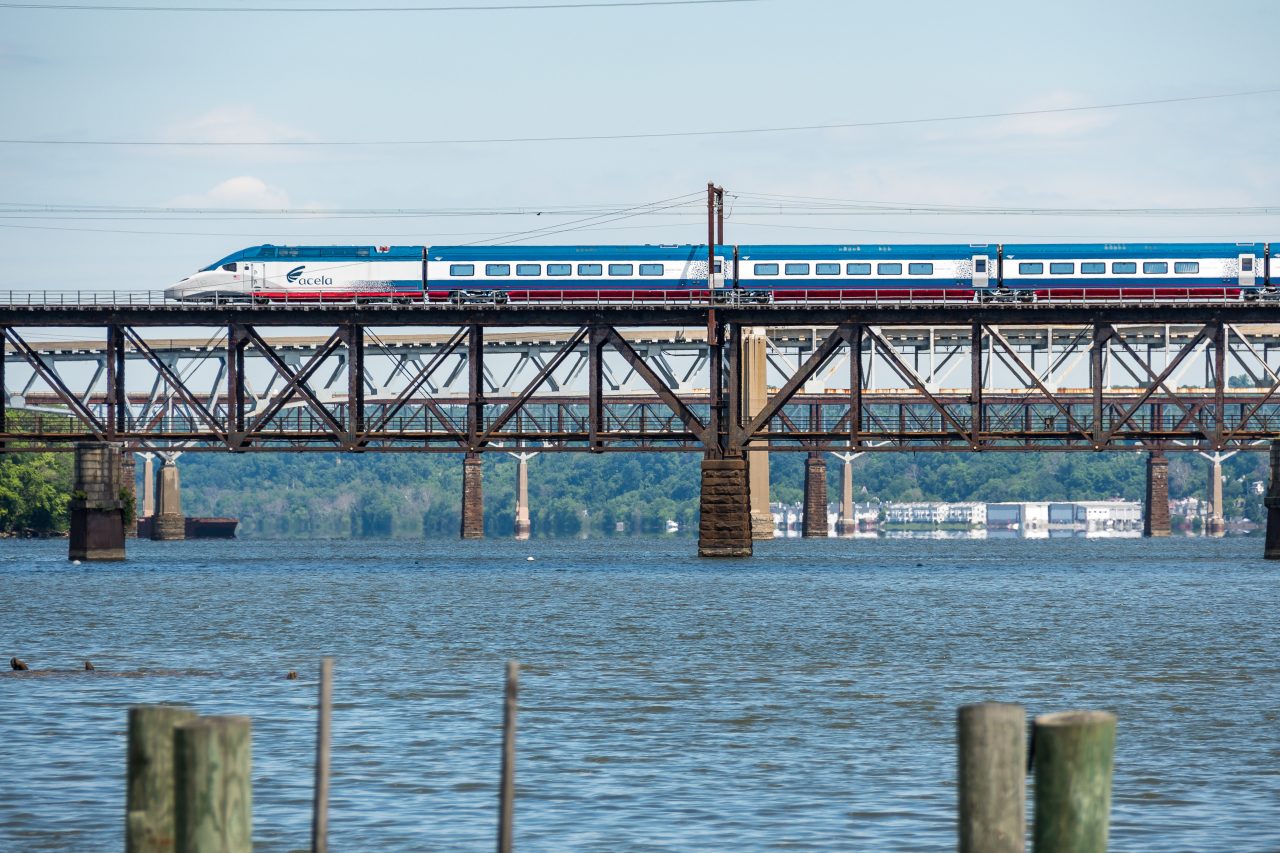
Amtrak is launching a new high-speed Acela train, but there is one wrinkle: It isn’t actually faster, yet.
The NextGen Acela can reach a top speed of 160 miles an hour, 10 mph faster than the older Acela fleet.
Five next-generation Acela trains begin service Thursday as part of a $2.45 billion project to improve service along the key Washington-to-Boston corridor. But two of them running from Washington to Boston will actually travel more slowly than their predecessors do on the same route Thursday, according to a Wall Street Journal analysis of Amtrak’s schedule. These new trains are scheduled to take at least seven hours and five minutes to complete the trip, compared with the average time of six hours and 56 minutes on the older Acela trains.
The limiting factor for the new trains’ speed, Amtrak says, is the railroad’s infrastructure: the tracks, the overhead power system, the switches and the signals. The railroad’s Northeast Corridor is more than 100 years old, and Acela runs on tracks shared with commuter and freight trains—not the modern, high-speed tracks found in Europe and Asia.
The NextGen Acela can reach a top speed of 160 miles an hour, according to its manufacturer. That is 10 mph faster than the older Acela fleet. But because of Amtrak’s old infrastructure, the new trains can only travel at top speed during certain portions of the journey. Amtrak previously has said the new trains could potentially shave 20 minutes off the travel time between New York City and Washington, D.C., reducing the duration to around 2½ hours.
Amtrak plans for a total of 28 next-generation trains to enter service gradually over the next two years. Fifteen older Acela train sets are still operational; they will be phased out over time.
The railroad Wednesday said it would adjust its Acela schedules based on actual operating experience and as more of the new trains are deployed. Infrastructure upgrades planned over the coming years will improve trainspeed and reliability, the railroad said.
Amtrak in 2016 signed a contract with France-based Alstom to replace the railroad’s aging Acela trains with 28 new high-speed train sets. The contract was part of a $2.45 billion plan to upgrade service along the Northeast Corridor. The project includes station improvements in Washington and New York, added track capacity, and modifications to maintenance facilities to accommodate the new trains.
The limiting factor for Amtrak’s new trains’ speed is the railroad’s infrastructure—the railroad’s Northeast Corridor is over 100 years old.
Ridership in the Northeast Corridor has recovered from pandemic lows, and is now exceeding 2019 levels. Each new train will hold 386 passengers, an increase of 27% compared with the current fleet.
Passenger rail analysts said that it isn’t unusual for rail operators to pad their schedules when introducing new trains, especially if they will run alongside older ones. For example, during a rollout, a railroad might schedule more generous dwell time at stops, they said.
Amtrak touted the new trains in a press release Wednesday, calling out their more spacious seating, sleek design, high-speed Wi-Fi and passenger power outlets.
The release didn’t mention any change in travel time.
Amtrak’s New Acela Trains Are Here. They’re Moving Slower Than the Old Ones.
Get the latest World News, breaking headlines and global updates from the US, UK, Pakistan, Bangladesh, Russia and other countries. Follow major international events on Hindustan Times.
Home/World News/Amtrak’s New Acela Trains Are Here. They’re Moving Slower Than The Old Ones.

 E-Paper