China on Tuesday aggressively countered new international allegations on the “brainwashing” internment camps for Muslim minorities in Xinjiang, saying there were no ethnic, religious or human rights issues in Xinjiang and the crackdown in the remote province was against “violent and terrorist crimes”.
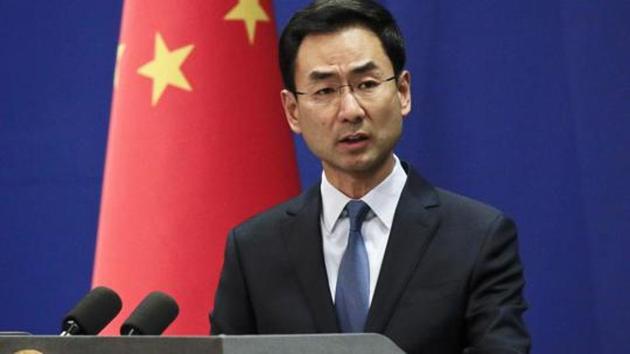
Beijing’s strong reaction was largely in response to possibly the largest leak of classified Chinese government documents in recent times to the International Consortium of Investigative Journalists (ICIJ) describing the repressive manual followed in camps where more than a million members of the Uyghur Muslim community are being held – many without having committed a crime.
The leak of documents was followed by critical statements from the US, UK, Germany and the European Commission, who also demanded access to the camps in the remote and troubled region.
A lengthy response from the Chinese foreign ministry on Tuesday called the news articles and statements “smearing and slandering accusations”.
The statement said the current governance policies in Xinjiang will be continued; “…we will continue to do our own thing well”.
The foreign ministry statement, however, didn’t mention the prison camps, which Beijing instead called “vocational and reeducation camps”
{{/usCountry}}The foreign ministry statement, however, didn’t mention the prison camps, which Beijing instead called “vocational and reeducation camps”
{{/usCountry}}“From 1990 to the end of 2016, thousands of violent terrorist incidents occurred in Xinjiang, causing a large number of innocent casualties and property damage,” spokesperson, Geng Shuang, said in a written statement issued by the ministry.
“Since Xinjiang has severely cracked down on violent and terrorist crimes in accordance with the law and attached importance to source control, there have been no violent terrorist incidents in the region for three consecutive years,” Geng said.
Geng said there were no “ethnic, religious, or human rights issues in Xinjiang” and accused western media of attacking the counter-terrorism de-extremisation” measures taken by Xinjiang’s local governments.
And there is full religious freedom for Uyghurs and other ethnic minorities, Geng said, giving out a bunch of statistics.
“There are nearly 200 million religious believers in China, of which more than 20 million are Muslims, more than 380,000 religious staff, about 5,500 religious groups and more than 140,000 places for religious activities registered according to law,” he said.
There is one mosque for every 530 Muslims in Xinjiang, Geng said.
“There are 24,400 mosques in Xinjiang, and an average of one mosque per 530 Muslims. This information can be found in seven white papers on Xinjiang issued by the Chinese government since 2015”.
China, he said, had sent invitations to the UN High Commissioner for Human Rights and the Office of the High Commissioner to visit Xinjiang.
“Since the end of last year, thousands of foreign envoys, officials of international organisations, and media have visited Xinjiang, and they have personally seen the remarkable results of Xinjiang’s preventive counter-terrorism and de-extremisation measures,” the spokesperson said.
“Obviously, what some people in the West lack is not the methods and ways to understand information, but the conscience and courage to acknowledge facts”.
It is better to give up their (western media’s) inherent prejudice and obsession as soon as possible, and really make efforts to deepen their understanding of Xinjiang, Geng added.