
 E-Paper



China calls for dialogue on Ukraine, tones down rhetoric on Taiwan
It’s possible that Beijing didn’t want to appear as aggressive as ally Russia on a day when Moscow offered an escalation of its ongoing invasion of Ukraine -- heightening global tension -- and instead wanted to portray a picture of calm and rationality

 Prefer HTon Google


China on Wednesday urged Russia and Ukraine to engage in “dialogue and consultation” to “peacefully resolve the crisis” after Russian President Vladimir Putin announced a partial mobilisation of 300,000 reservists and warned the West over what he described as “nuclear blackmail”.
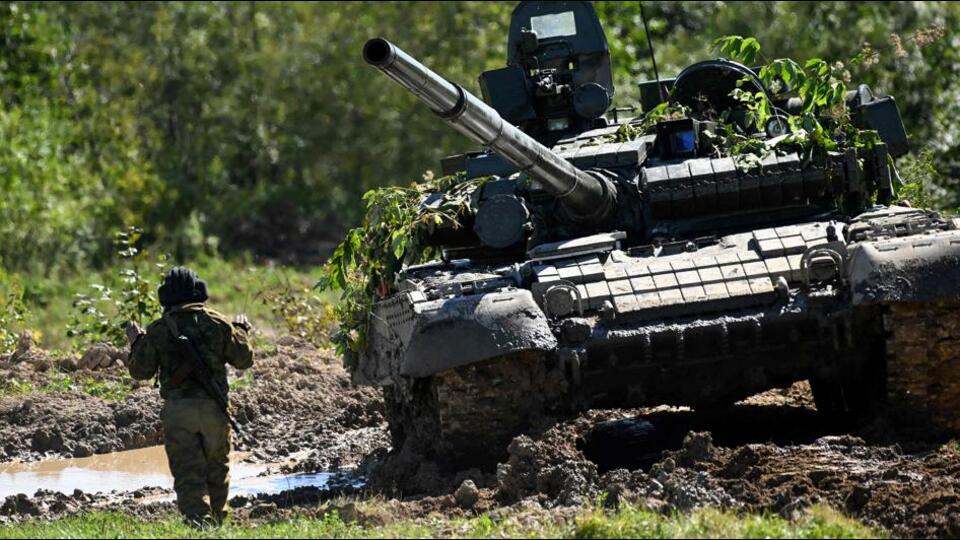
All efforts to peacefully address the Ukraine crisis should be supported, Chinese foreign ministry spokesperson Wang Wenbin was quoted as saying by official media at the regular ministry briefing on Wednesday.
Wang was asked to respond to Putin’s televised speech where the Russian leader said that if Russia’s territorial integrity was threatened, Moscow will use “all available means to protect our people – this is not a bluff”.
Putin’s announcement of mobilising hundreds of thousands of reservists could mean a serious escalation of the ongoing conflict in the face of a counteroffensive by Ukraine, which has rattled Russia.
Beijing, Russia’s staunch ally, called for calm and dialogue.
“We call on the parties concerned to resolve the issue through dialogue and negotiation and find a solution that accommodates all parties’ legitimate security concerns,” Wang said.
“We also hope the international community will create conditions and space for that,” Wang said, in an apparent reference to the US-led Western powers, which have been funding Ukraine and supplying it with arms.
“We believe that all countries deserve respect for their sovereignty and territorial integrity, that the purposes and principles of the UN Charter should be observed, that the legitimate security concerns of any country should be taken seriously, and that support should be given to all efforts that are conducive to peacefully resolving the crisis,” he added.
Putin’s speech triggered a flood of responses on China’s Twitter-like Weibo, making it trend on the social media platform.
Comments were overwhelmingly in Putin’s support with little or no sympathy shown for Ukraine.
“Come on, Russia,” said one Weibo user in encouragement while another said: “We will witness history”.
“Justice will prevail,” another person commented, indicating a popular understanding in China that it’s the US that’s to blame for Russia’s invasion of Ukraine as it had provoked Moscow into doing so.
Putin’s decision to mobilise more troops and bellicose rhetoric were made on the same day when China seemingly toned down its rhetoric on Taiwan, a self-governed island which Beijing claims as a breakaway region and has never ruled out using force to merge with the mainland.
On Wednesday, however, Ma Xiaoguang, a spokesperson for China’s Taiwan Affairs Office, told a news conference in Beijing: “I would like to reiterate that … we are willing to strive for the prospect of peaceful reunification with the greatest sincerity and utmost efforts”.
Ma was asked to comment on the China-Taiwan situation in the backdrop of concerns that – following Moscow’s example – Beijing might deploy troops to take over the small island with 23 million people.
The island, Ma said, will be “reunified” as China is also “unwavering” in its commitment to safeguarding its territory.
“The motherland must be reunified and will inevitably be reunified,” Ma said.
China has dismissed comparisons between Ukraine and Taiwan in the past, saying the two sets of disputes are totally different.
The People’s Liberation Army (PLA) too on Wednesday responded in a softer-than-usual manner to two US and Canadian warships sailing through Taiwan Strait, saying its naval and air forces tracked the passage of the ships, instead of the usual the foreign warships were “expelled” from Chinese waters.
The US navy’s Arleigh Burke-class guided-missile destroyer USS Higgins and Royal Canadian Navy’ Halifax-class frigate HMCS Vancouver sailed through the Taiwan Strait on Tuesday.
“The ships transited through a corridor in the Strait that is beyond the territorial sea of any coastal State,” the US navy’s 7th Fleet said in a statement.
China’s PLA did not see it the same way.
The PLA’s eastern theatre command “organised naval and air forces to be on high alert and track and monitor the US and Canadian warships throughout their entire course,” the command’s spokesperson, Senior Colonel Shi Yi, said in a statement on Wednesday.
The command’s troops “are always on high alert, will resolutely counter any threats and provocations, and will firmly safeguard national sovereignty and territorial integrity,” Shi said.
It is hard to pin down a reason why China’s Taiwan rhetoric on Wednesday was softer than usual.
It’s possible, however, that Beijing didn’t want to appear as aggressive as ally Russia on a day when Moscow offered an escalation of its ongoing invasion of Ukraine -- heightening global tension -- and instead wanted to portray a picture of calm and rationality.


