China has reportedly censored flood-related videos from Nepal and Tibet as journalists tried to collect accounts from people and the latest details on the flash floods that killed 676 people and left nearly 3,000 missing so far.
People in China have mostly depended on state-run media for updates. Reports from official outlets reportedly focused on rescue operations, with limited information about the scale of the damage caused by the floods.
ALSO READ | Those who survived Nepal floods: How a 97-year-old woman cheated death, was pulled alive from rubble
China censors Nepal-Tibet flood footage
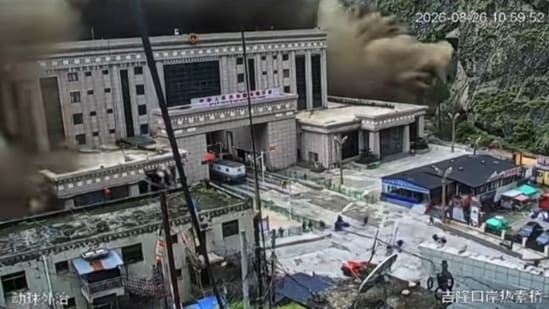
Footage recorded by residents and shared online, including a video showing a mudslide sweeping over a border crossing in Tibet’s Gyirong County, has reportedly been removed from Chinese social media, The New York Times reported.
Chinese state media used only a still image from the footage in its reports, according to UK daily The Telegraph.
{{/usCountry}}Chinese state media used only a still image from the footage in its reports, according to UK daily The Telegraph.
{{/usCountry}}Chinese state-controlled media outlets have focused their reports mainly on rescue operations. The outlets reported that the government had deployed Chinese military personnel and other emergency workers to the affected area, along with drones and helicopters.
The People’s Daily, the official newspaper of the Chinese Communist Party, reported on Thursday that Chinese President Xi Jinping had ordered that every possible effort be made to assist those affected in Gyirong.
Meanwhile, foreign reporters have faced strict limits on travelling to Tibet and speaking to people there by phone, making it difficult to independently determine the extent of the destruction beyond Nepal.
Tibet, which came under Chinese control in the 1950s, remains one of the country’s most tightly controlled and politically sensitive regions.
‘Tibet is seen through national security prism’
Steve Tsang, director of the China Institute at Soas University of London, told The Guardian that no report could be published without approval “from the very top”.
“Everything about Tibet is seen through the national security prism. And therefore nobody is going to say anything or report anything that has not been cleared from the very top,” Tsang said.
Rajendra Bajgain, a former member of the Nepal parliament, criticised Beijing over what he described as a lack of transparency.
“Now we are being told that China is deleting footage of flooding. It raises very serious questions about what they are trying to hide. Removing evidence does not help establish the truth; it prevents people from asking legitimate questions,” he told The Telegraph.
Nepal-Tibet floods: Toll rises, rescue operations on
The combined toll from the floods in Nepal and Tibet reached 676, while nearly 3,000 people remained missing following Nepal’s latest update on Saturday.
Chinese authorities put the number of deaths at seven and said more than 550 people were missing. Nepal’s disaster agency reported 669 deaths and 2,426 missing people.
Rescue teams have so far managed to bring more than 3,700 people to safety in Nepal.
The US Geological Survey said the deadly surge of water that struck the Nepal-Tibet border on Wednesday was caused by a glacial collapse.
(With inputs from agencies)