
One of China’s senior Communist party leader and public security minister has instructed the police to strengthen fight against “terrorism and separatism” during a tour to parts of the northern ethnic Mongolian province which saw protests against the imposition of Mandarin in schools in the past week.
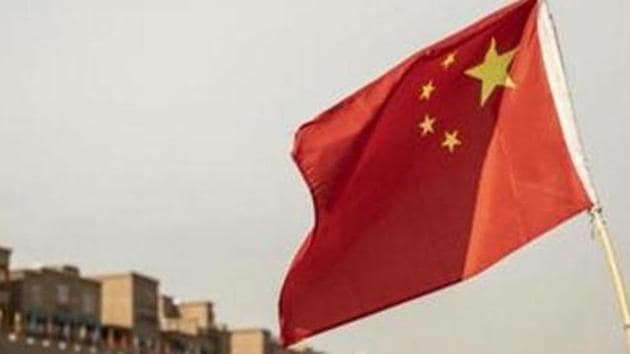
The powerful public security or police minister Zhao Khezhi, who is also a State Councilor, said during his visit to Inner Mongolia that it is “…necessary to deepen the struggle against separatism, strictly implement anti-terrorism and prevention measures, and do a solid job in maintaining stability in the ethnic and religious fields and promoting ethnic unity.”
Suggested For You
Zhao toured Inner Mongolia and Ningxia, home to Muslim minorities, between August 29 and September 2.
Zhao’s Inner Mongolia tour seemed to be in the backdrop of rare protests by ethnic Mongols against Beijing’s decision to make Mandarin – instead of Mongolian – as the language of instruction of key subjects like politics and history in local schools.
It is rare for a senior Communist Party of China politician to make a speech about terrorism and separatism in Inner Mongolia.
According to a report by the official news agency, Xinhua, in Mandarin, Zhao visited the anti-terrorist and special patrol departments of the local police in Hohhot, the provincial capital.
{{/usCountry}}According to a report by the official news agency, Xinhua, in Mandarin, Zhao visited the anti-terrorist and special patrol departments of the local police in Hohhot, the provincial capital.
{{/usCountry}}He also reviewed the “Warhawks”, the detachment’s commando force.
The official media report said Zhao said the police should “…undertake the duties of maintaining stability and dealing with emergencies, and fighting terrorism and violence”.
According to the New York-based Southern Mongolian Human Rights Information Centre (SMHRIC), the local police have increased deployment in the capital city, Hohhot; exiled groups refer to Inner Mongolia as Southern Mongolia.
“A short video taken by a Mongolian resident of Hohhot shows that hundreds of heavily armed riot police were waiting for orders in the city’s main square–Xina Hua Square,” the group said in a statement.
“According to some posts published on social media, government officials and Communist Party members of Mongolian ethnicity have been ordered to send their children to school by September 3, or else they will be fired or expelled from the party. Any Mongolians, on social benefits, will also automatically become ineligible for renewal if they do not send their children to school by the same deadline,” the SMHRIC said.
The change in curriculum in schools in Inner Mongolia, which was enacted this week, means that three core subjects – politics, history, language and literature – will now be taught in Mandarin, and not in Mongolian anymore.
The vast mineral-rich province shares its international border with Mongolia and Russia.
Also Read: Taiwan denounces China’s ‘vulgar threats’ towards Czech speaker
Rights groups say the move to change language in schools in Inner Mongolia mirrors what Beijing has done in Tibet and Xinjiang where, after local languages were replaced, the focus now is to sinicise even Tibetan and Islam – assimilate, even subsume, local ethnic communities within the majority Han population.
The Hindustan Times has reached out to the Chinese foreign ministry for a comment on the protests.
Christopher P. Atwood, professor in the Department of East Asian Languages and Civilizations at the University of Pennsylvania, where he teaches the history of Mongolia and the Inner Asian borderlands of China, explains the policy in the academic journal “Made in China”.
Also Read: Indian Army changes posture at LAC after China’s failed midnight attempt
“The plan is to begin transitioning to the state-compiled textbooks for ‘language and literature’, ‘morality and law (politics)’, and ‘history’ classes. The key point is that these classes will be taught in the national common language—Mandarin Chinese. This policy will be formally implemented from the beginning of school, this 1 September, starting with ‘language and literature’ in first and seventh grade,” Atwood wrote in the journal, which is brought out by the Australian Centre on China in the World and the Australian National University.
Next year, it will be extended to ‘morality and law’ and then to ‘history’ in 2022.
Explore More
ABOUT THE AUTHOR
Follow the latest breaking news, major developments and agenda-setting stories from India and around the world with the newsdesk at Hindustan Times. Operating round the clock, the desk brings together experienced editors, reporters and correspondents to deliver fast, accurate and contextual reporting across subjects that influence public policy, governance, business, society and international affairs. The HT News Desk covers politics, elections, government policies, the economy, business and markets, science and technology, the environment, law and order, infrastructure, education, climate issues and geopolitics, while closely tracking developments across states, institutions and global capitals. The team also leads coverage of major breaking news events, policy announcements, court proceedings, natural disasters, public emergencies and significant international developments. Reports published by the newsdesk are based on information gathered from reporters on the ground, official statements, government agencies, court records, regulatory filings, recognised institutions and other authoritative sources. Stories undergo editorial scrutiny and verification processes to ensure accuracy, fairness and relevance, and are updated as events evolve and additional information becomes available. Whether covering a key political decision in New Delhi, an economic policy shift affecting millions, a landmark court ruling or a major global event, the HT News Desk aims to provide readers with reliable, fact-based journalism that delivers not only the latest developments but also the context and analysis needed to understand their wider implications.