
China is rolling out new rules on religious activity on the internet amid an ongoing crackdown on churches, mosques and other institutions by the officially atheist Communist Party.
Anyone wishing to provide religious instruction or similar services online must apply by name and be judged morally fit and politically reliable, according to draft regulations posted online late Monday by the State Administration for Religious Affairs.
Suggested For You
Organizations and schools that receive licenses can operate only on their internal networks that require users to be registered and are barred from seeking converts or distributing texts or other religious materials, the rules said.
They also impose tight limits on what can be said or posted, including a ban on criticism of the party’s leadership and official religious policies, promoting religious participation by minors, and “using religion to ... overthrow the socialist system.”
Livestreaming of religious activities, including praying, preaching or even burning incense, is also forbidden.
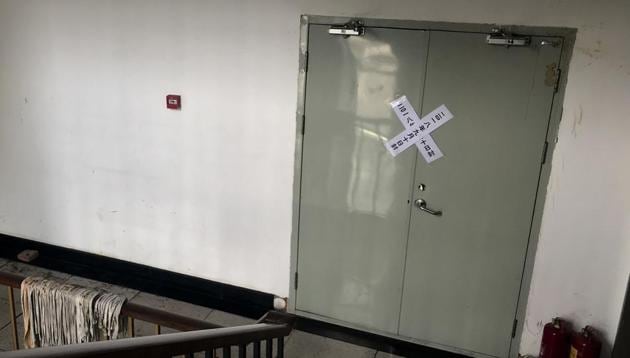
Authorities in recent months have ratcheted up pressure on religious groups, destroying crosses, burning bibles, shutting churches and ordering followers to renounce their faith.
The campaign is part of a drive to “Sinicize” religion by demanding loyalty to the officially atheist Communist Party and leader Xi Jinping. Observers call it the most severe crackdown since religious freedom was written into the Chinese constitution in 1982.
Chinese law requires religious believers to worship only in congregations registered with the authorities and bans most religious observance in private homes.
{{/usCountry}}Chinese law requires religious believers to worship only in congregations registered with the authorities and bans most religious observance in private homes.
{{/usCountry}}All of China’s officially recognised religions appear to have been affected by the crackdown. In the northwestern region of Xinjiang, an estimated 1 million Uighurs and other members of Muslim minority groups have been arbitrarily detained in indoctrination camps where they are forced to denounce Islam and profess loyalty to the party.
The government denies setting up the camps but says it is taking necessary measures to eliminate extremism.
Explore More
ABOUT THE AUTHOR
Follow the latest breaking news, major developments and agenda-setting stories from India and around the world with the newsdesk at Hindustan Times. Operating round the clock, the desk brings together experienced editors, reporters and correspondents to deliver fast, accurate and contextual reporting across subjects that influence public policy, governance, business, society and international affairs. The HT News Desk covers politics, elections, government policies, the economy, business and markets, science and technology, the environment, law and order, infrastructure, education, climate issues and geopolitics, while closely tracking developments across states, institutions and global capitals. The team also leads coverage of major breaking news events, policy announcements, court proceedings, natural disasters, public emergencies and significant international developments. Reports published by the newsdesk are based on information gathered from reporters on the ground, official statements, government agencies, court records, regulatory filings, recognised institutions and other authoritative sources. Stories undergo editorial scrutiny and verification processes to ensure accuracy, fairness and relevance, and are updated as events evolve and additional information becomes available. Whether covering a key political decision in New Delhi, an economic policy shift affecting millions, a landmark court ruling or a major global event, the HT News Desk aims to provide readers with reliable, fact-based journalism that delivers not only the latest developments but also the context and analysis needed to understand their wider implications.