
 E-Paper



China's factory activity is now at its lowest since February last year
It is the first time China's PMI has contracted since February last year when the domestic economy was battered by prolonged factory shutdowns caused by the coronavirus pandemic.


Chinese factory activity contracted in September to the lowest level since February 2020, when coronavirus lockdowns crippled the economy, official data showed Thursday, as the country faces waves of power outages and fears over instability in the real estate sector.
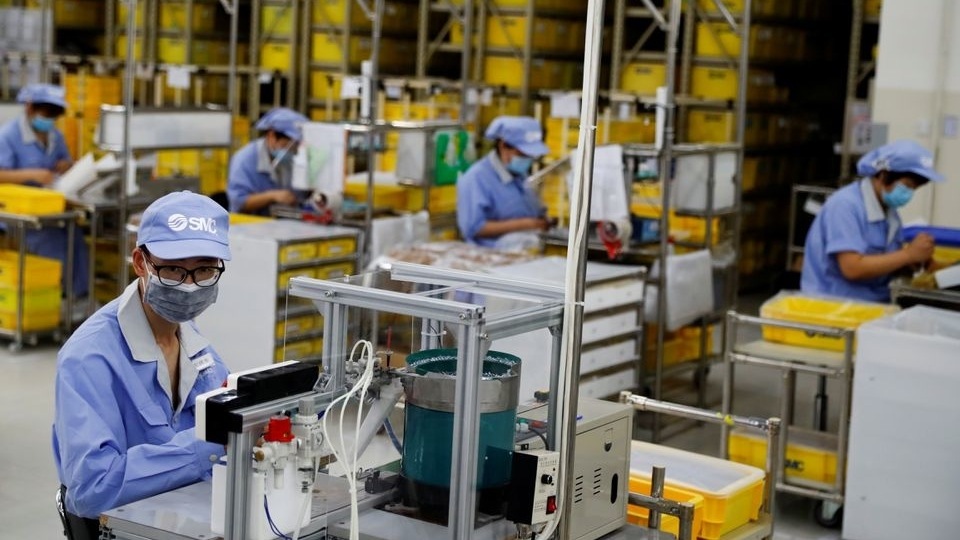
The Purchasing Managers' Index (PMI) -- a key gauge of manufacturing activity in the world's second-largest economy -- slipped to 49.6 from 50.1 in August, the National Bureau of Statistics said.
Any figure below the 50-point mark represents contraction, while above it indicates growth.
It is the first time China's PMI has contracted since February last year when the domestic economy was battered by prolonged factory shutdowns caused by the coronavirus pandemic.
Factory suspensions and power blackouts have already affected at least 17 provinces in recent months -- a situation further exacerbated by tight coal supply leading to sky-high prices.
The power cuts and local government restrictions on factories to cut energy use have led some major banks to lower their annual GDP forecast for China, with supply chains for international firms such as Apple and Tesla impacted.
NBS senior statistician Zhao Qinghe said the PMI fell below the threshold due to "the relatively low prosperity of energy-intensive industries".
The figure was slightly below the forecast of Bloomberg analysts, who expected a small rebound after successful containment of coronavirus outbreaks.
While China's economy has largely bounced back from the initial blow of the pandemic, multiple outbreaks in recent months hit domestic tourism and manufacturing as wide swathes of the country were locked down.
As a result, China's non-manufacturing PMI -- which measures activity in construction and services -- contracted in August for the first time since the pandemic began, but recovered in September to 53.2 from 47.5 last month.
Default fears around Chinese property giant Evergrande -- bogged down in a $300 billion debt quagmire -- has hit consumer confidence, as the government tries to stop financial risk from spilling over into the rest of the property sector.
Zhiwei Zhang, chief economist at Pinpoint Asset Management, said that the weak PMI would serve as an "alarm" for the government.
"Economic growth in Q4 will likely slow further without a change of government policies, and the pace of slowdown may pick up," he said.


