
Labour party leader Jeremy Corbyn on Wednesday apologised on behalf of his party for the UK’s role in the Iraq war, after an inquiry report into the US-led 2003 invasion blamed former British Prime Minister Tony Blair for leading the country into war based on “flawed intelligence”.
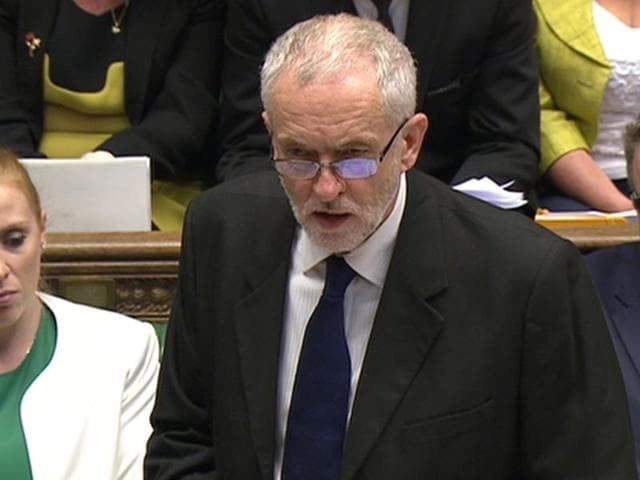
Much of Corbyn’s speech was similar to his comments in the House of Commons on Tuesday, but towards the end he included an apology on behalf of the then ruling Labour party’s decision to go to war.
Suggested For You
“I now apologise sincerely on behalf of my party for the disastrous decision to go to war in Iraq,” he said, following the release of the Iraq Inquiry report by Sir John Chilcot which concluded that Britain’s decision to go to war was based on “flawed intelligence”.
Read | Cameron says UK lawmakers must take share of blame over Iraq
“That apology is owed first of all to the people of Iraq. Hundreds of thousands of lives have been lost and the country is still living with the devastating consequences of the war and the forces it unleashed. They have paid the greatest price for the most serious foreign policy calamity of the last 60 years,” said Corbyn, who continues to be under pressure from within his party to step down as party leader for what has been branded as his failure to prevent Britain’s exit from the European Union (EU) in last month’s referendum.
He added: “The apology is also owed to the families of those soldiers who died in Iraq or who have returned home injured or incapacitated. They did their duty but it was in a conflict they should never have been sent to.
{{/usCountry}}He added: “The apology is also owed to the families of those soldiers who died in Iraq or who have returned home injured or incapacitated. They did their duty but it was in a conflict they should never have been sent to.
{{/usCountry}}“Finally, it is an apology to the millions of British citizens who feel our democracy was traduced and undermined by the way in which the decision to go to war was taken on the basis of secret ‘I will be with you, whatever’ understandings given to the US president,” Corbyn said referring to Blair’s note to then US President George W Bush on July 28, 2002, months before the invasion of Iraq, saying “I will be with you, whatever”.
Corbyn’s apology came in contrast to Blair’s own statements earlier, in which he stressed he would not apologise for the decision to go to war because it was taken in “good faith”.
Read | 6 key findings of Chilcot probe into Britain’s role in Iraq war
“There were no lies, Parliament and Cabinet were not misled, there was no secret commitment to war, intelligence was not falsified and the decision was made in good faith,” the former British PM said at a press conference in London today.
He told reporters that he had wanted to set the Iraqi people free and secure them from the “evil” of Saddam Hussein, but instead they had become victims of sectarian violence.
In an hour-long speech and an intense session of questions from the media, Blair said he wanted people to stop saying that he was “lying” or had “underhand motives”.
Read | Blair expresses ‘sorrow and apology’ but defends Iraq war strategy
Explore More
ABOUT THE AUTHOR
Follow the latest breaking news, major developments and agenda-setting stories from India and around the world with the newsdesk at Hindustan Times. Operating round the clock, the desk brings together experienced editors, reporters and correspondents to deliver fast, accurate and contextual reporting across subjects that influence public policy, governance, business, society and international affairs. The HT News Desk covers politics, elections, government policies, the economy, business and markets, science and technology, the environment, law and order, infrastructure, education, climate issues and geopolitics, while closely tracking developments across states, institutions and global capitals. The team also leads coverage of major breaking news events, policy announcements, court proceedings, natural disasters, public emergencies and significant international developments. Reports published by the newsdesk are based on information gathered from reporters on the ground, official statements, government agencies, court records, regulatory filings, recognised institutions and other authoritative sources. Stories undergo editorial scrutiny and verification processes to ensure accuracy, fairness and relevance, and are updated as events evolve and additional information becomes available. Whether covering a key political decision in New Delhi, an economic policy shift affecting millions, a landmark court ruling or a major global event, the HT News Desk aims to provide readers with reliable, fact-based journalism that delivers not only the latest developments but also the context and analysis needed to understand their wider implications.