ULCHI FREEDOM SHIELD, an annual military exercise, brings thousands of American and South Korean troops together to train to counter threats from North Korea. In this summer’s edition, which was scheduled to begin on August 17th, the allies planned to focus on responding to new capabilities that North Korean soldiers acquired while fighting in Russia’s war against Ukraine, such as drone warfare. Or at least they were supposed to: the night before the exercises were due to start, President Donald
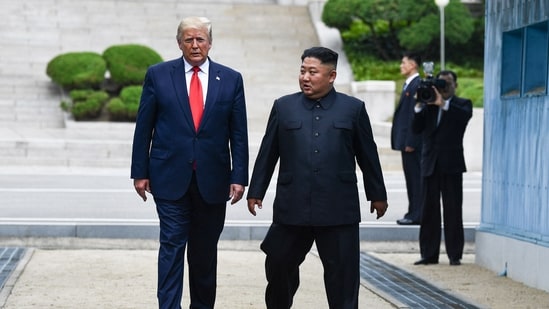
ULCHI FREEDOM SHIELD, an annual military exercise, brings thousands of American and South Korean troops together to train to counter threats from North Korea. In this summer’s edition, which was scheduled to begin on August 17th, the allies planned to focus on responding to new capabilities that North Korean soldiers acquired while fighting in Russia’s war against Ukraine, such as drone warfare. Or at least they were supposed to: the night before the exercises were due to start, President Donald Trump ordered the defence department to “substantially reduce” the manoeuvres, citing the cost of the drills, South Korea’s refusal to support his war in Iran and his “very good relationship with Kim Jong Un”, North Korea’s dictator (pictured, from a meeting in 2019).
America and South Korea have conducted regular joint exercises since 1954. Such drills are important signaling devices, and North Korea regularly protests each time they are held. Mr Trump decided that the signal was “totally inappropriate and hostile”, given that North Korea has been “unthreatening and respectful” under his watch. By undermining the exercises, he may hope to entice Mr Kim to restart the diplomatic engagement the two men began during Mr Trump’s first term in office. But his abrupt decision is more likely to send a different kind of message: that America’s commitments to its allies are hollow.
Mr Trump has long been particularly sceptical of the value of America’s alliance with South Korea. “What do we get from our economic competitor South Korea for the tremendous cost of protecting them from North Korea?” he tweeted several years before announcing his first campaign for president. “NOTHING!” During his first term he sought to withdraw American troops from South Korea, but was stymied by alliance-minded advisers and by Congress.
Deep Dive
Why did Trump decide to reduce military exercises with South Korea?
What impact does North Korea's military cooperation with Russia have on the region?
How have South Korean military exercises evolved in response to North Korean threats?
Since returning to office, his administration has made quiet but consequential changes to the alliance. America has moved to reorient the mission of its 28,500 troops in South Korea away from their traditional focus on the peninsula and toward deterring China; it has also made clear that South Korea must bear primary responsibility for defending itself from the nuclear-armed North, at least in the conventional domain. South Korea’s willingness to quietly accede to these changes in American posture and to pledge to spend lots more on defence have earned it plaudits from Trump administration officials, such as Elbridge Colby, the Pentagon’s undersecretary for policy, who has called it a “model ally”.
Mr Trump is now proving how little such statements are worth. In recent years, fear of American abandonment has fuelled discussions about South Korea acquiring nuclear weapons of its own. Lee Jae Myung, South Korea’s president, has made clear that he opposes that course. But he has sought to develop the capacity to enrich and reprocess nuclear fuel for his country’s civilian nuclear-power industry, which would make building the bomb easier if South Korea ever deemed that necessary.
Nor is this the first time Mr Trump has used joint exercises with South Korea as a bargaining chip in his brinkmanship with Mr Kim. When the two men met in Singapore in 2018, the first-ever summit between American and North Korean leaders, Mr Trump said that America would halt upcoming drills with South Korea. The move stunned his own advisers, not to mention nervous allies throughout the region. Yet it did not lead to a grand breakthrough with Mr Kim; the subsequent meeting between the two men, in Hanoi the following year, collapsed in acrimony when they could not agree on the future of North Korea’s nuclear programme.
This time Mr Trump linked the decision on the drills to his ongoing war in Iran. “I recently asked the President of South Korea if they would like to join us in the denuclearisation of the Islamic Republic of Iran, and they said, “No thanks!”” he wrote on Truth Social. Yet although plenty of American allies have held back from joining the war effort, only one set of exercises has been shot down so publicly; Japan, for example, has also balked at calls to do more to help America in Iran, but its annual military exercises with America this summer have unfolded unimpeded. If there is a connection to the war in Iran, it is instead that Mr Trump may hope that another round of summitry with Mr Kim (not that he has evinced any interest in such a meeting) could help divert attention from his quagmire there.
Correction (August 17th): We originally misidentified the meeting where this picture was taken.
One Subscription.
Get 360° coverage—from daily headlines
to 100 year archives.
Archives
HT App & Website